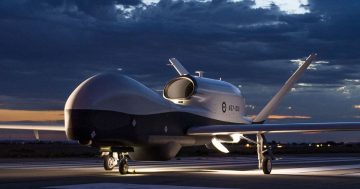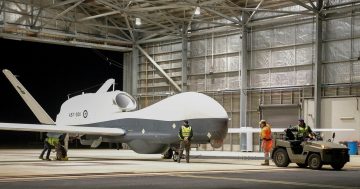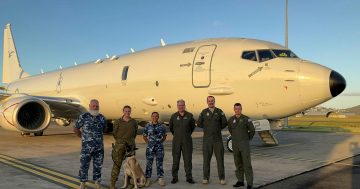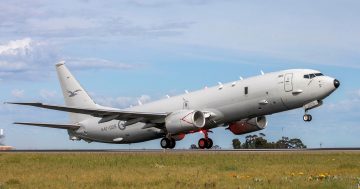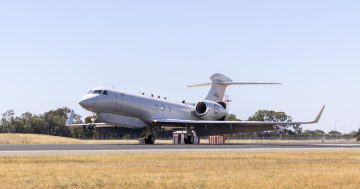

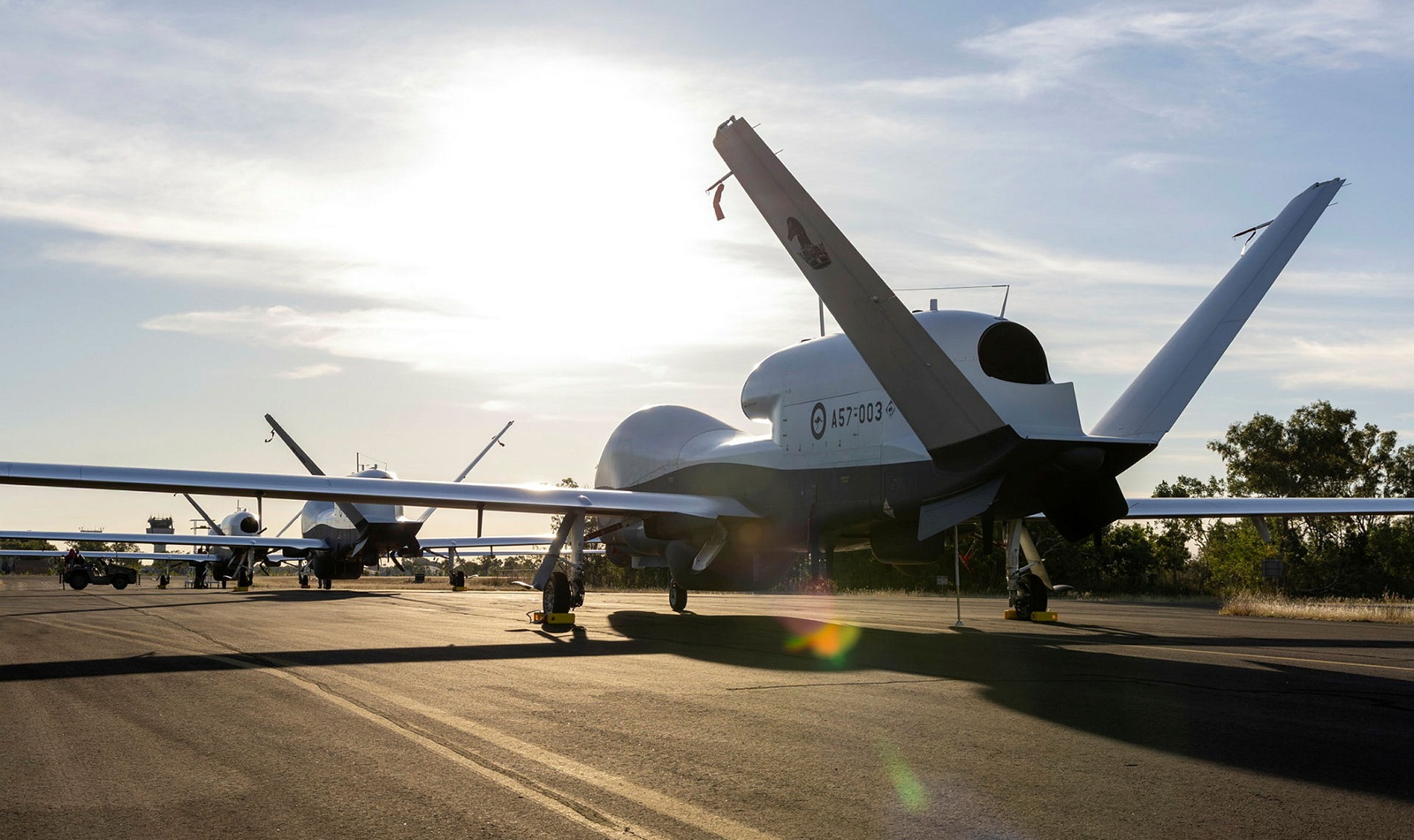
Three of the four planned MQ-4C Tritons are now in service at Tindal, with the aircraft operators and headquarters at Edinburgh in Adelaide. Photo: ADF.
New facilities dedicated to housing the Royal Australian Air Force’s (RAAF’s) four new Northrop Grumman MQ-4C Triton high-altitude, long-endurance uncrewed maritime reconnaissance aircraft (UAS) have been opened at Tindal, near Katherine in the Northern Territory.
The $355.7 million Remotely Piloted Aircraft System facility is part of a larger redevelopment of the base, and includes a purpose-built hangar, working accommodation, upgraded airfield pavement, and infrastructure to support Triton operations.
The first Triton UAS was delivered to Tindal in July 2014, and was followed by two more in April 2025. The fourth is scheduled to follow in 2028.
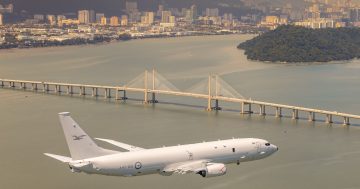
The aircraft has a 130-foot glider-like wingspan, and is capable of flying at an altitude of up to 55,000 feet for 28 hours. It has advanced optical, radar and signals/electronic intelligence (SIGINT/ELINT) sensors linked to onboard satellite communications, and can cover most of Australia’s northern maritime approaches stretching up into the South China Sea from Tindal in a single mission.
While defence and contract maintenance and ground handling staff are based at Tindal, the aircraft’s pilots and its Number 9 Squadron operational headquarters are at RAAF Base Edinburgh in Adelaide.
Apart from the Triton’s facilities, other upgrades for RAAF Base Tindal include new maintenance and headquarters facilities for the resident Number 75 Squadron, which flies the F-35A Lightning II combat aircraft; a larger air movements ramp for visiting transport aircraft and air-to-air refuellers; and improved base accommodation and community facilities.
The upgrades also include new visiting combat aircraft shelters and deployed headquarters facilities, repaved and widened taxiways, a lengthened runway, and a new ramp capable of supporting large bombers such as the US Air Force B-52H, B-1B and B-2A.
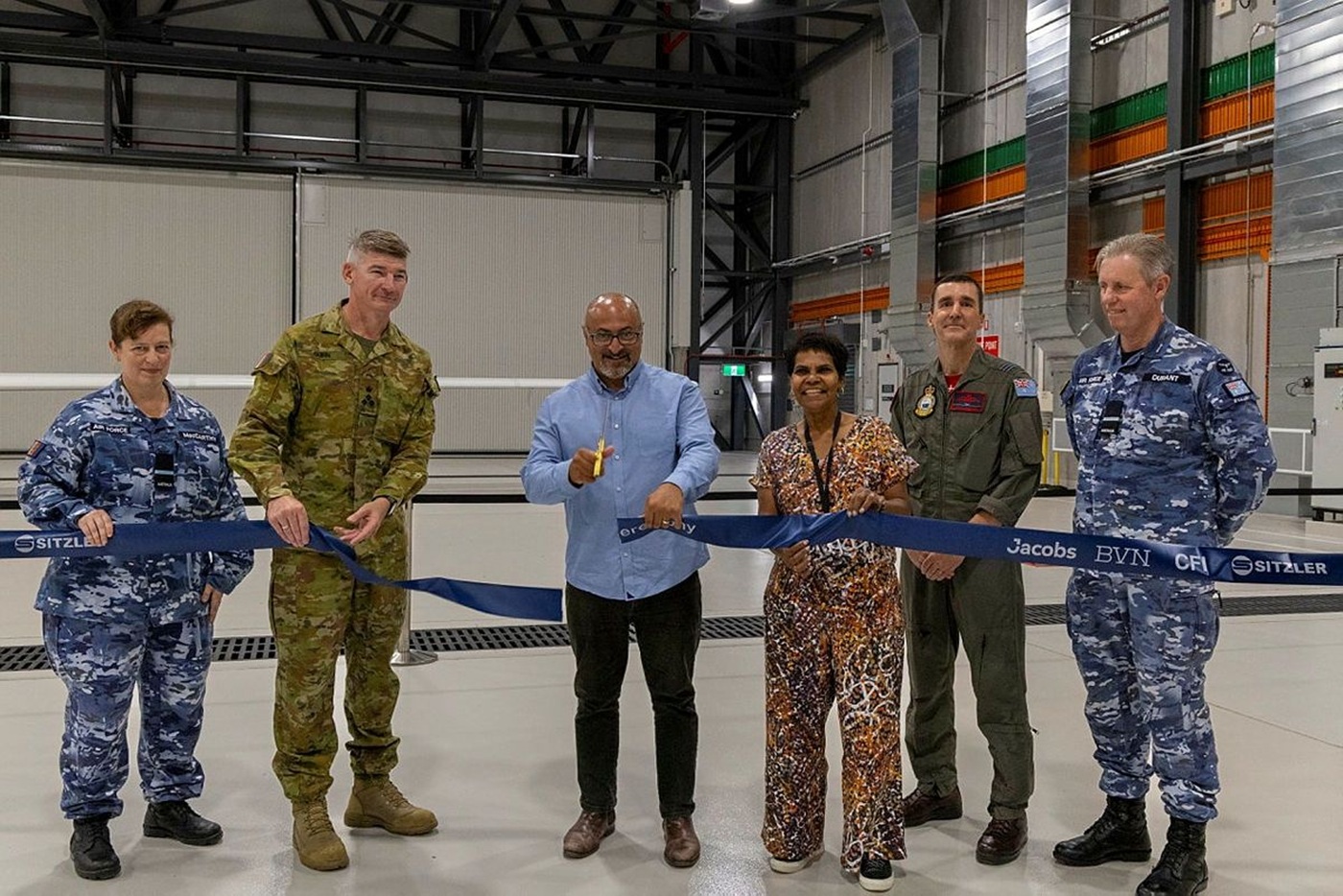
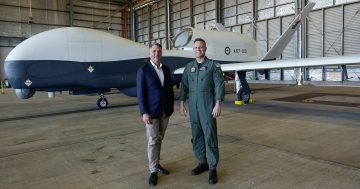
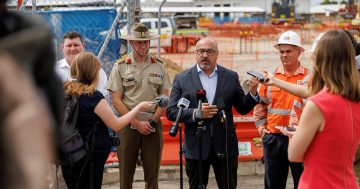
Assistant Minister for Defence Peter Khalil and Federal Member for Lingiari Marion Scrymgour with ADF personnel at the opening of the Triton maintenance facilities at RAAF Base Tindal. Photo: Peter Khalil LinkedIn.
Assistant Minister for Defence Peter Khalil said the completion of the Tindal facilities was a critical step in strengthening Australia’s northern defence capability.
“This suite of new infrastructure will enable the ADF to operate advanced uncrewed aircraft from Australia’s north, enhancing persistent intelligence, surveillance and reconnaissance along our maritime borders and across the broader region,” Mr Khalil said.
“The project also deepens Australia’s Cooperative Program with the US Navy, by ensuring our forces can operate seamlessly together in support of regional stability.
“Investing in critical infrastructure and advanced capabilities across our northern bases is critical to ensuring Australia is ready to face whatever challenges arise in the future.”
Federal Member for Lingiari Marion Scrymgour said the project had delivered benefits for the Territory, supporting local businesses, creating jobs and building skills that would continue to benefit the region well into the future.
“Working closely with local industry and Indigenous contractors has been central to this project, ensuring the investment strengthens not only Defence capability but also the local economy,” Ms Scrymgour said.
“RAAF Base Tindal is a valued part of the local community, and these new facilities will support the men and women who live and work here as they carry out their vital role.”
Special Envoy for Defence, Veterans’ Affairs and Northern Australia Luke Gosling added: “The completion of the MQ-4C Triton facilities at RAAF Base Tindal reflects the Northern Territory’s central role in Australia’s national security.
“It recognises the work of our Defence personnel, the importance of our northern bases, and the strength of our local Defence industry in keeping Australians safe.
“This investment gives the ADF a powerful new capability to see further, stay airborne longer and maintain constant situational awareness. It will significantly strengthen our maritime surveillance and ensure Australia is better prepared to respond to emerging security challenges across the Indo-Pacific.”
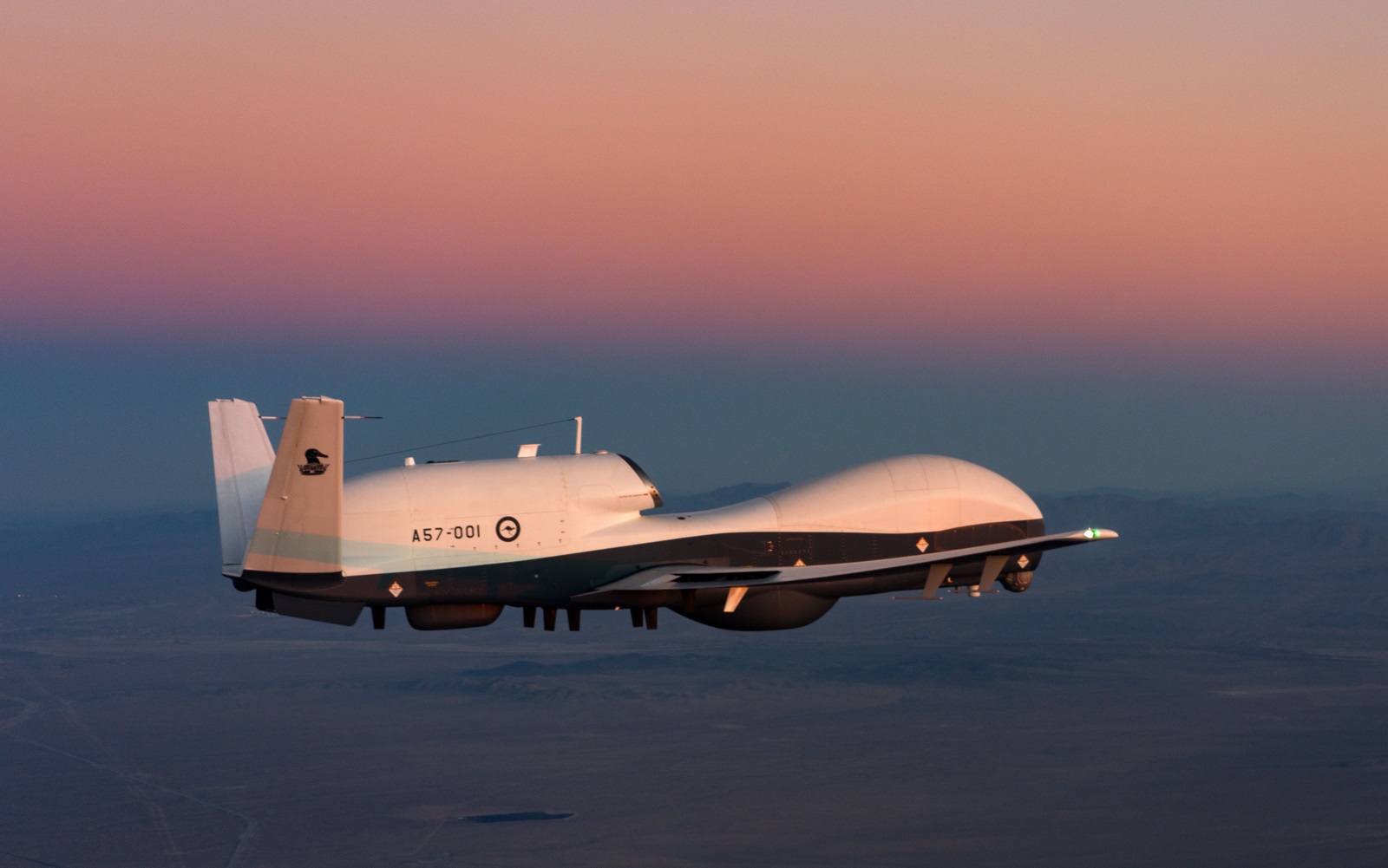
The Triton can fly for up to 28 hours at a maximum altitude of 55,000 feet. Photo: Northrop Grumman.