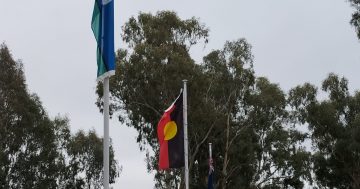
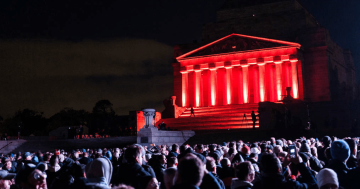
Richard Foley highlighted Aboriginal soldiers’ contribution to war efforts in his defence of Welcome to Country. Photo. Shri Gayathirie Rajen.
Wagga Wagga councillor Richard Foley has launched a blistering defence of Welcome to Country ceremonies after some Anzac Day services were disrupted by booing, describing the backlash as “ignorance dressed up as patriotism”.
In a lengthy social media post, Cr Foley said those who jeered during dawn services had misunderstood both the tradition of Welcome to Country and the meaning of the day itself.
He strongly rejected claims the practice is political or recently invented.
“Welcome to Country is not a government invention. It is not a Labor Party policy,” he wrote. “That is not politics. That is geography, history, and plain fact.”
Cr Foley pointed to tens of thousands of years of Aboriginal occupation and said critics claiming the practice was “made up” were displaying “arrogance”.
“When someone says Welcome to Country is ‘made up’ they are claiming to know more about 65,000 years of Aboriginal cultural protocol than the people who lived it.”
He also dismissed arguments that such ceremonies don’t belong at Anzac services, noting they have been included for years by major institutions.
“The Returned and Services League of Australia included Welcome to Country in yesterday’s Anzac Day ceremonies, as it has done for well over a decade. So did the Australian War Memorial,” he wrote.
“These are not radical progressive organisations … If you have a problem with Welcome to Country at Anzac Day, your argument is with the RSL.”
Opposition Leader Angus Taylor also condemned the booing, calling it “un-Australian”, but said the practice could be overused.
“I can understand the frustration that some Australians feel about overuse of Welcome to Country. I feel that at times,” he said.
Cr Foley expressed similar sentiments.
“I have sat through [conferences] where every single speaker – sometimes a dozen in a day – stands up and delivers their own Acknowledgment of Country before saying another word. By the fourth or fifth time it has lost all meaning. It becomes background noise. It becomes a box-ticking exercise that ultimately demeans the very practice it is supposed to honour,” he said.
“That is a legitimate concern. Overuse cheapens it. When Welcome to Country becomes a reflexive bureaucratic ritual, repeated ad nauseam at every corporate conference and government meeting regardless of context, it loses its integrity and its purpose.”
But he said that was a different conversation to the act of actively booing it at Anzac ceremonies.
“You want to keep Anzac Day sacred? Then act like it. Because booing at a solemn dawn service in front of veterans, families, and children who came to learn what this day means was a desecration of everything the fallen stood for,” he said.
A central plank of his argument was the contribution of Aboriginal servicemen and women.
“Aboriginal Australians fought and died for this country in both World Wars,” he wrote.
“If any people on earth have earned the right to be acknowledged at an Anzac ceremony, it is them. When you boo a Welcome to Country on Anzac Day, that is what you are booing. Own it.”
He ended with a direct challenge to critics: “What exactly were you defending yesterday morning? Because it wasn’t Anzac values … It was just your own prejudice.”
“Lest we forget.”
Original Article published by Oliver Jacques on Region Riverina.