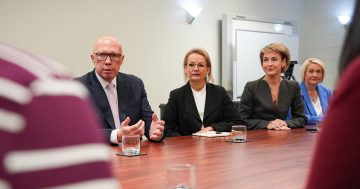
A government consultation process has been launched to develop a new action plan to end violence against women and children. Photo: Simona Pilolla.
A major consultation process over violence against women and children has kicked off, with the Federal Government seeking community input to help shape a new action plan.
Help with the next phase of the National Plan to End Violence Against Women and Children 2022-2032 is being sought, with the aim of developing Labor’s second action plan to guide collective efforts for the next five years.
The focus of the second action plan will be on what works to deliver practical, systemic solutions that have the greatest impact.
The government says it is committed to working with experts, stakeholders, victim-survivors and communities as it develops the next plan.
Minister for Women Katy Gallagher said the government knew everyone needed to work harder to end violence against women and children.
“We need to make sure our efforts are really having an impact, that we are responding to emerging challenges and evidence, and that we are working to prevent violence before it happens,” Senator Gallagher said.
“This is a national crisis, and we cannot afford to slow down.
“This consultation is about listening to victim-survivors, frontline workers, advocates and communities so this next phase of action is shaped by the people who know where change is needed most.
“We want to hear about practical action we can take to strengthen prevention, improve early intervention and make sure women and children can access the support they need when they need it and can live lives free from violence.”
Along with the consultation, the government will be consulting on related action plan Our Ways — Strong Ways — Our Voices, which is Australia’s first national dedicated plan to end family, domestic and sexual violence against First Nations women and children. Simultaneous consultations will also take place over Safe and Supported, the 10-year framework for protecting Australia’s children.
The action plans are being designed to work together because people affected by violence often deal with many of these interconnected issues at the same time and people’s lives do not fit neatly into plans or systems.
Social Services Minister Tanya Plibersek said one in four women and one in 14 men had experienced intimate partner violence since the age of 15.
While the government had taken “important steps” to drive change and made “significant investments”, for too many people, change wasn’t happening quickly enough.
“There are no simple answers, but the second action plan will make sure we are unified in our goals across governments, communities, workplaces, schools, health and justice systems, and of course, frontline services,” Ms Plibersek said.
“Most importantly, we want to listen. To survivors, to advocates and experts, and to communities — because your experiences and your voices are essential in shaping the changes that will truly make a difference.”
So far, the Federal Government has invested more than $4.4 billion to take action to end family, domestic and sexual violence.
This includes funding for 1400 organisations, directly helping about 450,000 people across Australia experiencing violence.
Attorney-General Michelle Rowland outlined some of the initiatives being put in place to help victims of abuse.
“Family, domestic and sexual violence is an abhorrent crime that has immeasurable lifelong impacts on victims and survivors, and we must keep working to eradicate it,” she said.
“Child sexual abuse affects more than one in four Australian children. No child should ever experience abuse, and the Albanese Government is committed to protecting the safety and wellbeing of children.
“The government is implementing ambitious, world-leading measures to prevent and respond to all forms of child sexual abuse, and this will continue as we move towards a robust second action plan.
“We’re ensuring that victims and survivors only need to tell their story once, and we’re aligning our action plans across government because people’s experiences rarely fit into a single plan.”
Everyone is encouraged to have their say, and the government is keen to hear from a wide range of people across the community, including academics and experts, frontline workers, employers, community members, victim-survivors and children and young people.
The consultation can be accessed on the Department of Social Services website.
If you are experiencing, or at risk of experiencing, domestic, family or sexual violence, or someone you know is, call 1800 737 732, text 0458 737 732 or visit www.1800respect.org.au for online chat and video call services.
Original Article published by Chris Johnson on Region Canberra.