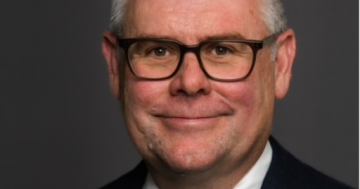
Employment Minister Amanda Rishworth says Australia’s labour market remains resilient despite the rise in unemployment rates. Photo: Michelle Kroll.
Australia’s unemployment has risen against expectations to the highest rate since the COVID pandemic, even though more jobs were added than anticipated.
The seasonally adjusted unemployment rate rose to 4.6 per cent in August, up from 4.5 per cent in July, according to the latest data from the Australian Bureau of Statistics (ABS).
Part-time employment rose by 46,000 people in August, while full-time employment fell by 6000 people.
“This August we recorded a higher proportion of people who were previously not in the labour force moving to being unemployed, compared to recent years,” ABS head of labour statistics Sean Crick said.
“The growth in the size of the labour force resulted in the participation rate increasing by 0.2 percentage points to 67.1 per cent.
“This month there were 39,000 more people in employment, and 28,000 more people in unemployment.”
The underemployment rate fell by 0.1 percentage points to 6.2 per cent.
Unions have used the data to call on the Reserve Bank of Australia to resist another hike in the official interest rate.
RBA governor Michele Bullock said this week that the unemployment rate would need to be somewhere between 4.5 and 5 per cent to ease pressure on inflation.
The Australian Council of Trade Unions, however, says it calculates that a 5 per cent unemployment rate could mean as many as 55,000 more people out of work.
ACTU secretary Melissa Donnelly said the new job figures already showed more Australians were out of work.
“This should give the Reserve Bank opportunity to change course and protect Australians already doing it tough when it meets to consider the cash rate next week,” Ms Donnelly said.
“The Reserve Bank must not neglect its dual mandate to preserve full employment and manage inflation.
“Workers are not the cause of current inflation pressures, so adding further stress to their budgets is just wrong.”
Employment Minister Amanda Rishworth insists Australia’s labour market remains resilient despite ongoing global economic uncertainty.
“The participation rate increased to 67.1 per cent in August and is close to its record high,” the minister said.
“This shows more Australians are working or looking for work. We know some Australians are still doing it tough, and we’re focused on supporting them.”
Acting Treasurer Katy Gallagher said it was not surprising to see unemployment tick up slightly in the context of global uncertainty.
“These figures show our labour market remains resilient with almost 40,000 jobs added in August and near record high participation,” Senator Gallagher said.
“More than 1.3 million jobs have been created since we came to government, most of them full-time, and we have stronger jobs growth and higher participation than every G7 economy.”
Total hours worked in August was up 0.7 per cent, after falling by the same amount in July.
“This is partly due to having more employed people working zero hours last month compared to usual July months,” Mr Crick said.
Employment and hours worked are closely aligned in annual growth, up 1.6 per cent and 1.7 per cent respectively.
The ABS also released data on Thursday (24 September), showing total household wealth rose by 1.0 per cent, or $201.1 billion, in the June quarter.
ABS head of finance statistics Mish Tan said strong growth in superannuation assets in the June quarter led to the growth in household wealth.
Superannuation assets grew by 5.2 per cent and offset a 0.2 per cent fall in the value of land and dwellings.
“Superannuation growth was driven by growth in global and domestic equity markets, as they recovered from relatively low share price levels at the start of the Middle East conflict in March,” Dr Tan said.
“Despite the value of land and dwellings falling for the first time since September 2022, it remains 8.0 per cent higher compared to the same period last year.”
The fall in residential land and dwellings was driven by lower property prices across New South Wales, Victoria and the Australian Capital Territory, with the mean dwelling price falling by 0.7 per cent in those jurisdictions.
Values rose in all other states and territories.
Original Article published by Chris Johnson on Region Canberra.