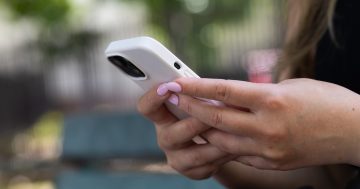
The AusAlert emergency warning system will be test broadcast to all mobile phones on Monday. Photo: Michelle Kroll.
People who have secret or concealed “safe phones” should turn them off before the upcoming AusAlert warning system test if they want them to remain undetected.
The new emergency warning system will be tested nationally on Monday (27 July) at 2 pm AEST, now that nine community-based trials across the country have been declared “successful” and have provided “valuable insights”.
Following the Australia-wide test, the system will then officially go live in October.
The alert works by broadcasting a 10-second siren to mobile phones, along with a ‘systems alert’ rather than a text message, in areas affected by an emergency.
But Monday’s test is going to everyone with a mobile phone.
Emergency Management Minister Kristy McBain described AusAlert on Wednesday (22 July) as a “milestone” that will deliver emergency alerts to more people in a “more timely manner” than the existing text-based emergency alert system.
But she cautioned that it will make a loud sound on people’s mobile phones, so anyone wanting to keep their devices secret should turn them off or switch them to aeroplane mode one hour before the test.
They should then keep their mobiles switched off or on flight mode until 24 hours after the test, the minister said.
The alert will sound through phones that are simply on silent, or a do not disturb mode.
“The national test will assess system-wide performance, checking the system can broadcast at scale to compatible devices in near real time without network congestion,” she said.
“The national test also provides an opportunity for Australians to familiarise themselves with AusAlert before alerts are sent during local or national disasters, including natural hazards such as bushfires, floods or cyclones or other security threats.
“The system was developed in response to the 2020 royal commission into national natural disaster arrangements, which identified the need for a more modern, reliable, and nationally consistent public warning capability.
“Cell broadcast technology, which is used successfully in 35 other countries, is that technology, especially during fast-moving and unpredictable emergencies.”
Hidden phones can be part of a safety plan for people at risk of domestic violence.
Wesnet (Women’s Services Network) has echoed the minister’s advice about turning concealed phones off or to flight mode during Monday’s test, but added that once AusAlert is live, bigger decisions will need to be made.
“Once the national emergency alert system is officially in place from October, people using hidden phones, as part of a safety plan, will need to make their own decision about the risks of having their phones on, on a permanent basis or whether it’s safer for them to keep their hidden phones off when they’re not in use,” Wesnet CEO Karen Bentley has stated.
Domestic violence perpetrators often use spyware and tracking apps to monitor the whereabouts and activities of their victims.
Wesnet and some other charities distribute repurposed smartphones to help women and children secretly escape abuse and coordinate safety plans.
Ms McBain met with her state and territory counterparts on Wednesday for the National Emergency Management Ministers’ Meeting.
Following the meeting, the federal minister said Monday’s test will assess the technology’s ability to broadcast warnings at scale, but that AusAlert will run along the existing emergency alert system for the upcoming high-risk weather season to make sure people without mobile phones can still get warnings.
But it will be up to each jurisdiction if they use both systems into the future.
“It’s one of the reasons those two systems will run alongside each other for this high-risk weather season,” Ms McBain said.
“Obviously, it would be great if we could use both systems to make sure that people are getting advice and notification if we need to advise people in those critical alert situations.
“But that will be a decision for emergency service agencies who are in control of whatever that disaster may be at the time.”
The minister downplayed suggestions that both the AusAlert and state-based system being used at the same time could create confusion.
Getting as much information as possible at times of disaster is always welcome.
“If they get that through a text message or an alert and notification on their phone, they are grateful,” she said.
“They get that from their emergency broadcasters; they love that.
“This is another tool in the toolkit, and it’s incredibly important that people continue to listen to the advice of emergency services.”
Ministers from both Queensland and Western Australia raised concerns in the meeting about people with landlines, which are more dominantly used in remote areas, being notified of disasters.
Concerns were also raised in the meeting about messages only being sent in English.
“A siren is pretty effective, and absolutely moves across language barriers,” Ms McBain said.
“People know when they hear a siren that there is an emergency happening.”
Original Article published by Chris Johnson on Region Canberra.