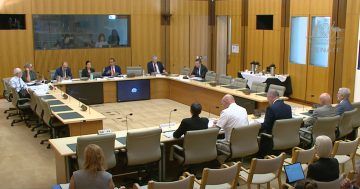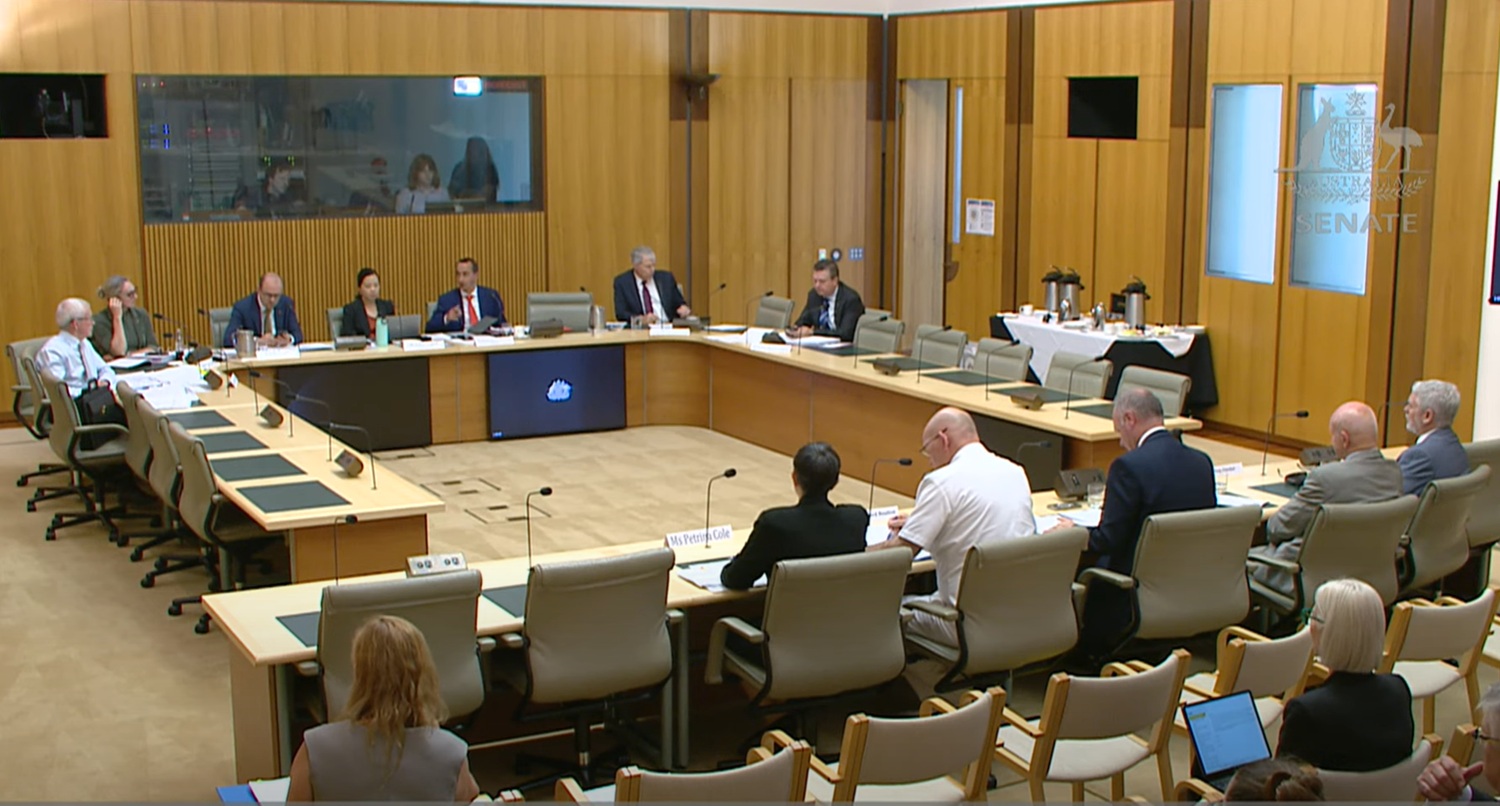
Scrutiny of the performance of major defence projects will increasingly be taken behind closed doors. Photo: Screenshot.
The Federal Government’s promise to increase transparency in reporting on taxpayer-funded expenditure has been called into question after the axing of an annual audit office report into Defence projects.
The Australian National Audit Office’s (ANAO) Major Projects Report (MPR) was once the go-to for parliamentarians, media and concerned citizens to review and report on the top 20 defence projects with regards to performance, capability goals, schedule and cost.
But with the passing of legislation in Parliament in early March to establish the new Parliamentary Joint Committee on Defence (PJCD), much of this reporting and subsequent public questioning of military leaders that was once conducted by the Joint Standing Committee on Foreign Affairs, Defence and Trade (JSCFADT) will now go behind closed doors.
As a result, the Joint Committee of Public Accounts and Audit (JCPAA) has ended the production of the MPR, which has been an annual report from the ANAO, with input from Defence, for nearly 20 years.
In a 6 March statement, the JCPAA said: “In 2008, the [JCPAA] expressed its view that greater transparency in defence acquisitions was required — at the time there was an absence of clear, consistent and precise information on which to make an assessment about the status of troubled acquisition projects.
“In that time, the committee has observed some improvements in Defence accountability and project governance, including in risk management, compliance reviews, budget reporting, records management, lessons, and oversight of projects of concern and projects of interest.
“While the need for scrutiny of Defence acquisition governance and performance remains as critical as it always has been, the means by which it best occurs has to evolve in the broader context of changing strategic circumstances where information on aspects of Defence acquisitions has become increasingly classified.
“In this context, the Committee has observed a steady reduction in the number of projects that can be reported on publicly through the Major Projects Report.”
As a result, the JCPAA says it “… has resolved not to request the Department of Defence and Australian National Audit Office continue to produce the Major Projects Report.”
The formation of the new PJCD follows a March 2023 report that highlighted that the existing parliamentary oversight and accountability mechanisms for Defence and its agencies were inadequate when it comes to balancing accountability and transparency and national security considerations.
The report said this included the risk of exposing information in the public domain that could be advantageous to potential adversaries.
It was recommended that the PJCD be modelled on the Parliamentary Joint Committee on Intelligence and Security (PJCIS), which was established in 2001 to request and receive classified information and briefings.
PJCD committee members will be briefed on matters relating to the Australian Defence Force (ADF), the Department of Defence, Department of Veterans’ Affairs and defence portfolio agencies. They will be able to receive and consider classified information to conduct effective scrutiny of Defence and its portfolio agencies, and strengthen government decision‑making.
The government says the legislation establishes appropriate safeguards on the PJCD that enhance parliamentary accountability and transparency while ensuring sensitive information about Australia’s national security is protected.
But unlike the JSCFADT, the PJCD will reportedly comprise only seven government and six Opposition members, with no minor party or crossbench representation.
Noted defence and strategic policy analyst and former defence official Dr Marcus Hellyer has described the move as “the end of transparency and accountability in Australia’s Department of Defence”.
“Ministers and senior Defence officials will be glad that their poor performance will now go unreported and unremarked,” he wrote on LinkedIn on 14 March.
“But Australian taxpayers will be the losers as they will have no way to know whether the military capabilities they are paying for are being delivered on time and budget or indeed whether they are being delivered at all.
“This follows the establishment of the new Joint Standing Committee on Defence which will meet in camera and will have no representation from the minor parties.
“This will allow the Government and Defence to refuse to answer any awkward questions at Senate estimates and refer them to the JSCD behind closed doors.”
Shadow Defence Minister James Paterson told The West Australian that “defence is in desperate need of more scrutiny, not less”, but added the PJCD must be “as open as possible in doing so”.
“In a dangerous strategic environment and with hopefully increased defence spending to come, taxpayers have every right to know their money is being spent well in the national interest,” he said.
“Given the Albanese Government’s refusal to be transparent through the major projects report process with the ANAO and the committee on public accounts and audit, that task must now fall to the statutory defence committee.”