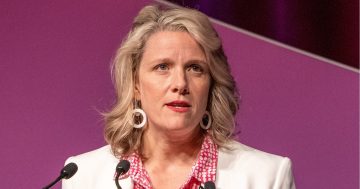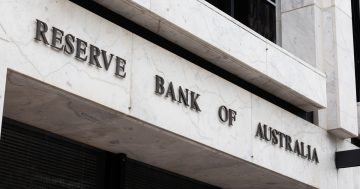
From today businesses can no longer pass on surcharges for card payments, so the ATO will refuse to accept credit cards after 30 November. Photo: File.
The Australian Taxation Office is being accused of hypocrisy for deciding not to accept credit card payments now that the surcharge ban has come into effect.
The card payment surcharge ban has kicked in from today (1 October) and means business transactions can no longer add a separate surcharge because a customer pays by card.
The surcharge ban covers EFTPOS, Visa and Mastercard and includes credit, debit and prepaid cards.
The new rule was introduced following a Reserve Bank of Australia’s Review of Merchant Card Payment Costs and Surcharging, which found that removing the surcharges would support a more efficient and competitive payments system.
The ATO, however, has responded to the ban by bluntly refusing to accept credit card payments after 30 November.
It says that as a government agency, it would not be appropriate for the cost of credit card merchant fees to be “transferred to the community”.
“The ATO recognises that some taxpayers currently rely on credit card payments to manage their tax payments and understands this change may require some adjustments,” it said in a statement.
“The ATO is committed to helping taxpayers transition to alternative payment methods and will continue to support those experiencing financial hardship or other circumstances that make it difficult to meet their obligations.”
The Tax Office is writing directly to those who currently have a payment plan linked to a credit card to explain the changes and the steps they need to take.
Taxpayers with a direct debit arrangement linked to a credit card will need to update their payment method before their next instalment due after 30 November to ensure compliance with their payment plan.
About 2.3 per cent of tax payments were made with credit cards in 2024–25.
The Australian Chamber of Commerce and Industry has described the ATO’s move as “utter hypocrisy” because it won’t absorb the costs like businesses now have to.
ACCI CEO Andrew McKellar said the chamber was also “deeply disappointed” the ATO decided to wait until the surcharge ban came into effect before making it public it will no longer accept credit card payments as a result of it.
“It is utter hypocrisy that the ATO, a government agency, refuses to absorb the costs of extending payment options to credit cards, yet expects small businesses across the country to absorb them because of a ban the government is implementing today,” Mr McKellar said.
“When decisions like this are deliberately hidden until the last moment, it is little wonder so many small businesses are angry at the government.
“Surcharging was never a revenue tool for small businesses, it was just a way to transparently recover merchant service fees.
“This ban is causing dread across small businesses who are bracing for increased costs at the terminal, reprinting menus and putting up prices today.”
ACCI has been steadfastly opposed to the ban, saying the blanket approach treats surcharging as the problem instead of “tackling the real issue” – high and opaque merchant card payment costs that businesses must pay to banks and other payment providers.
ACCI’s 2024 submission on the change highlighted that in hospitality more than three-quarters of businesses applied a surcharge.
All surveyed businesses applied a rate under 2 per cent purely to cover merchant service fees, and none applied surcharges for profit.
Mr McKellar said this reflected broader practice across the small business community, which represented more than 97 per cent of all Australian businesses.
“Small businesses did not surcharge because they wanted to. They surcharged because the payment system has a cost for every transaction,” he said.
“Small businesses are now having to absorb the cost of transactions at the very time interest rates are going up, and homegrown inflation continues to push up prices.”
Treasurer Jim Chalmers, however, has hailed the end of what he said are “pesky” card charges for customers.
He said it would ease cost-of-living pressure, saving customers a total of $1.6 billion a year.
“What you see on the menu [now] is what you pay when you tap your card,” Dr Chalmers said.
“This is about easing the cost of living; this is about the end of those annoying, pesky surcharges that everyone has paid in one way or another.”
The changes only apply to surcharges added because a customer chooses to pay by card.
They do not affect legitimate booking fees, service fees, delivery charges or hospitality surcharges for weekends and public holidays.
Original Article published by Chris Johnson on Region Canberra.