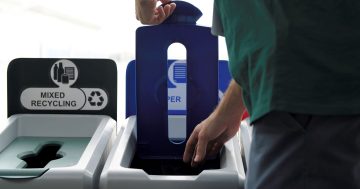
The Tasmanian Government’s new programs intend to reduce waste and improve recycling. Photo: Parliament of Tasmania.
The Tasmanian Government has established a new Waste Innovation and Resource Recovery Fund to support major industry and sector-led projects that reduce waste, improve efficiency and create new products, employment and markets.
Tasmania’s Minister for Environment Madeleine Ogilvie said the fund was an important step in carrying out the state’s waste commitments and was part of the Levy Reinvestment Program.
“Levy reinvestment is delivering critical infrastructure and peak-industry partnerships to schools, regional support programs and community initiatives,” Ms Ogilvie said.
“We undertook an extensive process to put in place the right framework for Tasmania’s future — the Waste and Resource Recovery Act 2022.
The new fund, along with a general collaborative stance with the Waste and Resource Recovery Board, is aimed at driving innovation, creating new opportunities and underlining long-term economic resilience.
The move is intended to accelerate the state’s transition to a “circular economy”.
Waste and Resource Recovery board chair Pam Allan said: “As we enter the final year of the current Waste and Resource Recovery Strategy, our focus is to consolidate progress and accelerate delivery.
“The fund represents a major step forward, enabling industries and sectors to transform waste into high‑value products, new markets and strong regional jobs.”
A range of strategic priorities lies at the heart of the investment policy, including:
- School initiatives that build awareness, future skills and capability.
- Strengthening sector-wide innovation through Peak Industry Partnerships.
- Coordination of local solutions and regional capacity through regional waste organisations.
- Statewide education and behavioural campaigns delivered with ReThink Waste.
- High-Priority Infrastructure initiatives to improve recycling and recovery pathways.
- Community programs that practically reduce waste and improve resource recovery.
The board will also progress a set of forward-thinking programs to build capability and increase the pace of delivery across the system by formalising the state’s Reuse and Repair Strategy, expanding education pathways to support long-term sector capability and completing the next Waste and Resource Recovery Strategy 2026-31.