
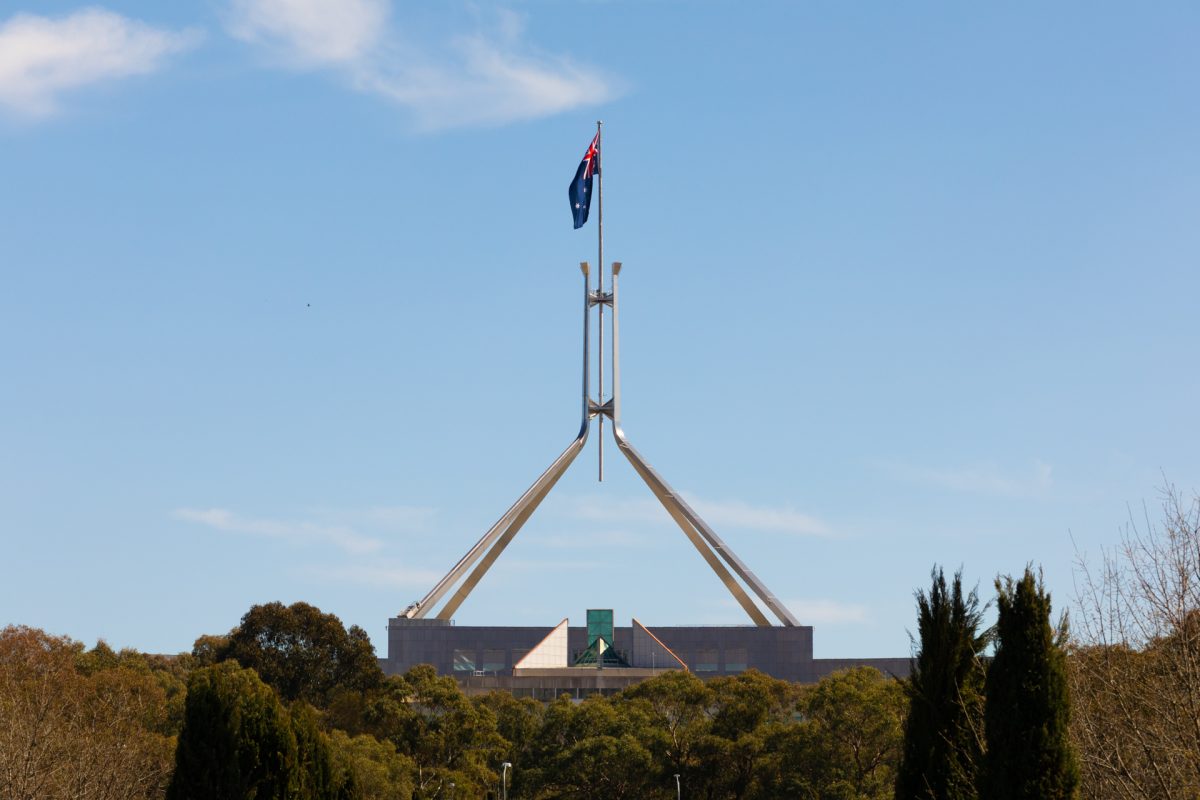
If governments don’t rethink their fiscal policy settings, budget deficits will be the norm for decades, new research says. Photo: Michelle Kroll.
An ageing population and governments bent on spending money without due consideration for future value will see Australia in greater debt than it has been for many decades.
There will also be two decades of continuous budget deficits if policies don’t change, according to just–released high-level academic research into fiscal sustainability.
Think tanks e61 and McKinnon have produced a report suggesting that by 2028, Australia will be on track for 20 consecutive years of combined state and federal deficits, because spending is consistently outstripping revenue.
The report Rising Pressures, Fading Discipline: A Review of Australia’s Fiscal Sustainability found the consolidated fiscal deficit, which combines federal, state and territory budgets, currently exceeds three per cent of GDP and is larger than in the years before the COVID-19 pandemic.
As a share of GDP, consolidated expenditure has increased from 34.7 per cent in the early 2000s to 38.2 per cent in 2024.
The biggest spending pressure is health, which has grown from 5.5 per cent of GDP in 1999 to 7.1 per cent today.
Meanwhile, education spending has stayed constant at around five per cent of GDP despite the population share of school age children shrinking.
E61 chief executive officer Michael Brennan said governments at all levels didn’t appear to be getting the policy settings right.
“Much of the recent growth in spending is explained by our ageing population which demands more labour-intensive services such as health, aged care and disability support,” he said.
“However, policymakers have chosen to increase spending on education and in-kind services such as childcare and the NDIS, often without a clear link to value-for-money outcomes.
“Over time, this will build pressure to raise more revenue, including from income tax, which is the workhorse of the Australian tax system.
“The income tax is by far the largest single source of tax revenue across all tiers of government. It funds federal programs but also indirectly underpins state services via tied grants.”
While it stresses there is no imminent debt crisis, the report notes that with renewed pressures ahead such as an ageing population and slow productivity growth, Australia’s fiscal options are narrowing.
Even if spending was maintained at its current share of GDP, the Federal Government will need to increase average income tax rates substantially over the next 10 years to achieve budget balance.
“Over the past two decades, Australia’s financial position has become increasingly fragile,” Mr Brennan said.
“Australian governments have been running a combined deficit every year since the Global Financial Crisis in 2008. Debt is higher after two global shocks and governments have struggled to rebuild fiscal buffers for the next one.
“With the tax system as it currently stands, we will be asking workers to pay a larger share of their income to fund a fiscal gap that has been building for two decades — and that’s before any new spending commitments are added to the ledger.”
Without tax reform, the report states, spending restraint will be needed to avoid burdening future generations with a fragile, inequitable and inefficient Australian economy.
Governments are spending unsustainably and left to its current path, it is unlikely that government debt will naturally decline.
Slower productivity growth is providing less revenue to finance new or expanded services, while spending continues to rise as the population ages.
The report states that while this ageing is unavoidable, the fiscal cost depends on policy decisions that are made now, making an increase in government debt likely.
Larger government debt, it says, implies that future generations must pay for some current government expenditure and all levels of government will be less able to support Australians if faced with a large external shock.
“Potential directions include a renewed focus on efficiency in state service delivery, curtailing cost pressures through greater means testing of in-kind transfers and, inevitably, hard choices about priorities,” Mr Brennan said.
Federal Government spending is a hot topic right now with interest rates on the rise.
New Opposition Leader Angus Taylor has requested a bipartisan taskforce to monitor government spending and find ways to cut waste.
Treasurer Jim Chalmers has denied the request.
The Treasurer has also hit back at former Reserve Bank of Australia governor Philip Lowe who said Labor’s handouts were contributing to inflation.
Dr Chalmers accused Dr Lowe of having a vendetta against the government for not reappointing him to the RBA.
Original Article published by Chris Johnson on Region Canberra.