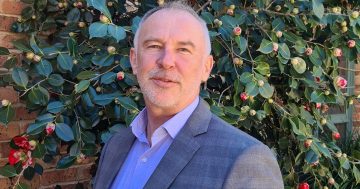
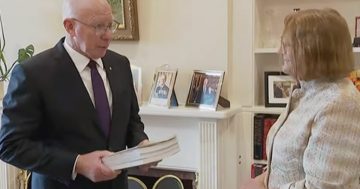
The South Australian Government of Premier Peter Malinauskas (above) has announced who will investigate the effects of AI. Photo: Peter Malinauskas, Facebook.
South Australia’s Government has appointed its royal commissioners who will lead the state’s nation-leading investigation into AI.
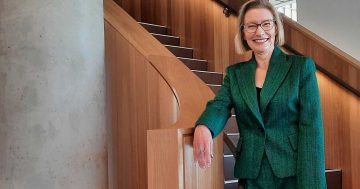
Three eminent Australians have been chosen for the role, including economist and former Federal Court judge Dr Iain Ross AO, who was appointed as chair on 1 October.
Dr Ross’s experience with workplace relations, labour markets and economics will prove vital to the commission’s work. He also has experience as a member of the RBA Monetary Policy Board, a former Assistant Secretary of the Australian Council of Trade Unions, chair of the Federal Net Zero Economy Authority and president of the Fair Work Commission.
The Royal Commission into Artificial Intelligence will be a broad, evidence-based inquiry into the opportunities, both economic and societal, relating to AI, and the ways the state may harness it safely and for the public good.
To this end, Professor Christopher Manning has also been appointed, bringing expertise in technology policy, innovation, machine learning and computer science.
Professor Manning is a linguist and computer scientist who has worked between the US and Australia for more than 30 years. He co-founded Stanford University’s Institute for Human-Centred Artificial Intelligence and is one of the world’s most cited researchers in the field of natural language processing.
The royal commission will also examine AI’s implications across sectors including education, employment, regulation, community life and public service by drawing on domestic and international evidence.
The third major appointee announced is inaugural CEO of the Tech Council of Australia, Kate Pounder, a technology policy expert and senior executive who has worked with OpenAI.
She is also co-founder of economics advisory firm AlphaBeta, chair of the board of RNA Australia and a board member of Essential Energy.
Much of the commission’s work will be in hearing evidence, considering key research and emerging developments, and engaging with broad parts of the community.
This will also mean taking in views from local, national and international businesses, unions, industry bodies, technology developers, academics, infrastructure experts, teachers, students and everyday South Australians.
This broad survey of the population will include community forums, roundtables, stakeholder consultations and public submissions.
The commission is expected to hand down its final report to the State Government in mid-2027.