
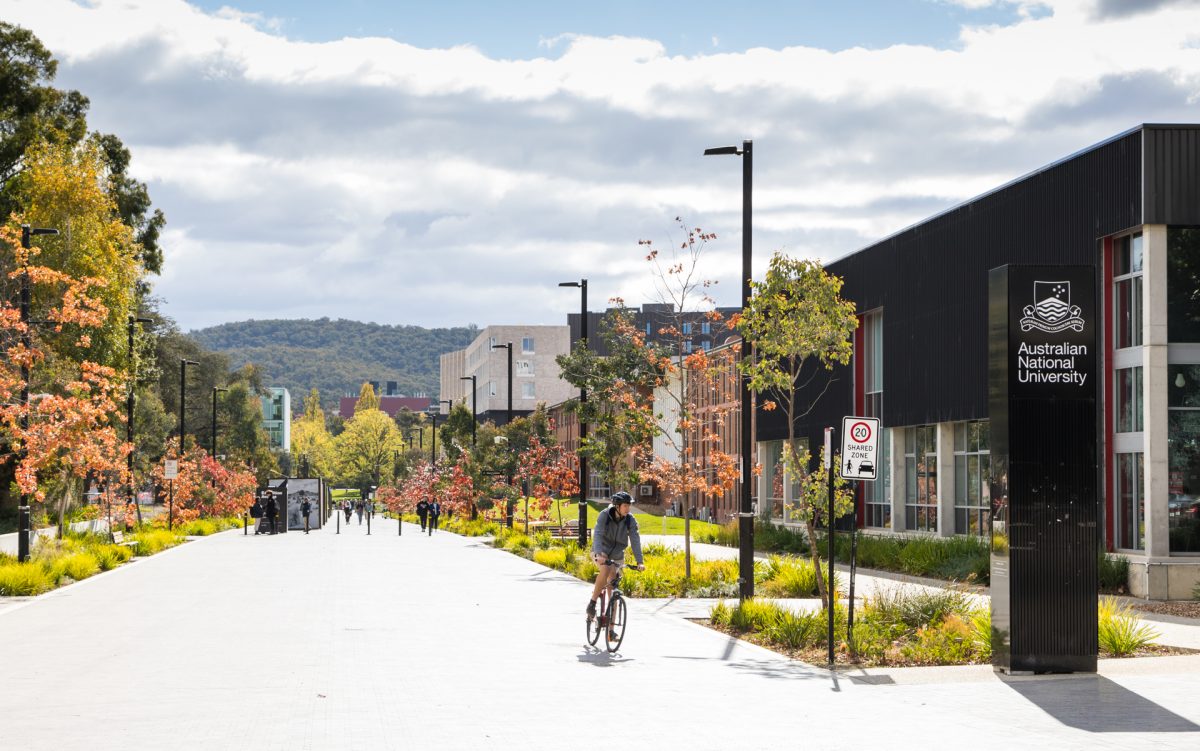
Australia’s universities are being governed as though they are big corporations, with less focus on public education, an inquiry has found. Photo: Michelle Kroll.
Australia’s universities should be far less corporatised and more transparent, and they must reshape their governing bodies to ensure public education and research are their highest priorities.
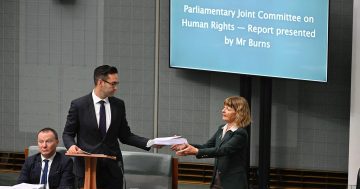
So says a Senate inquiry into the quality of university governance, in its final report handed down this week (11 December).
“It is painstakingly clear that governance failures at our universities have let staff, students and the public down,” committee chair Labor Senator Marielle Smith said.
“Universities are public institutions, established for the public good, and their governance standards must reflect this.”
The Senate’s Education and Employment Legislation Committee has listed eight recommendations for sweeping changes at Australia’s universities, including changes to Commonwealth legislation and that states and territories shake-up their laws as well in order to enforce improvements.
Other recommendations include a call for universities to be made more open about how many casual staff they have teaching students, and for academic boards to monitor courses and their staffing resources to ensure education is prioritised over profits.
The report also wants the Tertiary Education Quality and Standards Agency to be given more teeth; including for it to develop and monitor expectations over the governing and reporting of internal quality assurance.
This would include ratios of continuing versus casual staff, experience of teaching staff including PhD candidates and subject coordinators.
The inquiry’s interim report, released in September, had already recommended capping vice chancellors’ salaries and enforcing disclosure of how much universities are spending on external consultants.
The Senate inquiry ran for almost a year, held five public hearings and received more than 300 submissions.
A common theme of “degrees as commodities”, “students as consumers” and “research oriented towards industry needs” was presented as evidence to the committee.
“The growing corporatisation of Australia’s universities – and its impact on corporate and academic governance, employment practices, and the quality of education provided to students – was the subject of multiple submissions to the inquiry,” its final report states.
The National Tertiary Education Union has given its full backing to the final report and its recommendations, with its national president Alison Barnes describing it as a “watershed moment” for the nation’s public universities.
“We now have a clear blueprint to fix burning crises like corporatisation, casualisation and wage theft,” Dr Barnes said.
ACT independent Senator David Pocock, who sat on the inquiry, expressed his support for its eight recommendations, but also submitted a further 17 recommendations included in the report’s additional comments.
He said there should be a push for even greater ambitious reform in how Australia’s universities are governed.
Among Senator Pocock’s recommendations were specific reform measures for the Australian National University, as the only one governed by Commonwealth legislation, including support for continuing the community-led work of the ANU Governance Project.
“We have a unique opportunity to turn what has been an extremely difficult period for our national university into one of growth, success and sector-leadership on genuine consultation and innovative, improved governance models,” Senator Pocock said.
“My hope is that the work of the committee, and all those who have contributed to it, can help chart a path back from a corporatised, broken model to rebuilding the kind of higher education system Australians need, want and deserve…
“Australian universities are home to some of our best and brightest minds and people who have dedicated their whole lives to learning, teaching and furthering the public good.
“We need to better value and invest in them and in the next generation of students.”
The Greens too have submitted a list of 16 further recommendations, including an immediate reversal of the Jobs-Ready Graduates package and its rising fees while reducing funding structure.
“While the report is a scathing indictment on the corporatisation of universities and the severity of the crisis at hand, it falls short of providing remedies that match the systemic overhaul needed to end the era of managerial bloat and unaccountable opaque governance,” Greens deputy leader Mehreen Faruqi said.
“The corporate university has utterly failed its communities. It is high time we return to higher education as a public good, not a market for profit-seeking firms and austerity-obsessed executives. Our universities must be institutions grounded in equity, democracy, accountability, and transparency, empowered to pursue research and education in the public interest.
“The failures of governance in universities go hand in hand with decades of underfunding by governments, most viciously exemplified by the fee hikes and funding cuts of the JRG scheme, which have been widely condemned and yet still not been reversed by the Labor government.”
Original Article published by Chris Johnson on Region Canberra.