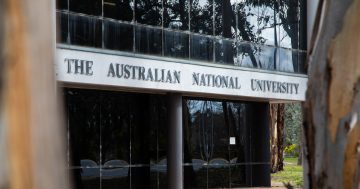
Audit report finds Renew ANU unjustified. Photo: Michelle Kroll.
The controversial and now-abandoned Renew ANU cost-saving and restructuring program saved just $74.8 million but came with a bill of $35.9 million – $34.7 million in redundancies and $1.2 million for advice from the Nous consultancy.
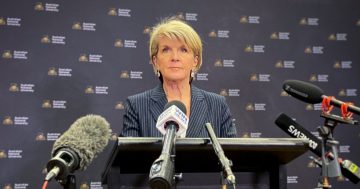
An Australian National Audit Office report has called into question the need for, justification for and outcomes of Renew ANU, which sparked a university revolt and led to the downfall of the Vice-Chancellor, Genevieve Bell, the Chancellor, Julie Bishop, and members of the ANU Council.
It said that despite the claimed dire state of the ANU finances, the university achieved a net operating result of $116.3 million in 2025.
The audit found that the council approved the $250 million-a-year savings target in 2024 without sufficient understanding of the university’s financial problems, the options available, or the implementation risks.
It embarked on the program of redundancies and cuts without clear evidence that it was needed, achievable, urgently required, or likely to have the intended impact, and should have considered additional information, options and perspectives.
These included alternative ways to address identified financial problems across the university’s balance sheet, such as using one or more of revenue measures, borrowing, or the use of investment assets and/or investment income, in combination with savings efforts, to allow for a longer transition timeframe.
The report said that ANU’s long-term sustainability did require active management, but it was not in immediate financial crisis, which was the justification for Renew ANU.
“ANU still shows strong overall financial health on measures like audited net operating results, credit ratings and net assets,” it said.
“However, a trend of declining average five-year surpluses raises questions about whether the current financial model is sustainable over the longer term.”
The audit found Renew ANU had delivered some savings, but with significant risks.
As of February 2026, the program had cost $35.9 million against reported annual salary savings of $74.8 million, and major risks remained – particularly around staff impacts and reliance on future growth in international student numbers, which had historically taken longer than planned.
The audit made three recommendations, all of which ANU agreed to.
It said any future proposals involving major financial or organisational change should go to the council, supported by a documented, evidence-based business case that includes risks to and impacts on financial sustainability and people, and urges the council to be provided with better and understandable financial advice.
ACT Senator David Pocock said the report justified the community’s outrage at the manufactured financial crisis and highlighted how much anguish could have been avoided with better leadership and governance by the council and the former Chancellor and Vice-Chancellor.
“It is hard to see how this saving justifies the expense, uncertainty and ongoing reputational and cultural damage the ANU has suffered as a result of this ill-conceived, and as it is now confirmed, unjustified Renew ANU program,” he said.
“The ANAO’s report highlights a swathe of failings, finding that Renew ANU was approved without a clear understanding of the problem, the options available, or the implementation risks.”
It underscored the critical importance of reforming governance at our national university to ensure a governance failure like this was never repeated.
In its formal response to the audit, the ANU Council acknowledged that documentation provided to it could have more clearly articulated the problem, options, risks and impacts, but rejected the characterisation that the Renew ANU savings target was approved without an understanding of the nature, scale or urgency of the financial challenge.
“Financial pressures developed over an extended period, reflecting structural changes in the university’s revenue and cost base, including sustained declines in government funding and volatility in student revenue, as noted in the ANAO report,” it said.
“These pressures were identified as early as 2023, with increasing scrutiny of cash flow, revenue sustainability and the cost base. By mid-2024, the scale and trajectory of the problem were clear.”
ANU Council committed to actions that would further support ANU’s financial sustainability and governance.
Original Article published by Ian Bushnell on Region Canberra.