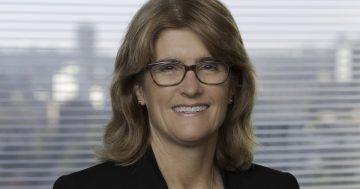
RBA Governor Michele Bullock said the central bank would do what was necessary to bring down inflation. Photo: RBA.
The official interest rate is at its highest since 2011, after the Reserve Bank lifted the cash rate target by 25 basis points to 4.6 per cent.
It will add about $120 a month to the average home loan, bringing this year’s increases to about $480.
The RBA Board voted unanimously on Tuesday (29 September) to increase the rate for a fourth time this year and is prepared to do so again to get inflation under control.
“The board remains focused on ensuring that high inflation does not become embedded,” its statement said.
“To achieve this, growth in aggregate demand needs to remain subdued for a period to reduce capacity pressures and bring inflation back to target.
“The three increases in the cash rate target since the beginning of the year have tightened financial conditions and the economy appears to be slowing.
“But inflation is still too high and the board judged that, in light of recent developments, a further tightening in financial conditions is warranted to support a return of inflation to target in a reasonable period.
“The board will continue to do what it considers necessary to bring inflation sustainably back to target, including increasing the cash rate target further if needed.”
Global uncertainty, including the Middle East war and AI-related demands, were contributing factors to the RBA’s decision.
Treasurer Jim Chalmers homed in on that point and said Australians had been placed under pressure and were paying a hefty price because of the conflict overseas.
“The Reserve Bank statement makes it really clear that we have an inflation challenge in our economy, which is made worse by the war in the Middle East,” he said.
“The statement makes it abundantly clear that one of the main drivers of inflation in our economy is a conflict on the other side of the world, pushing up global oil prices and being felt right around our economy and indeed right around the world.
“The war in the Middle East is not the only factor when it comes to our inflation challenge, but it is a very, very big factor.
“Australians are paying a very hefty price for that war in the Middle East. And today that price became a bit steeper with this decision from the independent Reserve Bank.”
Opposition Leader Angus Taylor described the outcome as terrible for the nation.
He said Labor had worsened the pressure on Australians and increased inflation through excessive government spending.
“This is a dark day, a tough day for hardworking Australian families with a mortgage, those in small businesses, but more particularly households who have got a mortgage who are going to pay more as a result of this $1400 a year in additional costs,” Mr Taylor said.
“We know that this is a government that is spending too much. We also know it’s an economy that is not working and that drives up inflation and it drives up interest rates.
“Labor’s spending has been much faster than the overall economy. Households and families are having to tighten their belts, but the government hasn’t tightened its belt and that drives up inflation and interest rates, and all Australians are paying a price for that.”
Some Coalition members are now calling for Labor to “redo” its federal budget.
RBA Governor Michele Bullock spoke to the media about an hour after the board’s decision was announced and said the central bank would continue to do what was required to rein in inflation.
She said higher interest rates were needed to ensure inflation returned to the cash target, but the hikes so far this year may be sufficient.
“We raised interest rates three times earlier in the year. A lot of that effect is still to flow through. This is one more,” Ms Bullock said.
“What we are predicting here is that this will be restrictive enough. Those interest rate increases bring things down …
“Now, I know this decision is difficult for households with a mortgage and businesses with loans, but high inflation hurts all Australians, especially the most vulnerable.
“Every household has seen how the price of everything has gone up in recent years. Pay packets don’t go as far as they used to, and that’s why we need to stop this high inflation.”
Original Article published by Chris Johnson on Region Canberra.