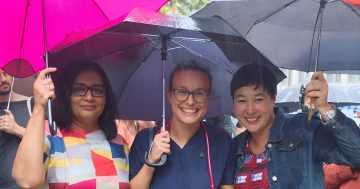
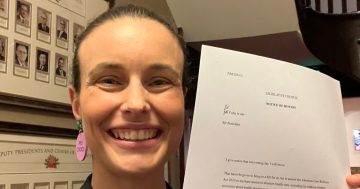
Dr Amanda Cohn has campaigned strongly against the bill. Photo: Amanda Cohn Facebook.
A proposed NSW law to ban sex-selective abortion is being driven by “racist and anti-immigration rhetoric”, according to Albury MP Dr Amanda Cohn.
Sex-selective abortion refers to terminating a pregnancy because of the sex of the foetus — typically after an ultrasound reveals it is female. The practice has been documented in some overseas countries, including China and India, where cultural preferences for sons have historically contributed to skewed birth ratios in parts of the population.
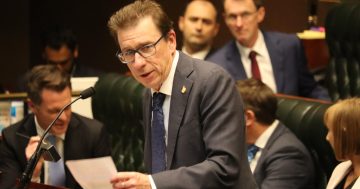
Libertarian MP John Ruddick has introduced a bill to NSW Parliament seeking to criminalise the practice, with penalties of up to five years’ imprisonment or up to 200 penalty units (about $22,000) for a medical practitioner who performs an abortion primarily because of the sex of the foetus. The pregnant woman would not be subject to criminal penalties.
Concerns bill may re-criminalise abortion
Dr Cohn, a former GP in Albury, has campaigned against the bill, arguing there is little evidence that sex-selective abortion occurs in Australia in any meaningful way.
“The suggestion that it is being sought by women from particular ethnic and cultural backgrounds is fed by racist and anti-immigration rhetoric,” she wrote in an online opinion article.
The Albury MP said the bill could be a backdoor attempt to re-criminalise abortion, which was decriminalised in NSW in 2019.
“The large fines and jail time proposed by this bill are so severe, and the offence is so poorly defined, that its effect would be for some health professionals to stop providing abortion altogether due to the uncertainty and risk. I suspect that’s the real goal of the bill,” she told Region.
“In US states with laws like this, the proportion of babies born of each sex is no different, but patients are racially profiled, have to be interrogated by doctors, and services are harder to access altogether.”
MP defends bill
Mr Ruddick rejected these claims.
“The entire purpose of this bill is to save lives. Research from Edith Cowan University show that sex-selective abortion predominately occurs in Chinese, Indian and Vietnamese communities with the second or third child if the first child is not a boy,” he said.
He says his bill will elevate existing NSW Health guidelines into legislation with significant penalties for medical practitioners who arrange for, permit, perform, or assist with a sex-selective abortion service.
Mr Ruddick also observed that when the Rev Hon. Fred Nile MLC moved an amendment to the Reproductive Health Care Reform Bill 2019 prohibiting sex-selection abortion, the then Shadow-Treasurer Daniel Moohkey said in contribution to the debate: “I do not lay the charge of racism against people who are making this argument”.
How new laws would be enforced
Sex-selective abortion laws are widely regarded as difficult to enforce, as proving the reason for a pregnancy termination is complex. Mr Ruddick said enforcement would rely partly on clinical reporting processes.
“In earlier years, the ‘Notification of termination of pregnancy’ webform had a question regarding whether the abortion was for a sex-selective purpose following a conversation with the mother by the health practitioner,” he said.
“That question should be restored to the webform and health practitioners should have this conversation with their patients.
“This isn’t a foolproof method but in the NSW Health 2020 Review of termination of pregnancy for the purpose of sex selection in NSW the data captured regarding sex-selection came from the results by health practitioners into this webform. This method of detection will save some lives.”
Dr Cohn said she saw a broader political agenda behind the bill.
“The same people driving this bill in NSW are pushing a bill in Queensland to restrict access to medical abortion tablets that have been safely prescribed for years, and another in South Australia proposing severe restrictions on abortion after 25 weeks. They are clutching at any opportunity to wind back our hard-fought rights,” she said.
What happens next?
Mr Ruddick’s bill is expected to be debated in the NSW Upper House in early June, and if it passes will proceed to the Lower House, where it would need support to become law.
The Greens will oppose the bill, while Labor and Coalition parties are expected to allow a conscience vote.
Original Article published by Oliver Jacques on Region Riverina.