

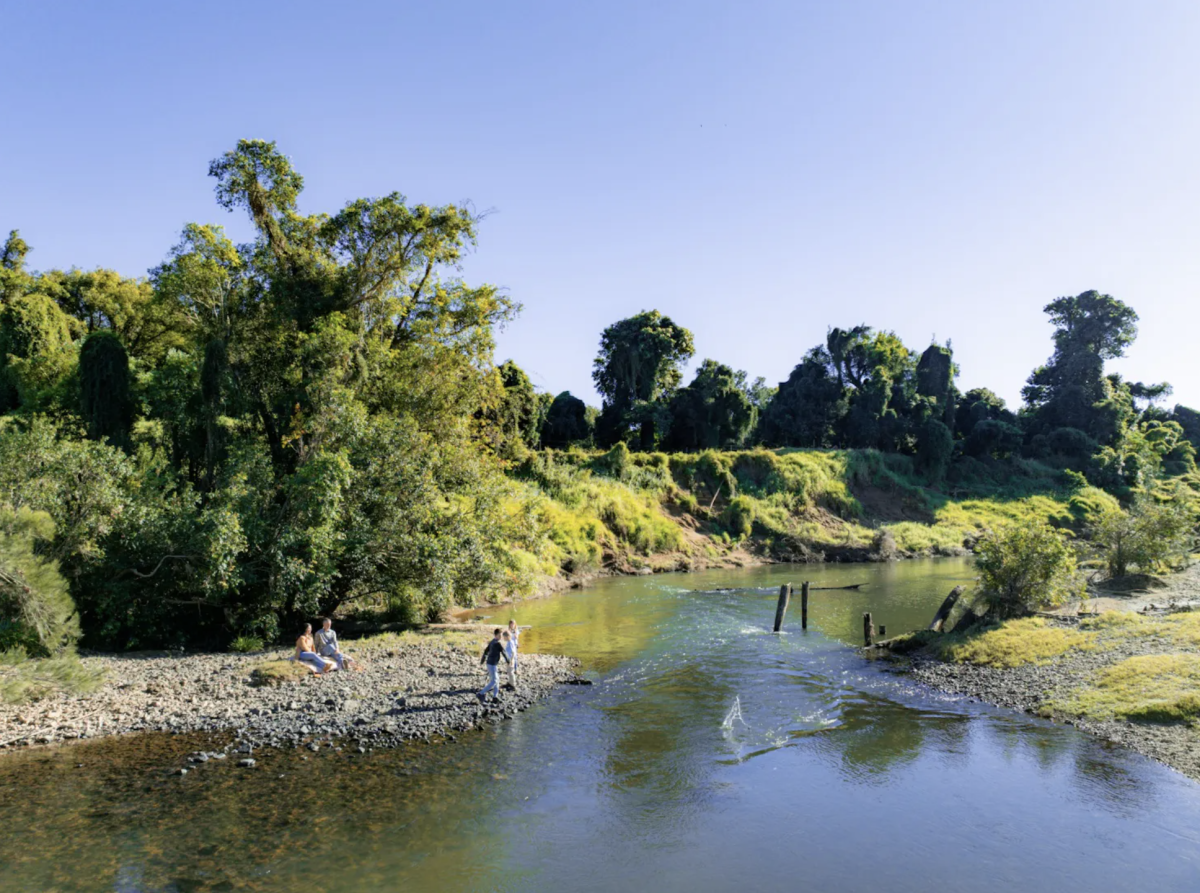
The Queensland Government has partnered with community groups and the Federal Government to protect the Mary River and its catchments. Photo: Visit Sunshine Coast.
A joint funding agreement between the Queensland Crisafulli Government and the Albanese Federal Government will boost critical habitats and threatened species in Queensland’s Mary River.
The strategy will both protect critical habitats for threatened species and improve water quality in an effort to bolster the resilience of the Mary River and its catchments.
The Mary River Integrated Project (MRIP) will be aided by the Mary River Catchment Coordination Committee (MRCCC), which has been given more than $2 million in funding.
MRCCC received more than $550,000 from the State and Federal governments under Disaster Recovery Funding Arrangements (DRFA) to extend and improve the key habitat areas for species including the Mary River turtle, the white-throated snapping turtle, the Australian lungfish and the Mary River cod.
An additional $1.5 million has been awarded through the Queensland Government’s $5.5 million Reef Place-Based Integrated Projects scheme, which focuses on improving water quality and reducing pollution through a localised approach.
These projects, aimed at environmental rehabilitation and water quality, are being delivered in partnership with Kabi Kabi Traditional Owners, Jinibara People Aboriginal Corporation, Griffith University, Tiaro Landcare, Burnett Mary Regional Group, and local councils.
Measures to help the Mary River and catchments include:
- Rehabilitating aquatic plant beds, a vital part of the Australian lungfish’s lifecycle.
- Installing submerged timber structures to support Mary River cod spawning.
- Protecting turtle nesting banks, controlling predators and installing turtle hatchling structures.
- Collaborating with Seqwater, James Cook University and local farmers and graziers to improve water quality and farming practices.
- The Jinibara Water Quality Monitoring Program, which builds capacity for Jinibara rangers to monitor water quality and catchment management.
- Riparian Zone Management — Restoring and protecting Mary River banks in partnership with community groups and Noosa Landcare to enhance the ecosystem’s health.
- Partnering with HQ Plantations, dairy farmers, and ANU Enterprise for the Unsealed Road Sediment Management, which reduces sediment runoff from rural roads and laneways.
“The Albanese Government is working closely with the Crisafulli Government to ensure that recovery efforts towards the Mary River catchments result in the improvement of water quality and habitats occupied by marine wildlife,” Federal Minister for Emergency Management Kristy McBain said.
Queensland’s Minister for the Environment and Tourism Andrew Powell said community initiatives such as these were vital to protecting the Great Barrier Reef, which was affected by runoff.
“We are protecting our iconic Great Barrier Reef through genuine environmental action, which includes stakeholder partnerships to reduce runoff and improve water quality,” Mr Powell said.
“This program tackles nutrient and sediment pollution in the Upper and Lower Mary River through five targeted sub-projects.
“In the Mary River catchment, our partnerships are boosting conservation outcomes for threatened species of fish and turtles.”
Mr Powell said MRCCC was a particularly trusted body, having more than 25 years of conservation experience.
“We’re building on the MRCCC’s successes, and these projects showcase the power of partnerships to deliver catchment-wide benefits for the environment and the community,” he said.