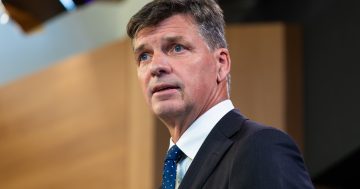
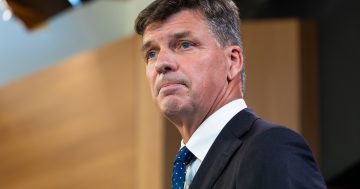
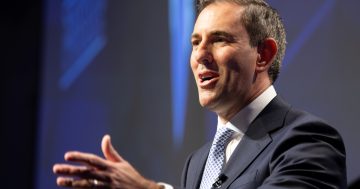
Treasurer Jim Chalmers has conceded the government has taken a political hit over last week’s Federal Budget. Photo: Screenshot.
Labor is dismissing the latest polling showing last week’s Federal Budget to be the least popular with Australian voters since 1993.
A national Newspoll conducted between 14 and 17 May from a sample of 1252 has 52 per cent of respondents saying they believe they will be worse off as a result of the budget.
The survey also showed Labor’s primary vote steady at 31 per cent, One Nation up three points to 27 per cent since last month’s poll, the Coalition down one point to 20 per cent, and the Greens also down one to 12 per cent.
According to the poll’s results and election flows from the last election, Labor would lead the Coalition by 54 to 46 if an election were held now.
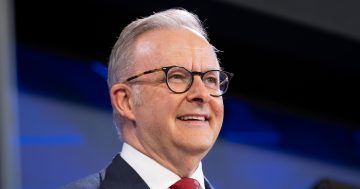
Anthony Albanese’s net approval was steady at -17, with 57 per cent dissatisfied and 40 per cent satisfied, while Angus Taylor’s net approval was up one point to -12 (48 per cent dissatisfied, 36 per cent satisfied).
The Prime Minister significantly led the Opposition Leader as who people thought would be the better PM, 46 to 38.
While the polling shows One Nation continuing to surge at the expense of the Coalition, it is a -5 net approval rating for Labor’s budget that has attracted most of the initial commentary.
Only 26 per cent of survey respondents agreed the budget would “make things fairer” and 47 per cent believed it would result in “driving a wedge” between generations.
Voters aged 50 to 64 returned at 59 per cent, saying they believed they would be worse off as a result of the budget, whereas 42 per cent of respondents aged 18 to 34 also believed they would be worse off.
Asked about the polling backlash on Monday (18 May), the Prime Minister said the budget’s changes to capital gains tax and negative gearing would make it easier for younger people to buy their own home without unfair competition from investors.
“My job is to put in place good policies to make a difference for people, that’s what we’re doing across the board,” Mr Albanese said.
“And my government continues to focus on building more homes for Australians. It’s the right thing to do. It’s what the country needs, and what’s more, it’s what has always been opposed by those opposite.”
Treasurer Jim Chalmers went even further and blamed an “unhinged scare campaign” for the backlash against the tax changes.
He accepted the government was taking a “political hit”, but said it was making the hard decisions for the good of the country.
“It would surprise me more if we got some sort of bounce in the polls from the difficult decisions that we’re talking about in the budget,” he said.
“The budget was full of hard decisions and not handouts. And we don’t hand down budgets expecting to make some kind of big, near-term positive difference to an opinion poll five days later.
“We make these decisions to make a big positive difference to the housing market over time, particularly for young Australians who’ve been locked out for too long.”
Two other national polls, conducted about the same time and with similar sample sizes, have returned varying results.
The Resolve Poll from a sample of 1800, gave Labor 29 per cent of the primary vote (a drop of three points since last month), One Nation up two points to 24 per cent, and the Coalition steady at 23 per cent.
The Greens were also steady in the Resolve Poll at 12 per cent, with independents up one to 7 per cent and others remaining steady at 5 per cent.
Mr Albanese’s net approval slumped seven points to -22 in the latest Resolve Poll, with 56 per cent giving him a poor rating and 34 per cent a good rating.
Mr Taylor’s net approval was down seven points to +8, being 37 per cent saying good and 29 per cent poor.
Interestingly, the Resolve Poll also showed Mr Taylor leading Mr Albanese as preferred PM 33 to 30, with 37 per cent marking undecided.
The latest Freshwater Poll from a sample of 1384 voters gave Labor 29 per cent of the primary vote (down three points), One Nation up one to 26 per cent, Coalition up two to 25 per cent, and the Greens down one to 11 per cent.
Original Article published by Chris Johnson on Region Canberra.