The Department of the Prime Minister and Cabinet was one of three APS agencies found to be rejecting too many FoI requests. Photo: Michelle Kroll.
Anthony Albanese’s own government department is failing in its transparency and accountability obligations by rejecting freedom of information requests at an alarming rate, the Auditor-General has found.
A culture of “resistance and delay” has been found to be spreading across Commonwealth agencies and the Federal Parliament.
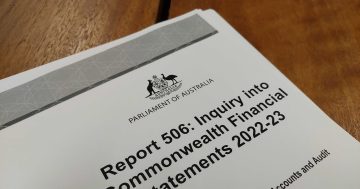
The Department of Prime Minister and Cabinet was one of three Australian Public Service agencies to be severely criticised over their approaches to FoI, following the Australian National Audit Office’s (ANAO) performance audit.
The other departments to be reprimanded in the newly published audit report are Treasury and the Department of Infrastructure, Transport, Regional Development, Communications, Sport and the Arts.
The report has found that across the three departments, an alarming 79 per cent of FoI applications were refused either in full or in part, and that 57 per cent of applications resulted in no documents being released to the applicants.
In 2024-25, more than 43,000 FoI applications were received by agencies and ministers, a 25 per cent increase on the year before.
The ANAO’s analysis focused on 1111 non‑personal information FoI requests across the three entities that were active at any time during 2024.
It found that the departments had little in the way of proper policies and procedures in place to meet their transparency obligations or to maintain FoI records.
Decision-making over requests was not consistent, transparent or accountable, and the pro-disclosure objectives of FoI laws were not being met.
“The three audited entities are unable to demonstrate that they have met the obligation to take all reasonable steps to find requested documents,” the report stated.
“Entities are not maintaining adequate records of the searches they undertake in response to FoI applications to assure completeness.
“Entity records also do not consistently support decisions to refuse access because records could not be located or do not exist.”
The audit identified multiple failures, including the fact that the departments were not demonstrably meeting their obligations to assist applicants in making FoI requests or locating requested documents.
Other failures included Incomplete publication of released documents on public disclosure logs; statutory decision-making and disclosure timeframes not being consistently met; and inconsistent and poorly evidenced decision-making processes and record keeping.
“The Freedom of Information Act 1982 (FOI Act) is the legislative basis for open government in Australia at the Commonwealth level,” the report states.
“Each person has legally enforceable rights under and subject to the FOI Act to obtain access to government documents and to apply for the amendment or annotation of records of personal information held by government.
“The FOI system is recognised as a critical pillar of open government and robust democracy in Australia. Australian Government information is a national resource that should be available for community access and use … Decision-making in the three audited entities was not consistently transparent, accountable and pro-disclosure.”
The Office of the Information Commissioner (OAIC) reported that, across the whole of government in 2024-2025, 62 per cent of Information Commissioner decisions were set aside.
The OAIC issued a statement welcoming the ANAO’s report as complementary to its own work.
“Accordingly, the ANAO’s report will be reviewed and considered as a vital tool in shaping the OAIC’s regulatory strategy, guidance, priorities, posture, procedures and capabilities,” it said.
The Centre for Public Integrity has seized on the report as evidence that the FoI system is failing the public.
“This report, from the independent office of the Auditor-General, must be a wake-up call for government to start taking FoI reform seriously, and commission the independent review that experts and civil society have long been calling for,” executive director Catherine Williams said.
The centre’s research director, Gabrielle Appleby, called on the government to implement enforceable reforms that restore transparency, accountability and public trust, and ensure Australia’s integrity institutions are properly resourced to continue providing independent scrutiny of government administration.
“When the Auditor-General found that not one of the audited departments had appropriate policies and procedures in place, when less than half of FoI applicants receiving any material and more than half of Information Commissioner reviews result in further information being released, and when the Auditor-General is making recommendations that the government comply with the law, it is clear the system is not delivering for democracy or the rule of law.” Professor Appleby said.
Following a public backlash, Labor dumped its controversial plans in March to make FoI applications even harder by charging fees and reducing transparency even further.
Original Article published by Chris Johnson on Region Canberra.