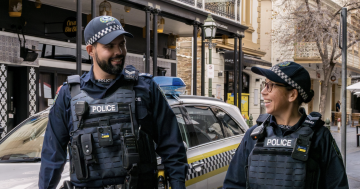
Both the Crime Commission and NSW Police Force have greater powers under the new laws. Photo: David Gyung.
New South Wales Parliament recently passed the Crimes and Other Legislation Amendment (Further Organised Crime Reforms) Bill 2026, approving new police powers to fight organised crime.
Under the new laws, the Crime Commission can compel suspects to hand over digital devices immediately to prevent evidence destruction.
Those who refuse to comply with this order could face a four-year jail sentence, a $4400 fine, or both, and may be found in contempt.
The reforms also double maximum penalties to 10 years for failing to comply with Crime Commission orders, including refusing to answer questions, obstructing investigations or giving false or misleading evidence.
Police, too, have had their powers expanded. They can now more quickly access suspects’ phones, with Digital Evidence Access Orders empowering them to compel access to assist with investigations into organised crime such as the illicit drug or tobacco trade, firebombings and public shootings.
Now police also have access to unredacted images from public toll road cameras if they are investigating serious indictable offences or missing persons cases.
Initially, these powers will cover images on the Sydney Harbour Bridge and in the Sydney Harbour Tunnel, before expansion to other public roads.
Additionally, the introduction of Interim Serious Crime Prevention Orders means police can immediately restrict the activities of high-risk suspects while officers apply to the court for a final order.
These restrictions can limit who someone can associate with and where they may go, and place conditions on their access to the internet, devices and technological platforms.
“NSW police are relentless. With more than 800 arrests and 2100 charges under their belt as part of Taskforce Falcon, they will stop at nothing to keep our communities safe,” Minister for Police and Counter-terrorism Yasmin Catley said.
“Organised criminals are coordinated, and these extraordinary powers will only build on the police’s efforts to arrest, disrupt and dismantle organised criminal networks and put them before the courts.”
The new powers are coupled with $15 million to help crack encrypted devices and digital platforms linked to organised crime. More than $108 million in the 2026-27 budget is for technology upgrades.
Consequences and penalties have been strengthened, too, with tougher punishment for those who plan or facilitate organised crime murders.
Attorney-General Michael Daley said: ”This important legislation gives law enforcement what they need to hold organised criminals to account and ensures they face tougher consequences for unacceptable violence.
“We are making sure our laws keep pace with the evolving tactics used by organised criminals and their associates to plan, facilitate and evade detection for heinous crimes.”
The toughened legislation also expands the existing Serious Children’s Indictable Offence (SCIO) so that children who carry out shootings or firebombings will now be faced with maximum adult penalties.
Four additional SCIOs now bring to 55 the number of serious offences that require children to be tried or sentenced as adults.
Now criminals who are involved in planning a murder will face penalties of up to life imprisonment even if they don’t do the killing.
Transport for NSW now has the power to securely share driver licence and photo card images through a centralised Commonwealth database to curb fraud.