The 2025 National Drug Strategy Household Survey also found e-cigarette use among young adults had declined, without a corresponding rise in cigarette smoking. Photo: Michelle Kroll.
More than nine in 10 Australians now live smoke-free, marking a dramatic turnaround from the start of the century when one in five adults smoked every day.
The latest national figures show daily smoking has fallen to its lowest level on record, with researchers describing the decline as proof that decades of tobacco controls, public health campaigns and changing community attitudes have worked.
But the success comes with a warning. Cigarettes may be disappearing from everyday Australian life, but nicotine addiction has not gone with them. Health experts say illicit tobacco, vaping and emerging nicotine products are reshaping the next phase of the fight.
The findings come from the 2025 National Drug Strategy Household Survey, Australia’s largest and longest-running national survey of smoking, vaping and other drug use. More than 17,500 people aged 14 and over took part.
Daily smoking among Australians aged 14 and over fell from 8.3 per cent in 2022-23 to 5.6 per cent in 2025. Among adults, the rate has dropped from 20.1 per cent in 2001 to just 5.8 per cent.
The survey also found e-cigarette use among young adults had declined, without a corresponding rise in cigarette smoking.
For researchers at the Australian National University (ANU), the figures represent one of Australia’s most significant public health achievements.
Distinguished Professor Emily Banks, from the ANU’s National Centre for Epidemiology and Population Health, said the results showed smoking had shifted from a widespread habit to something most Australians rejected.
“The results show that more than 90 per cent of people in Australia do not smoke, and we know that 90 per cent of people who smoke wish they’d never started, so virtually everyone wants to live smoke-free,” Professor Banks said.
Behind the national milestone, however, remains a significant human toll.
Smoking still kills dozens of Australians each day, with long-term smokers facing a high risk of dying from tobacco-related disease if they do not quit.
“Smoking kills around 66 people in Australia every day. That is 66 families and loved ones burying someone needlessly, day in, day out,” Professor Banks said.
The latest figures suggest Australia’s long-running approach to tobacco control — including advertising bans, plain packaging, higher taxes, smoke-free public spaces and support to quit — has steadily changed both behaviour and social attitudes.
Yet the survey also showed the market for tobacco and nicotine products was becoming more difficult to regulate.
Around one in three people who smoke reported recently using illicit tobacco, while governments continue to confront illegal vapes, nicotine pouches and other products capable of creating new forms of dependence.
The changing picture is also evident in Canberra.
A 2024 ACT Health report found cigarette smoking among secondary school students had continued its decades-long decline, with about 1.6 per cent identifying as current smokers in 2022-23, compared with 20.4 per cent in 1996.
But vaping had moved sharply in the opposite direction.
The proportion of ACT adults who had ever used e-cigarettes rose from 6.4 per cent in 2015 to 20.1 per cent in 2022. Among people aged 18 to 24, almost two-thirds had tried an e-cigarette by 2022.
The same age group was also significantly more likely to smoke daily or occasionally than older Canberrans, according to the report.
Those trends formed part of the background to changes passed by the ACT Legislative Assembly in December 2025, which explicitly prohibited the sale of illicit tobacco and strengthened inspectors’ powers to enter retail premises, seize prohibited products and issue fines.
The laws were intended to give regulators more tools to respond to a market increasingly shaped by illegal tobacco and vaping products rather than conventional cigarettes alone.
Associate Professor Raglan Maddox, also from the ANU’s National Centre for Epidemiology and Population Health, said the national decline was worth celebrating, but averages did not reveal whether every community was benefiting equally.
“National progress is important, but national averages do not tell us whether that progress is being shared equitably,” Associate Professor Maddox said.
He said further reductions would depend on continued investment in Aboriginal and Torres Strait Islander community-led and culturally safe approaches, as well as stronger support for communities carrying a disproportionate burden of tobacco-related harm.
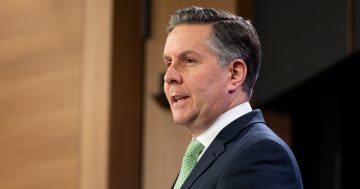
Federal Health Minister Mark Butler said the decline in smoking and vaping among young people suggested recent national reforms were beginning to have an effect.
“These results show our world-leading vaping reforms are making a difference, but we know there is still more work to be done to protect Australians from the harms of smoking and vaping,” Mr Butler said.
The Federal Government is also turning its attention to nicotine pouches, warning they risk creating another pathway to addiction among young people and promising continued enforcement against illegal sellers.
Original Article published by Naziya Alvi Rahman on Region Canberra.