
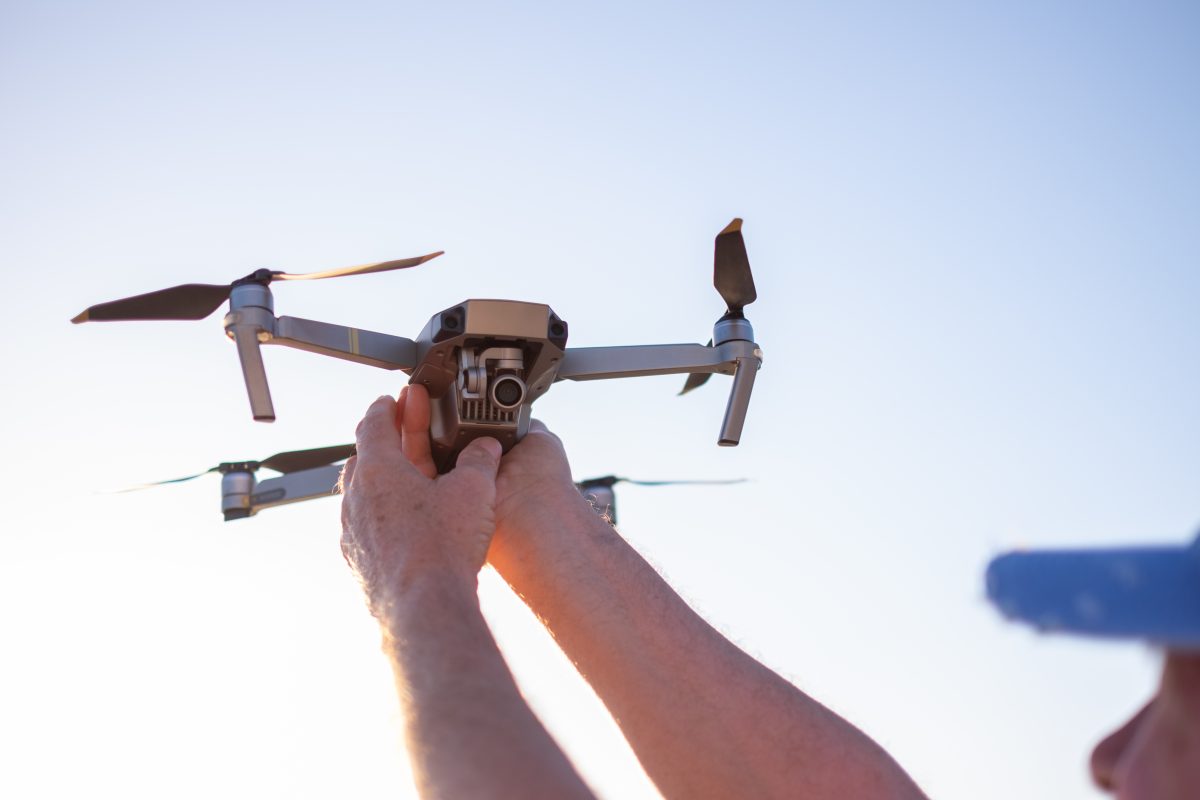
Drones will play a greater role in intelligence gathering and searches as the SES modernises. Photo: Luci Germa.
The South Australian State Emergency Services (SES) is strengthening its search-and-rescue abilities with the introduction of nine new drones.
The drones are part of the 2025-26 State Budget’s $2 million investment to modernise SES aerial reconnaissance, hazard assessment and intelligence gathering.
SES drones provide real-time aerial surveillance, thermal imaging for low-light operations and better access to hazardous locations without placing first responders at risk.
“Drone technology is rapidly evolving and the demand for their use in our operations continues to increase each year,” SES Chief Officer Kristy Phelps said.
“As an agency, we rely on volunteers to help protect our communities and help those in need.”
The new drones’ features include:
- Multiple high-resolution visual cameras
- Infrared thermal capability
- Integrated spotlights and loudspeakers for communication and visibility
- AI recognition of people and vehicles
- Mapping and terrain modelling for tracking and situational awareness.
Overall, the SES has about 50 drones across the state. Last year, its drones were deployed more than 500 times in support of emergency operations, most of which were to assist the police in searching for missing persons, a situation in which aerial intelligence can be invaluable.
Six of the new drones will be based in regional areas: Port Lincoln, Ceduna, Port Pirie, Quorn, Gawler and Kangaroo Island. The remaining three will be in Adelaide.
Aerial search capability is a focus of the SES in 2026, with a six-month microdrone trial planned to test 10 microdrones across six regional and four metropolitan SES units. Each drone weighs less than 250 grams and enables rapid deployment from response vehicles.
The trial locations for the microdrones are western Adelaide, Salisbury, Campbelltown, Noarlunga, Kingston, Berri, Kimba, Clare, Copper Coast and Kapunda.
Training for SES drone pilots with the new microdrones will begin in February, ensuring safe use of the technology and effective integration into operations.
“Drones are now an integral part of the SES’s search-and-rescue capability, and their technology has evolved significantly since we began using them in 2018,” SES Chief Remote Pilot Brad Flew said.
“However, drones often operate in incredibly challenging conditions and as they get older, they become more expensive to repair and their technology becomes outdated.
“These replacement units not only offer improved capabilities in terms of flight times and capturing images, but they also have more safety features to minimise the risk of an accident when flying.”