

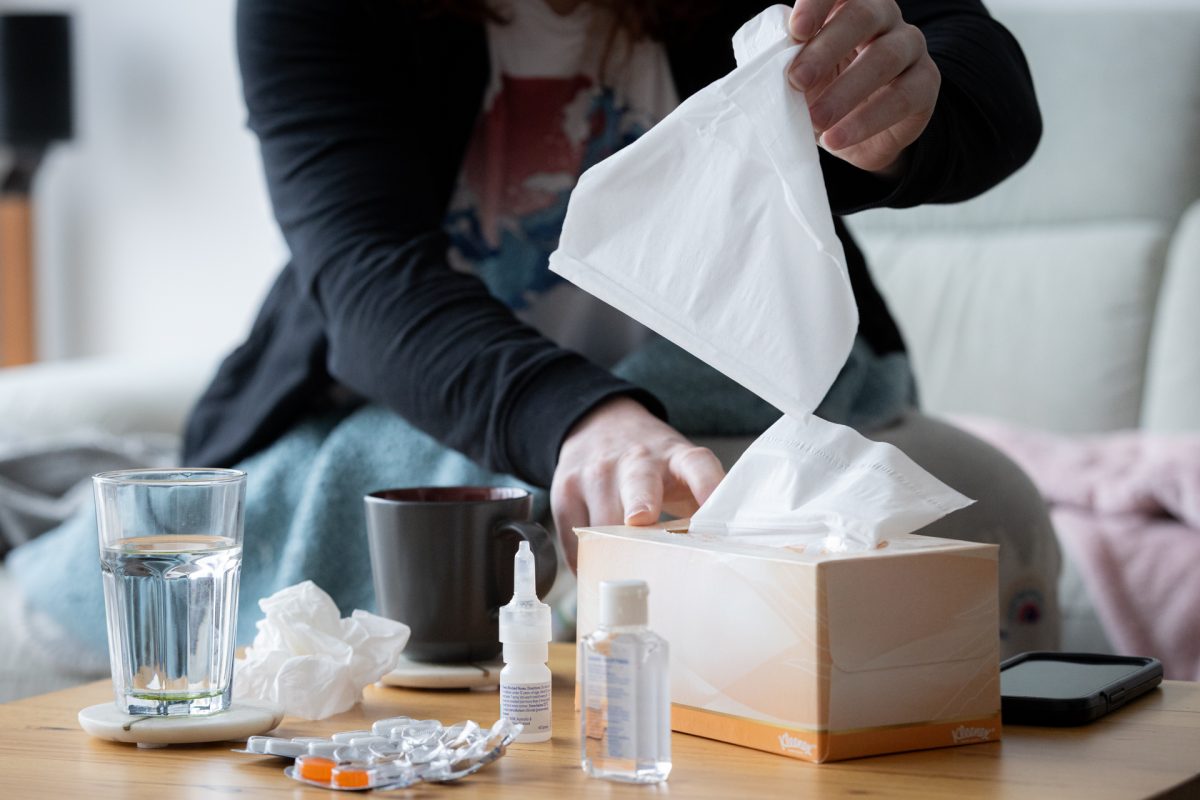
If you’re unlucky and end up with a dose of the cold or flu this winter, you can get help without leaving your house. Photo: Michelle Kroll.
You’ve woken up with the sniffles, your throat’s scratchy and your head’s throbbing – what do you do?
Are you the stoic type, determined to valiantly soldier on, head off to work and carry on with your usual activities, spreading love and germs everywhere you go?
Or are you more the hypochondriac type, convinced that every cough is a death rattle and you must immediately seek medical attention at the nearest emergency department?
Bulli Hospital and Urgent Care Centre nursing director Melissa Rees would much prefer you did neither.
She says there are plenty of healthcare options to get you through the winter months when there is traditionally a rise in respiratory illnesses.
“The best thing we would recommend is for people to stay at home, look after themselves and manage their symptoms,” she said.
“But if they feel that they need to seek medical attention, they can always contact Healthdirect and Healthdirect can talk them through their symptoms and make recommendations.
“Whether they should seek a medical review by going to their own GP, or if that’s not available we have a number of Medicare Urgent Care Centres, as well as the Bulli Urgent Care Centre, where people will be able to be seen and assessed on the same day.
“They’ll get treatment recommendations without having to go to an emergency department to be seen.”

Melissa Rees is urging people to access healthcare options other than emergency departments for cold and flu treatments. Photo: Region.
The Illawarra Shoalhaven Local Health District (ISLHD) is preparing to handle increased emergency department presentations this winter, with more than 30 initiatives underway across three focus areas – expanding care options across the region, increasing hospital capacity and supporting safe discharge.
But the clearest message it wants to get across is don’t go to the emergency department if it’s not an emergency.
“Flu symptoms or basic respiratory symptoms wouldn’t be considered an emergency situation,” Melissa said.
“It would be what we would consider a minor injury or an illness, where we could readily treat you in a non-emergency environment, like an urgent care centre.
“Or you may not even need that and Healthdirect may be able to provide you with good advice on how to manage your symptoms without having to leave your home.
“We also want to minimise the risk of exposing people to germs unnecessarily and spreading cold and flu symptoms through our community to our vulnerable patients.
“Our elderly population and our very young population are at risk when people are out and about and they’re unwell in our community.
“We always recommend that people stay home until they’re feeling well, so that they’re not exposing people who might be at risk of becoming very unwell if they are even coming in contact with colds.”
Melissa recommends people talk to their GPs about how they can best prepare for the winter cold and flu season. She stressed it was not too late to get a flu vaccination.
“Our cold and flu season is upon us and we will start to see an increase in our community,” she said.
“Prevention is the best form of protection. You can get a flu shot at your local pharmacy, you can get a flu shot with your GP, it’s readily available across the whole of our local council areas.”
Everyone aged six months and over is recommended to get an annual flu vaccine. A nasal spray influenza vaccination is a new option available this year for two- to 17-year-olds.
Melissa said as well as staying up to date with vaccinations, other basic steps people could take to reduce the spread of respiratory illness and keep themselves and their families safe, included regularly washing or sanitising hands and wearing a mask if experiencing respiratory symptoms or visiting healthcare settings.
“If you’re feeling unwell this winter and you’re not sure what to do next, you don’t have to figure it out alone,” Melissa said.
“By choosing the healthcare option that best matches your needs, you can often receive care sooner and help keep emergency departments available for people who are seriously unwell.”
Melissa stressed that emergency departments were always there for serious emergencies and people should call triple zero (000) immediately in a medical emergency, including for symptoms such as chest pain, difficulty breathing, severe bleeding or signs of stroke.
Healthdirect: Phone 1800 022 222 for 24-hour telephone health advice or click here. To find your closest Urgent Care Centre, click here.
Original Article published by Jen White on Region Illawarra.


