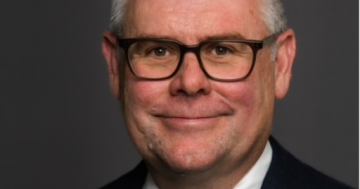
Employment Minister Amanda Rishworth says Australia’s labour market is remaining resilient in the face of global challenges. Photo: Supplied.
The number of Australians in jobs has grown, but so too has the unemployment rate, according to the Australian Bureau of Statistics’ latest data.
The seasonally adjusted unemployment rate increased to 4.3 per cent in February, up from 4.1 per cent in January.
The number of employed people grew by 49,000, led by part-time employment numbers rising by 79,000 people, but offset by full-time employment numbers falling by 30,000 people.
ABS head of labour statistics Sean Crick noted that the number of unemployed people grew by 35,000, contributing to the 0.2 percentage point increase of the unemployment rate in
February.
“We saw fewer people who were unemployed and waiting to start a job in January move into employment in February, compared to recent Februarys,” he said.
“We also saw more people remaining unemployed this month compared to recent Februarys.
“This month (February) we saw more people move into part-time employment, particularly those aged 65 and over. Additionally, this month we saw that fewer people are leaving jobs to retire compared to a year ago.”
Hours worked fell 0.2 per cent in February, with more people working part-time hours instead of full-time hours.
The growth in both employment and unemployment has resulted in a 0.2 percentage point increase to the participation rate, which was 66.9 per cent in February.
The Federal Government said the latest employment data showed the labour market remaining resilient amid heightened global challenges.
Employment Minister Amanda Rishworth said Australia’s unemployment rate of 4.3 per cent was low by historical standards.
“Australia has a record number of people in jobs, unemployment remains low and participation is near its highest level on record,” she said.
“Women’s participation also remains high and a record number of women are in work. That’s good for families, communities and the economy.
“We’ll keep working to create more jobs, lift wages and ensure people have the security they deserve at work.”
Treasurer Jim Chalmers said Australia was one of the few countries that had been able to keep people in jobs “in the face of extreme global uncertainty”.
“Our resilient labour market is one of the reasons we are well placed and well prepared to manage the impacts of the conflict in the Middle East, but we will not be immune,” he said.
“We’ve made a lot of progress together on the economy but the job’s not done because people are still under pressure which is why the government continues to focus on helping with the cost of living with two rounds of tax cuts to come, this year and next year.
“Our three big economic priorities for this year are addressing inflation, productivity and resilience and global uncertainty. Our resilient labour market gives us a strong foundation to build on the progress we’ve made recently.”
Opposition Leader Angus Taylor, however, said too many Australians were hurting financially because of Labor’s policies.
“The economic relief every Australian needs is lower inflation, lower interest rates, a stronger economy that’s not driving inflation – a reward for effort economy, where if people work hard, they get ahead,” Mr Taylor said.
“That’s not what we have right now in this country. People are seeing the Australia that they grew up with, that they knew, slipping away from them.
“Economically, culturally, they’re losing their country.”
The ABS also released population data on Thursday (19 March), showing Australia’s population grew by 1.6 per cent in the 12 months to September 2025.
Population grew to 27.7 million, with 423,600 more people than in September 2024.
“This was made up by natural increase, which is the number of births minus those who died, and overseas migration,” ABS head of demography Phil Browning said.
Natural increase added 112,600 people, with births up by 1.9 per cent and deaths down by 1.4 per cent. Net overseas migration added 311,000 people over the year.
ACT grew by 1.3 per cent, NSW by 1.2 per cent and Victoria and Queensland both grew by 1.7 per cent.
Western Australia was the fastest growing state, with a population rise of 2.2 per cent, while Tasmania had the slowest growth over the 12 month period, with a 0.3 per cent rise in
population.
Original Article published by Chris Johnson on Region Canberra.