Australians are spending more on concerts, musicals and leisure travel. Photo: File.
Household spending rose 0.3 per cent in February, which followed a similar rise in January, according to seasonally adjusted figures from the Australian Bureau of Statistics (ABS).
In December there was a fall of 0.5 per cent, but household spending over the past year remained high in nominal terms, up 4.6 per cent compared to February 2025.
Discretionary spending had an even bigger jump thanks to more people buying concert tickets and spending on leisure travel.
The ABS’s indicator records activity as spending at the point of purchase rather than when the service is consumed.
ABS head of business statistics Tom Lay said some of the rise in spending on concerts and musicals reflected advanced purchases of tickets for future performances.
“Discretionary spending rose 0.5 per cent in February, driven by recreational and cultural activities for concerts and musicals as well as higher spending on air travel and accommodation services,” Mr Lay said.
“Households also spent more on essential items, with food spending up 1.0 per cent, further contributing to overall household expenditure.”
Transport spending fell 0.4 per cent, driven by lower spending on operation of vehicles and partly offsetting the rise in household spending.
Mr Lay said this was largely due to lower fuel prices during the month prior to the Middle East conflict, which reduced household expenditure on transport.
In seasonally adjusted, current price terms, household spending increased for six of Australia’s eight states and territories, with NSW (-0.2 per cent) and Tasmania (-0.3 per cent) being the only jurisdictions where it decreased in February this year.
The ACT saw a 0.2 per cent increase in overall household spending.
The Northern Territory recorded the strongest monthly rise in household spending (+3.4 per cent), followed by Western Australia (+0.9 per cent) and South Australia (+0.6 per cent). Tasmania recorded the largest monthly fall, down 0.3 per cent.
Western Australia saw the biggest spending increase in dollar terms.
This ABS’s indicator uses aggregated and de-identified card transactions from banks, supermarket scanner data and motor vehicle sales data from the Federal Chamber of Automotive Industries and Electric Vehicle Council.
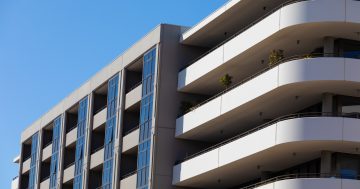
Housing approvals also rose nationally in February, with the total number of dwellings approved increasing 29.7 per cent in February to 19,022.
This follows a 25.0 per cent fall in private dwellings excluding houses in January and a 29.7 per cent fall in December.
ABS head of construction statistics Daniel Rossi said February’s rise was driven by a 101.2 per cent rise in private dwellings excluding houses.
The ABS term “private sector dwellings excluding houses” includes semi-detached, row or terrace houses, townhouses and apartments.
Private sector house approvals rose 0.2 per cent to 9847 dwellings. This is 6.1 per cent higher than one year ago.
“There have been a total of 195,434 dwellings approved, in original terms, over the past 12 months. This is a 9.0 per cent increase on the 12 months prior to that,” Mr Rossi said.
“NSW recorded the largest rise in private sector house approvals, up 13.7 per cent to the highest level since December 2023.
“In contrast, Queensland had the largest fall in February, down 13.4 per cent.”
Apartment approvals rose 191.2 per cent to 5398 dwellings, which is 29.8 per cent higher than one year ago.
Townhouse approvals also rose in February, up 73.8 per cent to 2981 dwellings, after a 38.7 per cent fall in January.
The value of total building approved rose 14.4 per cent in February to $20.43 billion, after a 7.8 per cent rise last month.
Residential buildings drove the overall rise in building value, rising by 30.8 per cent, to $12.50 billion, to reach a new record high.
The result consisted of a 35.9 per cent rise in new residential building (to $11.21 billion) and a 1.2 per cent fall in alterations and additions (to $1.29 billion).
The value of non-residential building fell 4.4 per cent to $7.93 billion, after a 19.5 per cent rise in January.
Original Article published by Chris Johnson on Region Canberra.