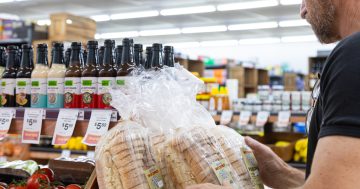
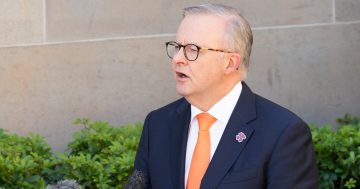
Assistant Minister Andrew Leigh has introduced legislation to crack down on hidden fees and traps, while Treasurer Jim Chalmers is temporarily offering small businesses more generous tax repayment plans. Photo: Thomas Lucraft.
So-called ‘Don’t Be a Jerk’ laws have been introduced to parliament, aimed at cracking down on businesses that engage in unfair trading practices such as hidden fees and subscription traps.
Online subscriptions and/or memberships that cost more than they first appear, or are far harder to cancel than they are to join, will soon be a thing of the past.
The Federal Government has been touting changes to the law for some time and finally delivered the legislation on Wednesday (1 April), following a consultation period last month on its draft bill.
Assistant Minister for Productivity, Competition, Charities and Treasury Andrew Leigh said dodgy traders are now on notice.
Unfair trading practices cost Australians millions of dollars each year, he said.
“When businesses compete honestly, consumers win, and so do the firms that play by the rules,” Dr Leigh said.
“These [unfair] practices chip away at household budgets and undermine trust in the marketplace.
“With cost-of-living pressures front of mind, the government is acting to ensure the price consumers see is the price they pay.”
The new laws will require businesses to disclose everything consumers need to know about costs when they sign up.
Hidden fees and drip pricing (adding extra charges as an online engagement continues), fake countdown timers and misleading claims are all being targeted.
Meanwhile, unions are calling for the government to bring forward a prohibition on price gouging by supermarkets and tougher penalties for those who exploit supply chain uncertainties to boost their profits.
A ban on price gouging and higher penalties for supermarkets that unfairly pad their profits during times of crisis are due to come into effect on 1 July as part of a beefed-up Food and Grocery Code.
But the Australian Council of Trade Unions wants it brought into effect immediately.
ACTU secretary Sally McManus said unions also want measures to ensure working people are properly compensated for work-related transport costs during the current fuel price environment.
“We do not want to see a repeat of what happened in Covid when supermarkets fattened their profits by price gouging ordinary Australians,” she said.
“This is not something that can be allowed to happen again; the government and the competition watchdog need to come down like a tonne of bricks on any supermarket that tries this on.
“The ACTU will be writing to the CEOs of Coles, Woolworths and Aldi, calling on them not to engage in price gouging.
“They are already delivering huge profits, working Australians cannot afford hefty price rises … We want supermarkets to know that if they do the wrong thing, all Australians will be watching them like hawks and the corporate regulator will have the power to swoop in and swiftly fine them.”
The ACTU is considering an urgent case before Fair Work to lift motor vehicle allowances for workers who use their own vehicle for work, and is calling on the Federal Government to direct the Australian Tax Office to increase the rate it uses to calculate deductions for workers’ vehicle expenses.
“Workers who need to use their vehicles for work also deserve a fair reimbursement rate that keeps up with actual fuel prices,” Ms McManus said.
“Until this changes, workers are effectively subsidising their employers from their own pockets. This is an even bigger issue in regional areas where people drive long distances.
“Right now, workers such as NDIS and aged care workers are struggling to pay for petrol, this puts at risk vulnerable Australians who need support.”
The tax office will provide temporary relief for businesses unable to meet their tax obligations, while the government will help small businesses access credit more quickly, as part of measures to keep small businesses afloat.
Treasurer Jim Chalmers said the ATO will provide “more generous payment plans, remission of interest and penalties, and support in varying PAYG instalments where there has been a downturn in taxable income”.
The government will also extend the Small Business Responsible Lending Obligation exemption for a further 10 years.
Dr Chalmers described the measures as common-sense steps to help offset some of the impacts from the Middle East war.
“What we’re announcing will make our systems more flexible, our supply chains more responsive, and also businesses more supportive as well,” he said.
“Obviously, there is a threshold for where this kind of concessional treatment will be provided, but the ATO is prepared to provide that kind of support in circumstances, which are obviously because of what we’re seeing in the Middle East.”
Original Article published by Chris Johnson on Region Canberra.