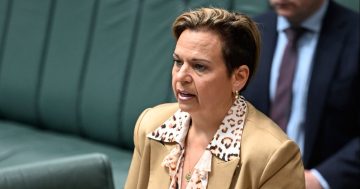
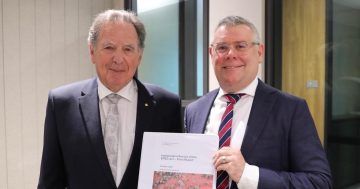
Attorney-General Michelle Rowland will not be banning the import of smart glasses. Photo: Tanny Solt.
Labor is not considering an import ban on smart glasses, despite calls from the Greens and privacy advocates to outlaw the camera-enabled wearable devices.
Attorney-General Michelle Rowland has detailed the Federal Government’s next planned round of reforms to Australia’s privacy laws, which include placing further limits on how companies can collect and use personal information.
But while she agreed that concerns over how smart glasses can be used – and are being used in some cases – are valid, the government is not taking action at this time.
“Firstly, I want to acknowledge the very deep concerns. We are not specifically in this consultation consulting on an import ban that would have consequences across government, including across trade, foreign affairs, and other potential legal obligations that can apply internationally,” she said on Monday (31 August).
Ms Rowland commended the actions of some local councils that have banned the use of smart glasses at public pools.
“Let’s be clear, we’re talking about the harmful behaviours and regulating the harms,” the Attorney-General said.
“That’s what governments seek to do. In terms of an import ban, as I said, we are not ruling anything out, but we are utilising what we have at our disposal right now.”
The A-G referred to the reforms she was presenting for consultation, saying they would severely affect the use of personal data collected by the glasses.
One reform to be introduced will be to impose a “fair and reasonable” test on firms, limiting them to collecting and using only the personal information they need.
Companies can no longer justify collecting more information than they need or using it for purposes Australians would never expect.
Other reforms include a right to erasure, allowing individuals to request the destruction of personal information from large digital platforms such as social media and search platforms; and stronger standards for consent, ensuring Australians make an informed choice about the information they share, without hidden terms or take-it-or-leave-it conditions.
Measures to stop businesses from trading in personal information without clear permission will also be introduced, meaning shopping habits, online interests or location data cannot be bought and sold behind Australians’ backs.
Another initiative is a new ID Lock service through MyGov to allow people to block, unblock and monitor the use of their eligible identity documents for verification.
That service will be available securely through myGov next year and is being developed as a new way for people to access the protections of the Credential Protection Register.
Established by the Commonwealth in 2022, the register helps prevent compromised identity documents from being used to fraudulently establish an individual’s identity.
This ID Lock is planned to help people protect themselves from identity crime, scams and the impacts of data breaches before harm occurs.
“We know that Australians are increasingly concerned about how their data is being collected, used, and shared, particularly as AI and other emerging technologies such as smart glasses become more accessible,” Ms Rowland said.
“People should not have to choose between protecting their privacy and participating in the digital economy.”
Since late 2022, the register has blocked more than 830,000 fraudulent identity-verification attempts, averaging about 18,000 per month.
ID Lock will be released initially to a small cohort of users for early access and testing later this year, ahead of a broader national rollout in 2027.
“The Albanese Government is modernising Australia’s privacy laws to ensure they are fit for purpose in the digital age,” Ms Rowland said.
“Australians expect their personal information to be protected, not exploited. Yet almost four in five Australians report they have very little or no control over how their personal information is collected or used.
“As more of our lives move online, these reforms will help strengthen privacy protections, boost accountability, and ensure Australians can embrace technology with greater confidence.
“Getting Australia’s privacy settings right and building trust in our digital world is good for people and good for business.”
The government has opened public consultation on the privacy law reforms and wants to hear from regulated entities, experts and civil society about the design and implementation of the intended new measures. Submissions close 18 September 2026.
Ms Rowland recently wrote to the Privacy Commissioner regarding the potential privacy implications and community concerns raised by the growing uptake of smart glasses.
Greens spokesperson for digital rights David Shoebridge described Labor’s bill as a “modest step forward” that goes some way to “dragging Australia’s privacy laws” into the 21st century.
But he said action against the abuse of smart glasses was nowhere near enough.
“Smart glasses that whisper a stranger’s name, their job, and social media history into someone’s ear will still sit entirely outside privacy laws with this bill unless it is being done during work,” Senator Shoebridge said.
“We need to extend these laws to cover the use of so-called ‘smart glasses’ regardless of whether or not the wearer is doing it for personal curiosity or as part of a business.”
He has called for a 12-month ban on the import of devices and for the Privacy Act to be updated so that filming, storing or sharing footage from these devices without consent is a clear breach of the law.
Original Article published by Chris Johnson on Region Canberra.