Woodside Energy’s North Rankin Complex, North West Shelf Project. Labor says Australia must continue exporting gas and coal while export markets still need them. Photo: Woodside Energy.
The Federal Government will today (14 October) introduce legislation to create the National Gas Reservation Scheme, which it is hailing as a “landmark moment” for the nation.
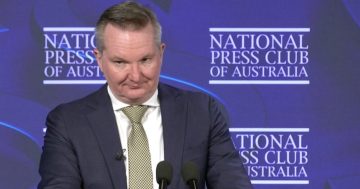
In introducing the bills, ahead of explaining them further in an address to the National Press Club this afternoon, Resources Minister Madeleine King described the package as one of the Federal Government’s most significant structural economic reforms.
It is Australia’s first national gas reservation scheme and is aimed at securing Australian gas for Australian domestic and business use at fair prices.
“When we came to government in 2022, the first thing we had to deal with was an energy crisis,” Ms King will tell the Press Club.
“Weather events that interrupted the supply of coal; ageing coal-powered generators failing because of maintenance backlogs; extraordinary disruptions in the international gas market because of a new land war in Europe.
“This was a perfect storm of events that culminated in gas being offered into the domestic market for well over $60 a gigajoule.
“That was unacceptable to the government and to the Australian people.”
Labor responded by initially reforming and extending the Australian Domestic Gas Security Mechanism and Heads of Agreement, and it introduced a gas market code of conduct that capped gas prices at $12.
In 2024, the government released its Future Gas Strategy, which set out the role gas will continue to play, particularly in supporting the rollout of renewables in Australia and for trading partners.
The Gas Market Review was commissioned last year, which recommended establishing a national gas reservation scheme.
“Over the course of this year, we have extensively consulted on the detailed design of the domestic gas reservation,” Ms King says.
“In May this year we released our draft design framework for consultation. It set out a headline reservation figure equivalent to 20 per cent of export volumes, along with the regulatory architecture, such as the export license scheme.
“As a result of extensive consultation and feedback, further detailed design work was undertaken.
“We have further refined the reservation scheme, and many of you [in the gas industry] will have reviewed the exposure draft of the bill we released for further consultation in September.
“That exposure draft included the announcement of the demand calibration mechanism, which provides for the Australian Energy Regulator to vary the domestic supply obligation from year to year in response to projected demand – with a target of 110 per cent of that demand.”
The bills being introduced include further refinements to the scheme based on the consultation on the draft bill.
Some key changes from the exposure draft include limiting ministerial discretion and making the scheme more transparent; closing loopholes and making it harder to game the scheme; and ensuring the states and territories are consulted on decisions that affect them, such as market-wide domestic supply obligation adjustments.
The legislative package also abolishes the Australian Domestic Gas Security Mechanism – which the government says will no longer be needed in a “well-supplied market” the reserve aims to create. The Heads of Agreement also fall away as a consequence.
“There’s been a lot said about the role of gas over the past year, so allow me to be clear,” Ms King says.
“We need gas to support the rollout of renewables. We need gas to have a strong Australian manufacturing industry. We need gas to continue heating our homes.
“And we need gas to process more critical minerals and rare earths here in Australia. Only gas can provide the sustained high temperatures needed at the right cost to process and refine them.
“We cannot have a critical minerals revolution here in Australia without a guaranteed supply of affordable gas. And we must keep developing gas for export for our regional partners.
“We have enjoyed almost half a century of peace and prosperity in our region. That peace and prosperity is in large part due to Australia’s reliable flow of energy exports.”
The minister says a successful, peaceful energy transition relies on continued Australian exports of energy.
Labor insists Australia must continue exporting traditional commodities – gas and coal – while export markets still need them, and while regional trading partners follow their own paths to net zero.
“No two countries will follow exactly the same pathway to reducing emissions,” Ms King says.
“What remains important is the commitment to the goal and a peaceful and inclusive journey toward it, so that we can minimise the damage caused by climate change, while making sure our communities have the energy they need.
“This is how we assure the ongoing prosperity of our growing and vibrant region.”
Original Article published by Chris Johnson on Region Canberra.