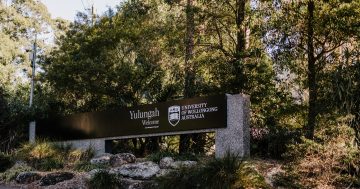
The University of Wollongong’s commercial activities were targeted for further scrutiny, including its overseas operations, in a NSW Government inquiry into the university sector. Photo: UOW.
A NSW Government inquiry into the state’s university sector has exposed systemic problems that can no longer be ignored, according to its chair.
The Standing Committee on Social Issues’ inquiry has released its final report, warning that without significant governance reform, NSW risks undermining some of its most important public institutions and the students, workers and communities that depend on them.
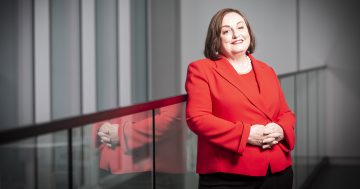
Committee chair Dr Sarah Kaine said the report detailed what needed to change.
“For years we have seen headlines exposing governance failures, controversial spending decisions, soaring executive salaries, overreliance on consultants, cuts to staff and worsening workplace culture,” she said.
“This inquiry confirms these are not isolated incidents. They are symptoms of deeper structural problems across the sector.
“This report sets out what needs to change. The challenge now is ensuring these recommendations do not sit on a shelf. The future strength of our university sector depends on our willingness to act.”
The inquiry heard from staff, students, university leaders and experts through written submissions and in eight public hearings.
They reported widespread concerns about governance failures, declining transparency, growing corporatisation, poor workplace culture, weakened staff and student voices, and increasing concentration of power within university management.
The committee released an interim report in April which highlighted failings at the University of Wollongong and the University of Technology Sydney.
It called for a ministerial report into UOW’s commercial activities, particularly its operation of overseas campuses.
It has also raised questions about the university’s handling of the major 2025 restructuring and the resultant substantial staff cuts, following evidence about the “quality of consultation, transparency in governance, concentration of decision-making authority and the pace of organisational change”.
Since the interim report was handed down, a number of UOW executive and other staff fronted an Independent Commission Against Corruption (ICAC) hearing into governance, recruitment and the widespread use of external consultants.
ICAC is yet to release its findings and recommendations as a result of Operation Scandi.
Dr Kaine said universities were among the state’s most important public institutions and their success was critical to the state’s future prosperity and social wellbeing.
“Universities educate the teachers who will shape future generations, the nurses who will care for our communities, the engineers who will build our infrastructure, the scientists who will drive innovation and the researchers whose discoveries improve and save lives,” she said.
“When governance fails in our universities, it is not just a university problem. It affects students, workers, research, innovation, public confidence and the future productivity of NSW.”
The inquiry’s final report lists 21 findings and 23 recommendations for action.
It also examines operations at the remaining eight of 10 NSW universities not featured in the interim report – Macquarie University, the University of Sydney, the University of New England, the University of Newcastle, Charles Sturt University, Western Sydney University, the University of NSW and Southern Cross University.
The report found that governance arrangements at NSW universities were increasingly failing to provide the transparency, accountability and public stewardship expected of publicly-funded institutions.
It argued that universities have drifted too far towards corporate models of governance and management, weakening their connection to the public mission for which they were established.
“Universities were not created to operate like private corporations. They were established by parliament to serve the public interest through education, research, scholarship and community benefit,” Dr Kaine said.
“The committee heard repeated concerns about decisions being made behind closed doors, staff and students being shut out of decision-making and university communities losing faith in the institutions they serve. That should concern everyone.”
Dr Kaine said the final report must be seen as the beginning of a reform agenda, not the end of an inquiry.
“This inquiry has provided a roadmap for change. The recommendations are there. The evidence is there. The need is clear,” she said.
“What happens next matters. If governments and universities fail to act, we risk further erosion of trust in institutions that are fundamental to our state’s future.”
The final report is available to read on the NSW Parliament website.
Original Article published by Jen White on Region Illawarra.