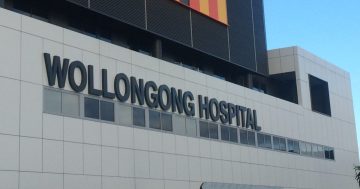
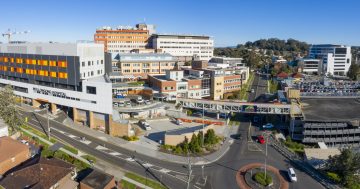
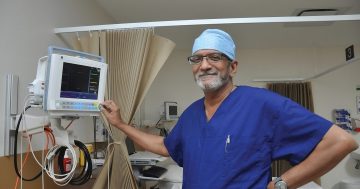
A new report has revealed how Illawarra hospitals are performing as bed block continues to be highlighted as an issue by the government. Photo: SDI Productions.
Illawarra hospitals are battling more highly urgent emergency presentations while being stifled by bed block and discharge delays, with new statistics showing some promising performance outcomes despite the flow-on effects of systemic issues.
Admitted patients in the Illawarra Shoalhaven Local Health District (ISLHD) appear to be requiring more complex hospital care while demand continues to mount across the whole system, according to the most recent data from the Bureau of Health Information (BHI).
In the April to June quarter, Wollongong Hospital admitted patients recorded 64,072 bed days – the highest number at the facility in the BHI’s reporting history, with Shellharbour Hospital also recording a high of 17,218 days.
The average length of stay for admitted patients at Wollongong was 6.1 days, while it was 10.8 days at Shellharbour.
NSW Health Minister Ryan Park said patients stuck waiting for aged care or NDIS placements were putting increasing pressure on Illawarra hospitals, with 19 patients stranded in Wollongong Hospital and 133 across the ISLHD.
It follows a statewide trend, with the number of stranded patients surging in NSW hospitals from 1065 to 1355 between 30 June 2025 and 30 June 2026.
“The number of people waiting for Commonwealth aged care and NDIS placements stranded in NSW hospitals is growing at an unprecedented and unsustainable level,” Minister Park said.
“In the Illawarra, this means more than 130 beds in public hospitals cannot be used as a result.
“Waiting indefinitely in a hospital is not good for patient mobility, recovery or quality of life. These people are more than statistics, and they deserve so much better.”
The ripple effect from bed block is evident in the blowout in the time patients were spending from arrival in ED to being admitted to hospital or transferred to another hospital.
In Wollongong the median time for that admission or transfer was 12 hours and 42 minutes, with around one in 10 patients waiting more than 28 hours.
At Shellharbour Hospital the median time was 9 hours and 48 minutes, with the 90th percentile spending 25 hours and 35 minutes before being admitted or transferred to another facility.
Despite these high numbers, the overall time from arriving to leaving the ED in Wollongong was the lowest in years, sitting at 4 hours and 37 minutes, with the median time in Shellharbour 3 hours and 22 minutes.
Presentations in emergency departments weren’t notably higher than in recent years, however there seems to have been a shift in the condition of people coming in.
Wollongong Hospital recorded 17,691 ED presentations throughout the quarter, with both the T2: Emergency (3640) and T3: Urgent (8961) level presentations the highest in BHI recording history.
In Shellharbour, 1323 T2: Emergency presentations was also the highest on record.
But less urgent cases have been shifting down, with Wollongong ED’s 4348 T4: Semi-urgent cases the lowest on record and 545 T5: Non-urgent cases the lowest in nearly a decade.
Shellharbour’s T4: Semi-urgent cases (3210) is also among the lowest figures recorded in the hospital’s reporting history.
“This reflects the growing use of alternative care pathways across the region, including general practice, urgent care services, and virtual care options, helping ensure EDs remain available for patients requiring emergency treatment,” ISLHD Clinical Operations Executive Director Mark Garrick said.
“Wollongong, Shellharbour and Shoalhaven hospitals are now also rostering to Safe Staffing Levels in their EDs, to support our workforce and relieve pressure on hospitals, following the recruitment of more than 74 FTE nurses across all facilities.
“The staffing boost enables the rostering of a one-to-one nursing care ratio for generally occupied ED resuscitation beds on all shifts, and one nurse to three generally occupied ED treatment spaces and ED short-stay unit beds on all shifts.”
The median time spent to transfer patients from paramedics to ED staff remained at 12 minutes for a second quarter in a row at Wollongong Hospital, with 88.8 per cent of patients transferred within 30 minutes.
But while across the ISLHD the number of ambulance arrivals (12,799) was the lowest figure in the past year, it does not reflect the pressure on paramedics right across the region.
Wollongong Ambulance SA3 recorded 7301 responses during the quarter, the highest on record for the area, and 5668 incidents, which is the highest since 2014.
A further 4779 responses were recorded in the Dapto – Port Kembla area and 4946 in the Kiama-Shellharbour SA3.
The demand on paramedics is an issue that NSW Ambulance Acting Chief Executive Clare Beech addressed in budget estimates last month.
“We have experienced, as the entire system has, a significant uptick in demand for our services over the course of this winter,” Ms Beech said.
“Even in the last fortnight, we have seen tripe zero volume on a daily basis at times reach 4000 calls per day, which is an increase in demand.
“We have had periods of higher demand than that which we’ve experienced recently, particularly during COVID, but it is fair to say that our demand trajectory probably never really normalised after COVID.
“We have a range of strategies in place to ensure that we continue to meet our performance targets, particularly around our sickest patients — our category one cases. We continue to meet that target across the state, which is very pleasing for us and for our patients.”
The data set from the April to June Healthcare Quarterly is available on the BHI website.
Original Article published by Keeli Dyson on Region Illawarra.