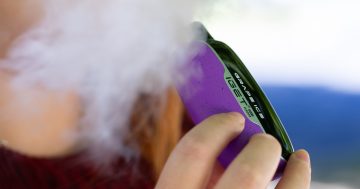
Health groups say big tobacco is trying to reshape public debate around smoking to its own benefit. Photo: iStock.
Fifteen public health organisations, led by the Cancer Council and the Heart Foundation, have issued an open letter accusing the tobacco industry of trying to hijack public debate around smoking to secure cuts to government excise.
The letter was timed to coincide with Monday’s second day of hearings in Canberra of the Senate inquiry into the illicit tobacco trade.
It follows the first session earlier this month that controversially allowed executives from tobacco giant Philip Morris to give evidence in secret.
That in-camera evidence claimed the illegal trade would wipe out the sale of legal cigarettes by 2030, with executives urging the Federal Government to counter that development by cutting the tobacco excise.
But health groups have dismissed the tobacco industry’s claims, saying they undermine the future of public health success in Australia.
Australia has achieved some of the lowest smoking rates in the world thanks to strong, evidence-based tobacco control policies that have saved thousands of lives. But this progress is now at risk,” the letter states.
“In 2026, the tobacco industry is working to regain influence over public health policy.
“At a recent federal parliamentary inquiry into illicit tobacco, a major global tobacco company was granted a private, undisclosed hearing during these important public proceedings. No public listing. No transparency. No scrutiny.
“This is deeply concerning. Giving a tobacco giant this platform undermines Australia’s obligations under the WHO Framework Convention on Tobacco Control, which is designed to protect policymaking from tobacco industry interference.”
The health groups warn that big tobacco is exploiting concerns about the illicit market as an excuse to undo 25 years of successful tobacco control policies.
The coalition of health groups says its letter aims to highlight how the tobacco industry employs illicit tobacco as a “dog whistle” to weaken policy.
Cutting tobacco taxes would deliver billions of dollars in profits to multinational tobacco companies, while making cigarettes more affordable and increasing smoking rates.
The health groups insist such an outcome would make the only real winners the tobacco industry itself.
“The industry is now using the rise of illicit tobacco to reshape public debate and to push for lower taxes. But illicit tobacco is primarily an enforcement and health issue – not a tax one,” the letter states.
“Even if we were to cut the tobacco tax altogether, illicit products would remain cheaper, while legal tobacco would become more affordable, tobacco industry profits would skyrocket and smoking rates would increase, undoing decades of progress.”
Signatories to the letter include Cancer Council, Australian Council on Smoking & Health, Asthma Australia, Heart Foundation, Life ED NSW & ACT, Lung Foundation Australia, McCabe Centre for Law & Cancer, Public Health Association of Australia, Clinical Oncology Society of Australia, Quit, Tobacco Endgame, Thoracic Society of Australia and New Zealand, Australian Prevention Partnership Centre, Stroke Foundation, and the Australian Chronic Disease Prevention Alliance.
Together, they are asking members of the public to send the open letter to their local MPs.
Cancer Council chief executive officer Jacinta Reddan said the public health bodies are calling for the tobacco industry to be prevented from interfering in public health policy.
“We cannot allow tobacco companies, whose profits come from products that still kill 66 Australians every day, to weaken tobacco control measures,” she said.
“The evidence is clear. Illicit tobacco is an enforcement, licensing, and regulatory issue.
“Calls for cuts to the tobacco excise are not about helping communities, they are part of a coordinated effort by the tobacco industry to protect profits at the expense of public health.
“Even if the tobacco excise was cut altogether, illicit products would remain cheaper, while legal tobacco would become more affordable, tobacco industry profits would skyrocket and smoking rates would increase.”
On the same day that the health groups released their letter, British American Tobacco (BAT) issued a statement citing last week’s Federal Budget as evidence that the tobacco excise was hurting the industry while not dampening the illicit trade.
“Budget papers revealed Treasury now expects tobacco excise revenue to collapse to just $2.1 billion by 2029-30 – the lowest collection this century – despite originally forecasting $16.8 billion over the same period,” BAT said.
“Public reporting also revealed a projected $77 billion excise shortfall across the forward estimates.
“At the same time, the government continues insisting enforcement is the answer while allocating just $14 million across all states and territories for illicit tobacco enforcement – approximately $1.75 million each.
“That is not a serious response to a black market now estimated to be worth around $10 billion annually and linked to more than 285 firebombings nationwide.
“As the Senate inquiry continues its examination into the illicit tobacco crisis again today, the Federal Government must explain how Australians are expected to have confidence in a strategy it is barely funding, openly acknowledging is unlikely to work, and which continues to hand billions of dollars to organised crime while stripping billions more from taxpayers and government revenue.”
Original Article published by Chris Johnson on Region Canberra.