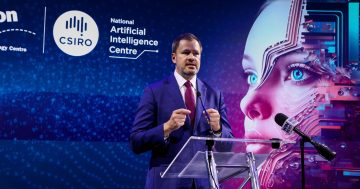
Industry and Innovation Minister Tim Ayres is considering the recommendations of the SERD review’s final report. Photo: Tim Ayres/Facebook.
The need to vastly improve Australia’s capacity for research, development and innovation (RD&I) is vital to support the nation’s economy into the future and to create a more prosperous, healthier, safer and equitable country.
A new governance framework, greater collaboration between sectors, tax incentives and deregulation are all central to achieving that goal. That’s the overriding message of the final Strategic Examination of Research and Development (SERD) report, which has just been delivered to the Federal Government.
An independent panel, chaired by business executive Robyn Denholm, released its report following an extensive review of Australia’s RD&I system.
The review sought to consider how Australia can get greater value from research investment, grow business R&D and leverage the nation’s scientific strengths to address national priorities and build new industries.
The panel consulted with stakeholders during the development of its advice to the government, which is now considering the report.
The report details challenges and the opportunities ahead and how governments, business, workers, industry, universities, researchers and scientists can and must work together to lift productivity and boost Australia’s economic resilience.
It includes 20 recommendations that focus on six elements, being:
- greater focus and scale for RD&I impact
- a world class foundational research system creating knowledge and expertise
- incentives to build the RD&I businesses and industries of the future
- investment and capital to fuel the innovation cycle
- building workforce capability to power RD&I activities
- government to lead and champion.
Ms Denholm told the government the starting point had to be a commitment to bringing the elements of Australia’s RD&I system together under a clear vision.
“The panel recommends a new governance framework to provide the oversight, coherence and alignment needed across Australia’s RD&I system,” she said.
“Importantly, this framework goes beyond governance – it calls for sustained, purposeful action and collaboration focused on outcomes and impact.
“International experience shows that scale and focus are essential for competitiveness.
“This focus must be matched by sustained support for Australia’s world-class foundational research base.
“Without strong and consistent investment in knowledge creation, Australia risks losing its competitive edge in global discovery and eroding the foundation needed to transform innovation into enduring economic prosperity.”
The report points out that a strong research base will only deliver economic and societal results when it is matched to a “translation of knowledge” into goods and services that transform the lives of people and the economy that supports them.
“Tax incentives and deregulation are central to stimulating the private sector in this effort, along with support for partnerships and investments that engage entrepreneurs and innovators in the translation of new knowledge to impact,” Ms Denholm said.
The SERD independent panel also included Emeritus Professor Ian Chubb AC, Winthrop Professor Fiona Wood AO and Dr Kate Cornick.
Industry and Innovation Minister Tim Ayres, who is also Science Minister, thanked the panel and stressed that a strong RD&I system was critical to delivering the government’s ambitious Future Made in Australia program.
He said Australian researchers and scientists were unlocking new ways to process critical minerals, make green iron, reduce emissions in heavy industries and find new ways to use AI, quantum and critical technologies to drive better outcomes for Australians.
The Minister noted that the report charted a long-term reform roadmap for the government to consider over coming months.
“Meeting Australia’s big collective challenges – food and agriculture, energy security, new industrial and tech processes, water security and dealing with the human, animal and plant diseases of the future, to name just a few – requires a modern and fit for purpose research and development system,” he said.
“A Future Made in Australia requires bold and visionary private, public and institutional research and development capability together with mobilised scientists and engineers and I am keen to grasp the challenge and work with the sector to deliver that.”
The SERD report was commissioned as part of the 2024–25 Federal Budget and responds to a recommendation of the Universities Accord.
Universities Australia welcomed the report and said it provided a major opportunity for Australia to strengthen its innovation system and help tackle cost of living pressures.
Chief executive officer Luke Sheehy said with the right policy settings in place, a stronger research and development system could help put Australia “back on a path to future prosperity”.
“Research and development are the engine room of productivity, economic growth and living standards,” Mr Sheehy said.
“If we want to be an ambitious, thriving, prosperous and modern country, we have to get serious about innovation.
“But reports alone don’t lift productivity or build new industries – action does. It’s now up to the government to make the most of this opportunity and respond with ambition.”
Original Article published by Chris Johnson on Region Canberra.