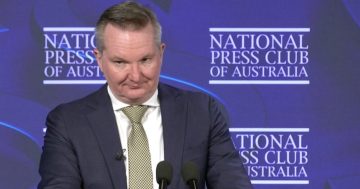
Energy Minister Chris Bowen says the proposed gas reservation scheme will put downward pressure on prices for Australian households. Photo: Chris Bowen.
A Labor plan to force gas exporters to reserve 20 per cent of gas for domestic use is being dismissed by the Coalition as a “thought bubble” and by the Greens as a “distraction”.
The Federal Government’s proposal, outlined on Thursday (7 May), is for a domestic gas reservation scheme aimed at keeping more gas onshore and less exported to overseas markets.
The government will legislate the scheme, which will require gas exporters, from 1 July 2027, to supply the equivalent of 20 per cent of their exports to the Australian domestic market.
Energy Minister Chris Bowen said the reservation scheme will put strong downward pressure on domestic gas prices and shield both industry and households from global price volatility.
It will also bolster Australia’s energy security by avoiding potential gas supply shortfalls.
“We’ve been acting to shield Australians from global energy shocks by investing in reliable, sovereign renewables and keeping more of the gas we need onshore,” Mr Bowen said.
“Our sensible, practical policies mean we will avoid gas shortfalls and will be able to protect consumers from global energy price spikes.
“That model will involve 20 per cent of Australian gas exports being reserved for Australian use first.
“There will be a requirement on gas producers to sell that 20 per cent to Australian users.
“This is a carefully calibrated model which ensures Australia’s national best interests are put first.”
While the minister said the scheme will put “downward pressure” on gas prices and disconnect price spikes from international volatility, he would not say how much he hopes the move will save Australian households.
Opposition Leader Angus Taylor described the government’s announcement as a thought bubble strategically timed just before the federal budget.
“This government has made it harder to get oil and gas out from under the ground consistently,” Mr Taylor said.
“We need a government that both gets the supply up, and makes sure it’s working hard for Australians, and that’s what we’ll always back.”
The Opposition Leader acknowledged, however, that he had not seen details of the plan before the announcement.
Greens resources spokesperson Steph Hodgins-May severely criticised the policy, saying it was a distraction from the intense pressure the government is under to impose a flat 25 per cent tax on Australian gas exports.
Supporters of the levy estimate it would raise about $17 billion a year.
“This announcement by Labor today will raise no revenue,” Senator Hodgins-May said.
“It will continue to see those massive gas exporters gifted Australian gas for free, making wartime profits and paying nothing back to the Australian people.”
The government says its new proposal for a domestic gas reservation scheme is a key plank of its plan to build Australia’s energy sovereignty.
Resources Minister Madeleine King said secure and affordable gas is key to the government’s Future Made in Australia agenda, particularly for nationally significant, trade-exposed industrial users who can’t currently electrify.
“The domestic gas reservation is a great outcome for Australians, as it will put downward pressure on domestic gas prices and ensure Australia will remain a trusted and reliable supplier of LNG to our export partners,” she said.
“The reservation also gives industry the certainty it needs to ensure ongoing investment into Australia’s gas industry.
“The outcome follows extensive consultations with the industry and international stakeholders, and means Australians can have confidence that they will be able to access long-term and plentiful supplies of affordable gas.”
Australian Energy Producers chief executive officer Samantha McCulloch, however, said the proposal raises significant concerns about the potential impacts on competition, investment and future gas supply.
An example she used was that forcing Queensland LNG exporters to supply 20 per cent of export volumes into the east coast market would crowd out smaller domestic producers, reduce competition and impact future supply, because 20 per cent of export volumes represents around 60 per cent of the east coast gas market.
She said the answer to projected gas shortfalls is to remove barriers to investment in new supply, but this new policy risks chilling investment with long-term consequences for Australia’s energy security.
“There is no justification for such heavy-handed intervention when the east coast market is currently well supplied, and prices are the lowest they’ve been in years, with Australian gas users insulated from the global energy crisis,” Ms McCulloch said.
“It also risks undermining our reputation as a reliable trading partner at a time when our LNG exports are critical for regional energy security.”
Original Article published by Chris Johnson on Region Canberra.