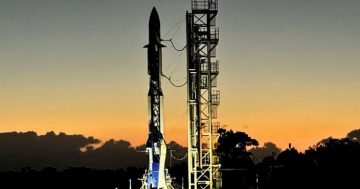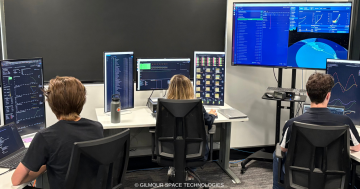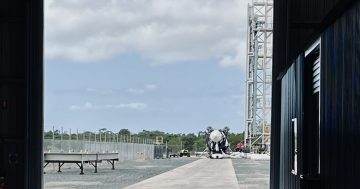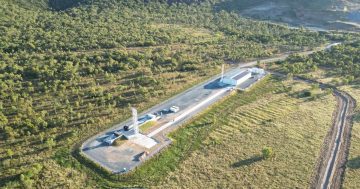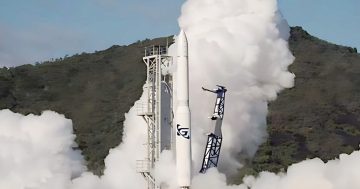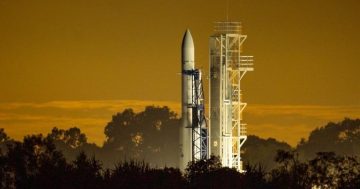

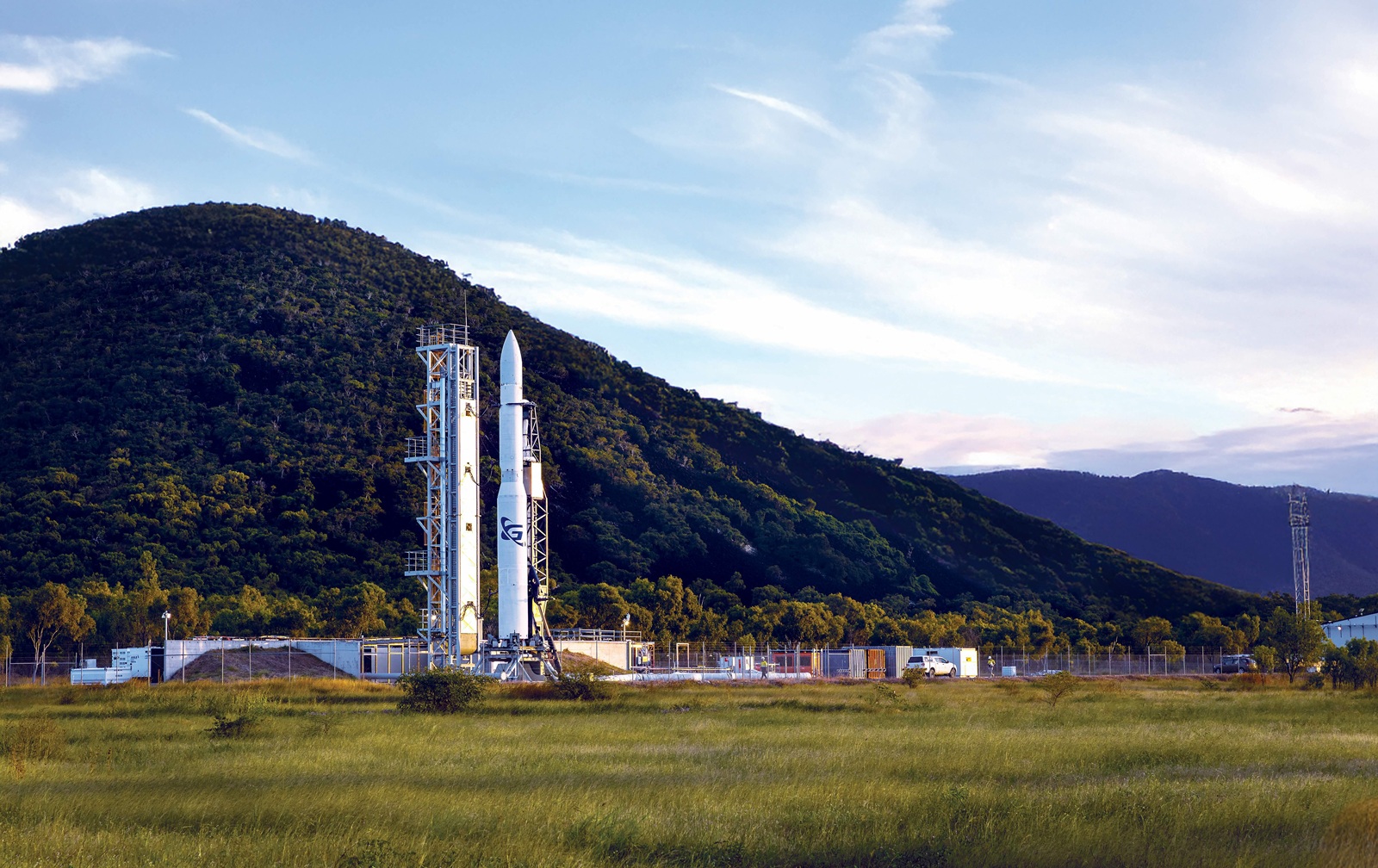
Gilmour Space’s Eres-1 rocket on the Bowen Spaceport launchpad prior to last July’s failed launch. Photo: Gilmour Space Technologies.
Gold Coast-based Gilmour Space Technologies has announced it has secured $217 million in its latest round of private equity investment funding as it seeks to advance its goal to develop a sovereign Australian satellite launch capability.
In a 20 January release, the company says the latest Series E round was jointly led by the National Reconstruction Fund Corporation (NRFC) and Hostplus, with participation from Future Fund, Blackbird, Funds SA, HESTA, NGS Super, Main Sequence, QIC, and Brighter Super.
It says the latest funding lifts the company’s valuation above $1 billion, an amazing result for a startup which it says reflects the strategic importance of the development of sovereign space technologies underpinned by a strong supply chain and manufacturing base.
Founded by brothers Adam and James Gilmour, the company has been steadily building up its technical staff, industry suppliers, and design and manufacturing capabilities since 2015. The company now employs more than 220 people building what it describes as end-to-end sovereign space capability spanning the design, manufacture, test, and launch of rockets and satellites in Australia.
The company has a manufacturing facility on Queensland’s Gold Coast, and has built a launch site at the Bowen Orbital Spaceport, north-west of the Whitsundays in North Queensland. Being north of the Tropic of Capricorn, the launch site is ideally located for launching satellite payloads into an equatorial orbit.
The company says the proceeds from the funding raise will go towards continued development and qualification of its Eris orbital launch vehicle, scale rocket and satellite manufacturing, expand test and launch infrastructure, and to grow the company’s workforce to meet global demand for space launch services.
The first launch of its Eres-1 rocket from Bowen failed last July after 14 seconds of flight. But despite the failure, the company said it had achieved a successful integrated operation between the rocket and its ground systems, the launch cleared the tower, the vehicle’s flight software and guidance and navigation control (GNC) performed as expected, and extensive flight data was collected.
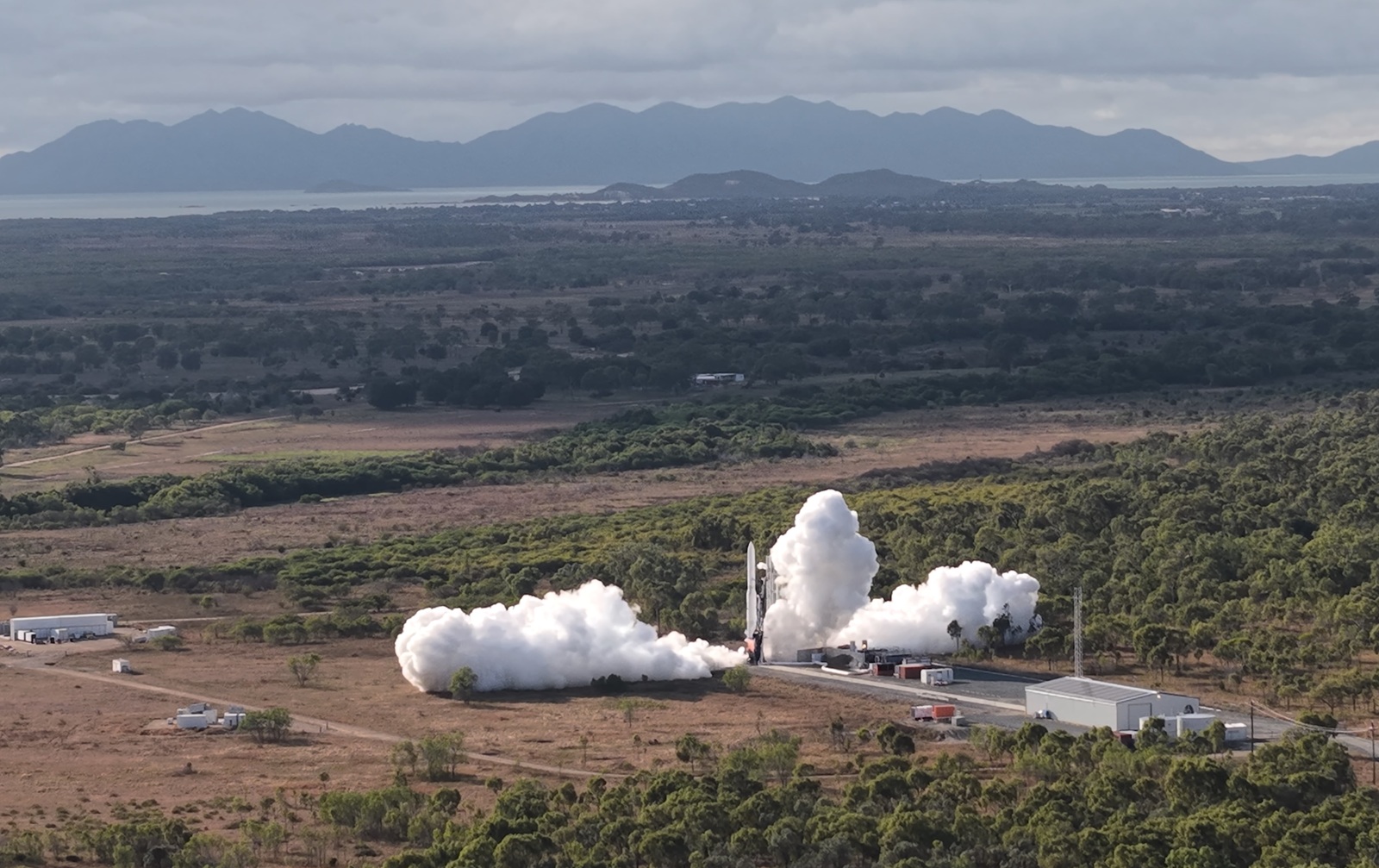
The first launch of Gilmour’s Eres-1 rocket in July 2025 failed after 14 seconds of flight. Photo: Gilmour Space Technologies.
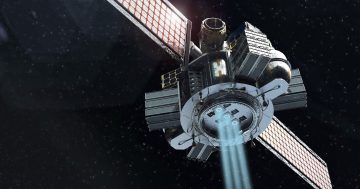
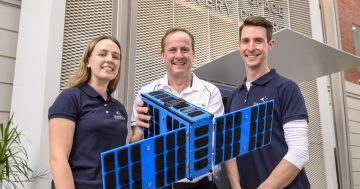
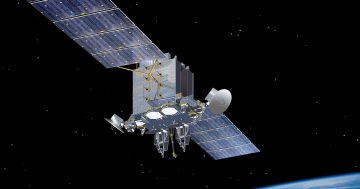
In September the company announced its 100-kilogram ElaraSat Block 1 satellite bus, which had been launched on 24 June aboard a SpaceX Falcon 9 rocket from Vandenberg Space Force Base in California, had achieved successful in-orbit operation.
The Multi Mission Satellite-1 (MMS-1) ElaraSat bus carries a hyperspectral imager for the Commonwealth Scientific and Industrial Research Organisation (CSIRO). The imager can gather detailed information about the composition and characteristics of the Earth’s surface and water quality from space by combining spectroscopy and imaging capabilities.
On the company’s latest investment, co-founder and CEO Adam Gilmour said it reflected strong investor confidence in his team and in Australia’s ability to build and operate critical space infrastructure at home.
“We’ve reached important technical and business milestones,” he said. “Our focus now is on delivering reliable and regular access to space for customers both at home and abroad.”
CEO of NRFC David Gal said, “Space technologies are fundamental to national resilience, economic productivity, and regional growth.
“Gilmour’s success will help secure Australia’s access to essential space services, strengthen our advanced manufacturing base, and create highly skilled jobs and opportunities in the region.”
HostPlus Chief Investment Officer Sam Sicilia added, “As one of the nation’s leading investors in domestic venture capital, we are committed to identifying opportunities that deliver long-term value for our members.
“This capital injection will help position Gilmour Space for its next phase of growth, enabling it to scale operations and advance technology development, creating potential for strong, risk-adjusted returns for our members.”
Venture capital firm Main Sequence partner Martin Duursma said his company had backed Gilmour since 2018, “when most people thought building rockets in Australia was impossible”.
“Seven years later, we’re doubling down on a conviction that’s only grown stronger,” he said.
“This raise represents more than capital for launch attempts. It’s validation that Australia can build sovereign capability in one of the world’s most challenging industries.
“Gilmour’s first launch proved out the critical systems,” he added. “Now comes the hard work of iteration. SpaceX needed multiple attempts to reach orbit. So will Gilmour. The difference is, we’ll be there for every single one. That’s what backing deep tech really means.”