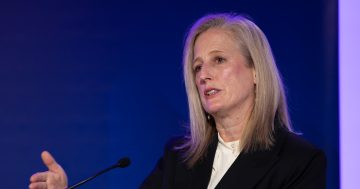
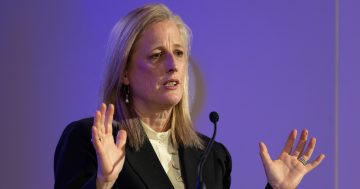
The gender pay gap is heading in the right direction, with women now earning, on average, 88 cents for every dollar men earn. Photo: Michelle Kroll.
Gender pay gaps are smaller today than they were a year ago, according to the latest Workplace Gender Equality Agency (WGEA) results from 10,500 Australian employers across sectors.
The new data shows progress is being made across sectors, with a majority of employers having taken deliberate measures to reduce their pay gaps over the past 12 months.
More than 50 per cent of employers have a gender pay gap larger than 11.2 per cent in favour of men, but that is down 0.9 percentage points.
It equates to, on average, for every $1 men earn in Australia, women make 88 cents.
More employers have a gender pay gap in the target range of +/-5 per cent (22.5 per cent, up from 21.4 per cent in 2023-24).
But men are still twice as likely to hold higher-paying roles than women, with employers in high-paying, men-dominated industries more likely to have the largest pay gaps.
There are more women in high‑paid roles than there were a year ago (up 1 percentage point), but women are still more likely to be concentrated in the lowest‑paid roles.
The gender pay gap among Commonwealth public sector workers has, for the first time, been released together with data for the private sector.
Minister for Women Katy Gallagher noted that the gender pay gap would be almost completely eliminated in the Australian Public Service if some major agencies were more gender-balanced.
For example, Services Australia employs about 30,000 staff, but is female-dominated in lower-paid customer service and shopfront roles.
“The last time I looked at this, if that workforce were more balanced, we would almost get rid of the gender pay gap,” Senator Gallagher said.
The results form part of the third WGEA release of employer gender pay gap reporting, allowing Australians to see how their employer, favourite brand, or future workplace is performing on the gender pay gap.
About 5.9 million workers can use WGEA’s Data Explorer to access their employer’s gender pay gap, the gender composition, and average pay of high earners and low earners in their workplaces.
WGEA chief executive officer Mary Wooldridge said the publication of employer gender pay gaps has motivated employers to act on gender equality after progress had previously stalled.
“Many employers have told us publishing their information has helped them prioritise fairness and equality and led to deeper engagement from the C-Suite and Board,” Ms Wooldridge said.
“Results since 2024 show more employers now analyse how managers recruit employees, decide their pay and performance bonuses and determine promotions.
“Many are also looking past composition and pay to examine women and men’s different experiences of access to parental leave, flexible working arrangements or safety in the workplace.”
Ms Wooldridge added that while many employers should be celebrating progress, there is more work to do to ensure Australian workplaces are truly gender-equal.
Large differences in discretionary payments, like performance bonuses and overtime hours, remain a key driver of many employer gender pay gaps.
“The fact that men are nearly twice as likely as women to be in the highest paid roles and that women still dominate the lowest paid roles should offer a reality check for anyone who thinks Australia has achieved equality in the workplace,” she said.
“Employers should treat gender equality like their other business goals. Do a detailed analysis to find the issues, create an action plan to address them and set targets to be accountable for ensuring progress happens.”
Senator Gallagher said the public release of the WGEA data is “helping to shift the dial” on the gender pay gap.
“This transparency shines a light on where progress is being made and where more work is needed,” the Minister said.
“Gender pay gaps tell us a lot about how workplaces really operate, who gets opportunities, who gets rewarded, and who has the flexibility to manage responsibilities outside of work.
“Flexible work is a key part of the solution. When workplaces genuinely support flexibility, women are more likely to stay connected to work, progress into senior roles and build their lifetime earnings.”
During Question Time in the House of Representatives on Tuesday (3 March), Anthony Albanese used a Dorothy Dixer question on the gender pay gap to mock the Coalition’s policy it took to the last federal election to end work-from-home – which would have had the harshest impact of women workers.
The Prime Minister also tabled a leaked copy of a Liberal Party review of its devastating election campaign, which features a severe criticism of that policy.
The Liberal Party federal executive had decided not to publish the embarrassing review, but it has been so widely leaked that the PM was able to easily make it public by tabling it in Federal Parliament.
Original Article published by Chris Johnson on Region Canberra.