Labor almost doubled the taxpayer money it gave to KPMG for government contracts in the past financial year. Photo: KPMG.
The Federal Government spent $860 million on external consultants for the public service in the last financial year, including almost doubling what it gave to the unethical KPMG firm.
KPMG’s taxpayer-funded windfall went from $32 million in 2024-25 to $59 million in 2025-26, with more than 30 contracts worth over $20 million being sealed even after major scandals involving the consultancy giant’s unethical behaviour became public in March this year.
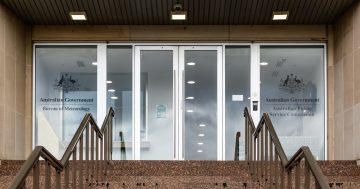
KPMG’s key contracts are with the Department of Industry, Science and Resources; Services Australia; Defence; the Australian Securities and Investments Commission; and the Bureau of Meteorology.
The Parliamentary Library has compiled the data, revealing Labor’s continued massive addiction to external consultancies, despite insisting it is reducing the APS’s reliance on outsourcing.
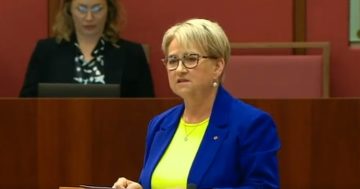
Greens finance and public service spokesperson Barbara Pocock said Labor’s outsourcing of public sector work to the private sector at three times the cost wastes taxpayers’ money and erodes the public service.
“The government’s response to the KPMG scandal has been to give more money to KPMG, not less. What a joke,” Senator Pocock said.
“The volume of contracts awarded to KPMG shows just how aggressive KPMG’s push into government has been and how addicted Labor remains to the Big 4 consultancy firms.
“The government has been watching a repeat of scandals and still hasn’t delivered meaningful reform. The government’s temporary month-to-month freeze on KPMG is nothing but a pathetic, tokenistic punishment.
“Every KPMG contract should be reviewed before another dollar is handed over to the unethical firm. The government must ban KPMG from any future contracts until they’ve been properly investigated.
“It’s no wonder Australians are fed up. Labor said they’d reduce spending on outsourcing work to consultants, but they spent more last year on consulting contracts than the final year of the consultant-addicted Morrison government. Meanwhile, consultants continue to play by their own rules.”
The Australian National Audit Office has also recently published its review of government outsourcing, finding the Federal Government spends about $20 billion each year on an external workforce.
Australian Government entities that employ staff under the Public Service Act 1999 cumulatively spend that amount each year on labour hire, contractors, consultants and outsourced service providers.
The ANAO’s analysis of a sample of 22 government entities found that reported expenses for both suppliers and Australian Public Service employees increased in 2024–25.
More than half of the sampled entities — 12 of 22 — increased spending on external labour, comprising labour hire, contractors and consultants.
The Auditor-General said the Australian Public Service Commission’s Strategic Commissioning Framework (SFC), which was designed to reduce the APS’s reliance on the external workforce and bring ‘core work’ in‑house, has been partly effective.
The APSC was largely effective in supporting agencies to implement the framework.
But the audit found that the framework’s design limited the scope to a narrow part of external workforce spending, and entities could meet targets while overall spending on the external workforce increased.
An unintended consequence of the target design was that entities could report they had ‘met’ the targets to reduce supplier expenditure for core work, even if their overall external workforce expenditure had increased.
Two entities were responsible for achieving 74 per cent of the total 2024–25 targets.
Weaknesses in the target design, and the absence of controls to ensure target achievement reflected genuine reductions in expenditure on outsourced core work, limited the APSC’s ability to assess whether reported results represented actual reductions in overall expenditure on the external workforce, or whether reported reductions were offset by increases in other spending on the external workforce.
“The description of the APSC’s performance measure in the APSC’s 2024–25 Corporate Plan was based on how many entities met ‘required milestones’ but did not state what those milestones were,” the audit report states.
“The absence of a clear statement about the meaning of ‘milestones’ introduced the potential for bias when reporting performance against the measure.”
The APSC welcomed the findings and acknowledged the ANAO’s recommendations for improvement.
“The APSC will continue to work closely with the Department of Finance to identify opportunities to simplify SCF requirements and align with related Commonwealth procurement frameworks, guidance and reporting processes,” it said in its response.
“The APSC will also continue to work closely with agencies to refine broader implementation arrangements for the policy over time.”
Senator Pocock said the ANAO’s audit reveals loopholes in the government’s framework to curb outsourcing core work.
“Even when targets were in place and apparently ‘met’, government spending still increased,” she said.
“Without any controls to ensure targets to reduce outsourcing are met, it’s just tokenism; there is no genuine attempt to cut government reliance on outsourcing.”
Original Article published by Chris Johnson on Region Canberra.