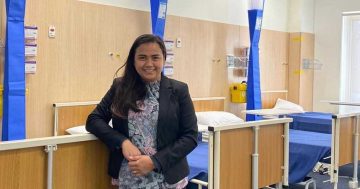
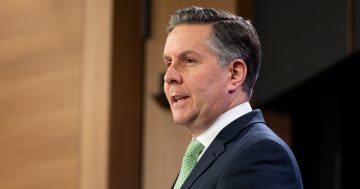
More women will soon benefit from a pharmacy trial aimed at lowering female health costs. Photo: Lyndon Stratford.
Close to a million more women will soon get cheaper access to the pill and urinary tract infection (UTI) medication at pharmacies, with the Federal Government expanding a trial aimed at lowering female health costs.
The trial was previously announced for concession card holders only, but will now be expanded to provide access for all women through their local pharmacies.
The 12-month trial will start to be rolled out early next year and will allow women to access pharmacy treatment for uncomplicated UTIs and initiation or re-supply of hormonal contraception.
Access to the contraception without a GP visit will be included in the trial so long as it is permitted under the rules of the state or territory in which it is provided.
It is estimated 900,000 Australian women could now benefit from the trial, which will see the government cover the cost of a pharmacist consultation up to $38 per visit and result in women paying no more than $25 per script.
Health Minister Mark Butler said the government wanted to make it easier for women to get care that fitted into their lives.
“This trial is part of our government’s promise to give Australian women more choice and control over their health, which has already benefited more than one million women,” he said.
“We’ve heard really a message for some years now that women don’t feel they get the choice and the access and the affordability for their healthcare that they need.
“We’ve done a lot of work over the last few years to put more medicines onto the PBS (Pharmaceutical Benefits Scheme), to introduce Medicare entitlements for people, for women to get better care from their doctors.
“And this latest chapter really deals with a situation where women need a medicine urgently for a UTI, for urinary tract infection, within 24 hours and if they can’t get to their GP in that time, things can get very, very serious.
“Being able to access your local pharmacist, provided that pharmacist has undertaken some additional training, we think will improve access, but also improve affordability.”
The reforms form part of Labor’s $792.2 million women’s health package, which also includes the first new contraceptives being added to the PBS in 30 years and improved access to IUDs and the contraceptive implant.
Women Minister Katy Gallagher said since the government announced the package last year, more than one million women have accessed almost 4.9 million cheaper scripts for new contraceptives, menopausal hormone therapies and endometriosis treatment listed on the PBS.
“For too long, women’s experiences of the health system haven’t received the attention they deserve. We’re determined to change that,” she said.
“We’re making practical changes that give women more choice, make health care more accessible and help save women thousands of dollars over their lifetimes.”
The Pharmacy Guild of Australia has welcomed the move.
National president Trent Twomey described the announcement as a landmark reform for women’s healthcare in Australia.
“It provides women more choice in when and where they can access safe and affordable primary healthcare,” Professor Twomey said.
“The trial will build on years of specially trained pharmacists delivering these services safely to patients across Australia and the world.
“Community pharmacy is Australia’s most accessible primary healthcare destination with more than 6000 community pharmacies open earlier, later and longer than other healthcare providers.”
Doctors, however, are concerned that the move opens up the potential for misdiagnoses at pharmacies resulting in patients receiving medications they don’t need and that don’t treat their actual conditions.
Both the Australian Medical Association and the Royal Australian College of General Practitioners also regularly highlight that pharmacists have “no significant training” in clinical medicine regarding complex medical history taking, symptom interpretation or physical examination.
Original Article published by Chris Johnson on Region Canberra.