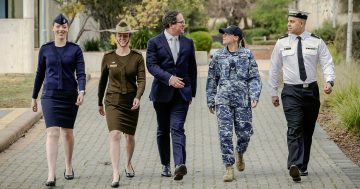
In 2025/26, recruitment grew across all three ADF services. Photo: POIS Bradley Darvill.
The Australian Defence Force (ADF) has the largest number of permanent members in 25 years after a concerted recruitment and retention effort in recent years.
The Federal Government said the ADF had 8100 new enlistments in the 2025/26 financial year, the highest number since 2010, and said the full-time and permanent workforce now exceeded 64,000 personnel, the largest since 2001.
It said recruitment growth had improved across all three services, with the navy achieving its highest intake in 16 years, the army its highest in 12 years, and the air force its highest intake in 24 years.
These improved recruitment numbers have been further bolstered by a reduced separation rate, which dropped from 7.9 per cent to 7.4 per cent last year, the lowest since 2011.
More than $1 billion has been spent on recruitment and retention since 2022 after numbers stagnated in the decade before. For example, in 2021, the permanent ADF workforce shrank by 1400.
The previous high separation rate was linked to a boom in mining jobs, operational fatigue from continuous deployments to Iraq and Afghanistan, and weariness among ADF members who had repeatedly been called upon to support clean-ups after a series of natural disasters.
Adecco Australia took over Defence recruitment from Manpower in October 2022 on a reported $20 million-a-year contract.
In 2023, the former ‘’Defence Jobs’’ recruitment branding was changed to ‘’ADF Careers’’, which was relaunched under the command of a three-star officer and with four new fixed recruitment centres in Brisbane, Sydney, Melbourne and Perth, and one mobile run by Adecco.
The government offered a $400 million retention scheme to personnel who were nearing the end of their return of service obligation (ROSO) period. Under the scheme, defence members were offered a $50,000 bonus if they signed on for an additional three years after their initial ROSO period.
In 2023, an Australian National Audit Office report found that recruitment targets continued to fall short, with the ADF meeting only 73 per cent of its target in 2022-23. It also found Defence had no effective ways of measuring the success of its recruitment campaigns.
In early 2025, with recruitment numbers continuing to fall below the targeted rate, Defence Minister Richard Marles said the average processing time for an ADF applicant was 268 days, a figure he said was unacceptable and should be less than half that.
The statement came as it was reported the government was having “difficult conversations” with Adecco about the shortfall.
But the tide has seemingly turned, with the government claiming Defence received almost 74,000 applications in 2025-26, and that the ADF was back on track to achieve the government’s target of 69,000 permanent Average Funded Strength by the early 2030s.
In a 15 September statement, Mr Marles said more sailors, soldiers, aviators, and cyber and space operators joined the ADF than in the past 16 years.
“The men and women who wear our nation’s uniform go to work every day to keep Australians safe,” he said.
“That is why the government is focused on recruiting, retaining and skilling the workforce we need.
“We’ve already made significant progress, but we will continue to reform recruitment processes and retention initiatives over the long term.”
Minister for Defence Personnel Matt Keogh said Defence’s most important capability was its people.
“Thanks to the government’s interventions, the Defence workforce is growing, with more people putting their hand up to serve and more personnel choosing to stick around for longer,” he said.
“In 2026, a career in the ADF can mean almost anything, with more than 300 roles to choose from. It’s fantastic to see more Australians coming forward to serve in such dynamic and rewarding careers.”
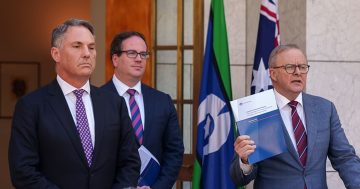
At a media doorstop at Parliament House on Tuesday, Mr Marles said the government had completely turned things around.
“And we’ve done this by much better recruiting, by focusing on where people are at in terms of more emphasis online, less on TV,” he said.
“We’ve had really innovative recruitment practices such as pop-up recruiting centres, which have been very effective. We’re pulling people through the recruitment process much quicker; that’s been important.
“But we’re also paying people more across the Defence Force, particularly in those trades where we need more people.”