The Prime Minister says writers and musicians will retain control over their work if it is used in AI training. Photo: Pressmaster.
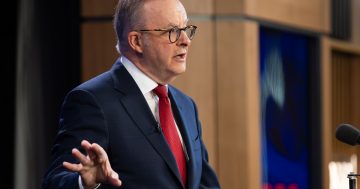
Anthony Albanese has promised Australian writers and musicians their work will not be exploited by artificial intelligence under the new framework the Prime Minister is setting up to manage the technology’s uptake in this country.
The Federal Government has been heavily lobbied by the media, authors, and the music industry to ensure their work remains under their control and that copyright laws are not diluted for the benefit of AI training.
In announcing mandatory rules around the new technology, Mr Albanese said the government’s approach will be to help Australia’s economy grow while strengthening its sovereignty and securing benefits consistent with the national interests.
“The AI Standards will deliver greater clarity, speed up approvals and streamline the process for verifying compliance with energy, water, safety and other requirements,” he said.
“The government will also ensure the strongest possible protection for Australian artists and media.
“Our approach will ensure Australian writers, artists and journalists retain ownership over their work, meaning no company should use Australian creative works to train AI without the artist’s control.”
Mr Albanese said anything less than that would be theft.
On Thursday, the PM revealed more details of his plans to protect intellectual property.
“Part of that will be a recognition that artists’ creativity, whether it be writers or songwriters or other people in the creative sector, including the media, that their work is their property and that it can’t be used without one, control, and secondly, without payment,” he said.
The announcement has been welcomed by the arts sector, which says it wants a seat at the table in the policy development.
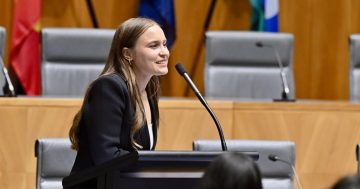
Australian Recording Industry Association (ARIA) chief executive officer Annabelle Herd said the Prime Minister could not have been clearer.
“Australian writers and musicians keep ownership and control of their work. Artists control what that work is worth, not the government and not a technology company,” she said.
“Control of price, value and terms of use are what underpin a commercial licensing market. The artist decides what their work is worth and who may use it.
“That is how licensing works everywhere else in the world, and it is how it should work here. In the Prime Minister’s words: anything less is theft.
“This is a clear message to AI companies: now is the time to get on with licensing.
“Right now deals are being signed across music, journalism and publishing around the world. Australia’s creative industries are ready to do business.”

Australian Writers’ Guild Group CEO Claire Pullen said local stories were a critical part of the nation’s shared future, and that the right copyright settings supported this.
She said the Prime Minister made it clear that theft of creative works is unacceptable and that Australia is ready for the opportunities ahead.
“Australia is a good place to invest in AI infrastructure. We are in the driver’s seat to set the pace for this change, and it’s time for the foreign big tech companies to heed the messages the government has been sending them for almost a year, and that we have heard again today,” Ms Pullen said.
“We look forward to working with the Office of AI and our industry to ensure Australian creators remain in control of their work and can be part of a framework where consent, credit and compensation are the pillars.”
The PM has established an Office of AI within his own department to accelerate the implementation of the Australian Standards on a national level.
The government’s approach will be considered by National Cabinet in August, with standards expected to be legislated early next year.
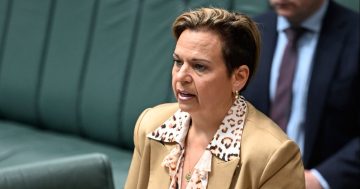
Attorney-General Michelle Rowland said artists would definitely be part of the consultation process, with the government’s priority being the preservation of Australian culture.
“That’s the basis for a copyright regime that has served Australia well,” she said.
“This is a property right that has been around for a very long time. It has been very durable at various ages of technological development.
“Creatives will be coming to the table to look at ways at which we can ensure they are getting properly recompensed and also that they can thrive in the new AI economy.”
Original Article published by Chris Johnson on Region Canberra.