
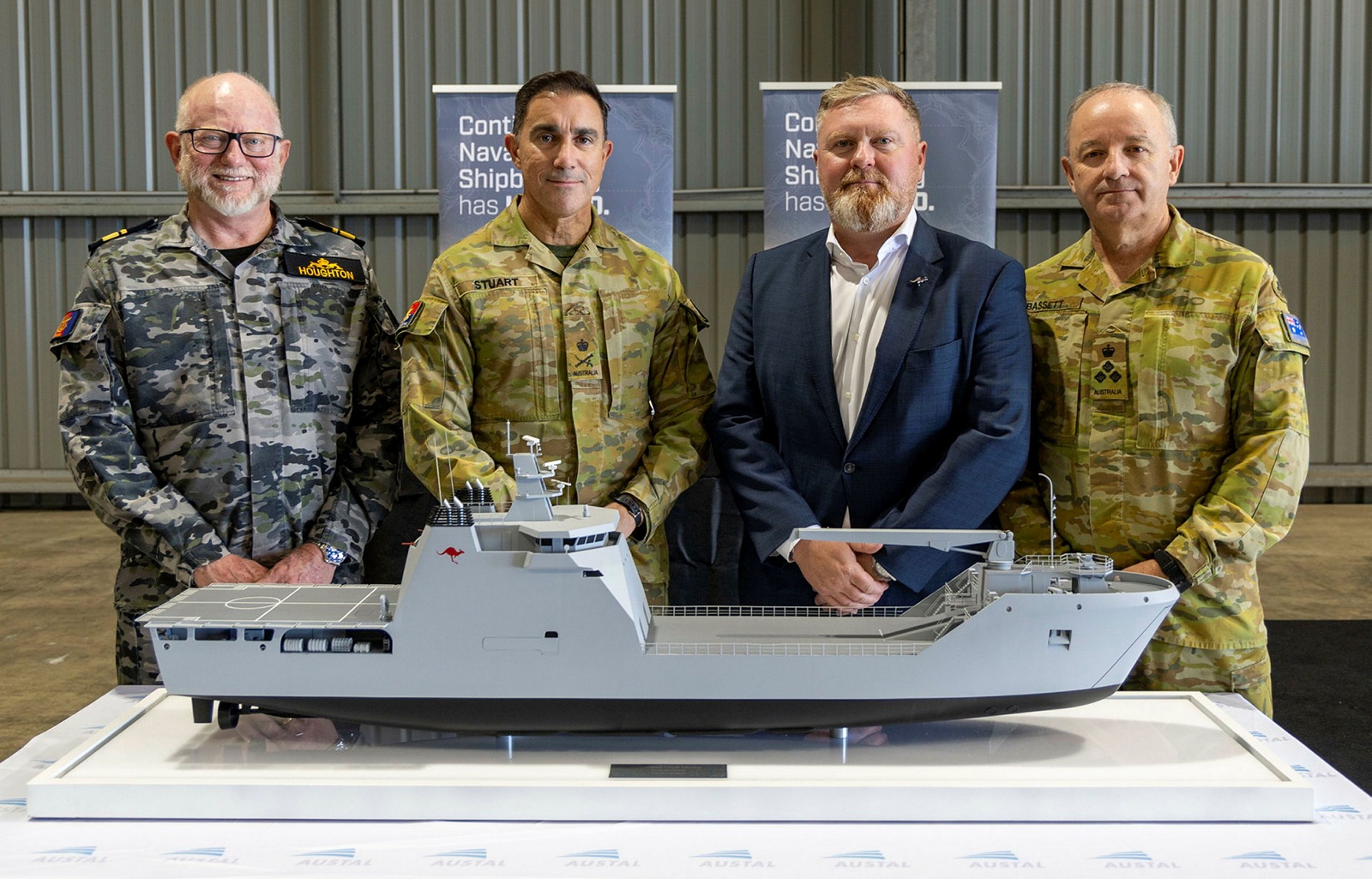
Head Patrol Boats and Specialist Ships, NSSG RADM Michael Houghton; Chief of Army LTGEN Simon Stuart; Austal General Manager Strategic Shipbuilding Gavin Stewart; and Director General Platforms BRIG Colin Bassett with a model of the LCH. Photo: ADF.
The Commonwealth has signed contracts for the supply of two new classes of amphibious landing craft vessels for the Australian Army.
The contracts totalling $4 billion will see Defence’s strategic shipbuilder Austal Defence Australia build 18 Landing Craft Medium (LCM) which were formerly designated Littoral Manoeuvre Vessel – Medium (LMV-M), and eight Landing Craft Heavy (LCH) which were previously designated as Littoral Manoeuvre Vessel – Heavy (LMV-H).
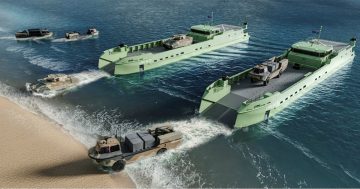
The LCM is based on a design by NSW-based Birdon and Incat Crowther which was selected in November 2023 for the Project LAND 8710 Phase 1A LMV-M requirement.
The LCM will replace 15 LCM-8 landing craft in Army service. By comparison with the 22-metre long LCM-8, at nearly 49 metres the Birdon design is not only more than twice as large, but also features cabin accommodation and a galley for its crew and some passengers, integral weapons stations, and will be capable of self-deploying from northern bases over much longer distances.
The vessels’ requirement calls for an LCM that can self-deploy over 2000 km, and be able to operate in sea-state 4 and survive in up to sea-state 7 conditions, while retaining the ability to beach and un-beach itself to load and offload equipment.
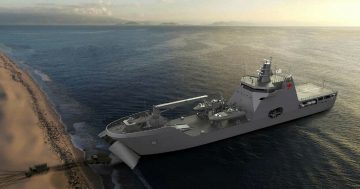
The larger LCH is based on the Damen LST100 design which was selected in November 2024 for Project LAND 8170 Phase 2A LMV-H requirement, and which has also been selected by the US Marine Corps.
The new LCH replaces the capability lost with the retirement of the last of eight Balikpapan LCH vessels in 2014. With a displacement of 3900 tonnes and a length of 100 metres, the Damen LST100 is nearly eight times heavier and twice as long as the old Balikpapan-class.
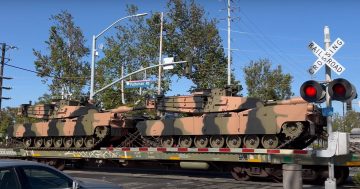
It has a capacity of 500 tonnes of military vehicles and equipment – nearly four times that of the LCH – with example loads being six M1A2SEP3 Abrams Tanks, 11 AS21 Redback Infantry Fighting Vehicles, or 26 HIMARS long-range strike systems. Each vessel will be equipped with self-defence weapons and military communications systems.
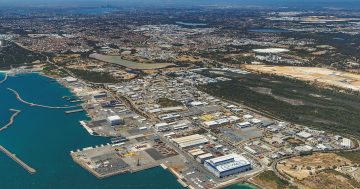
The government says the contract signings represent its commitment to support a future made in Australia. It says the first few vessels will be constructed at a Common User Facility (CUF) at Henderson in WA, before the build program moves to a permanent location.
As part of the LCH program, the government has also announced an initial $30 million for the Western Australian Government to commence early works for interim replacement facilities for non-Defence industries that utilise the Henderson Common User Facility.
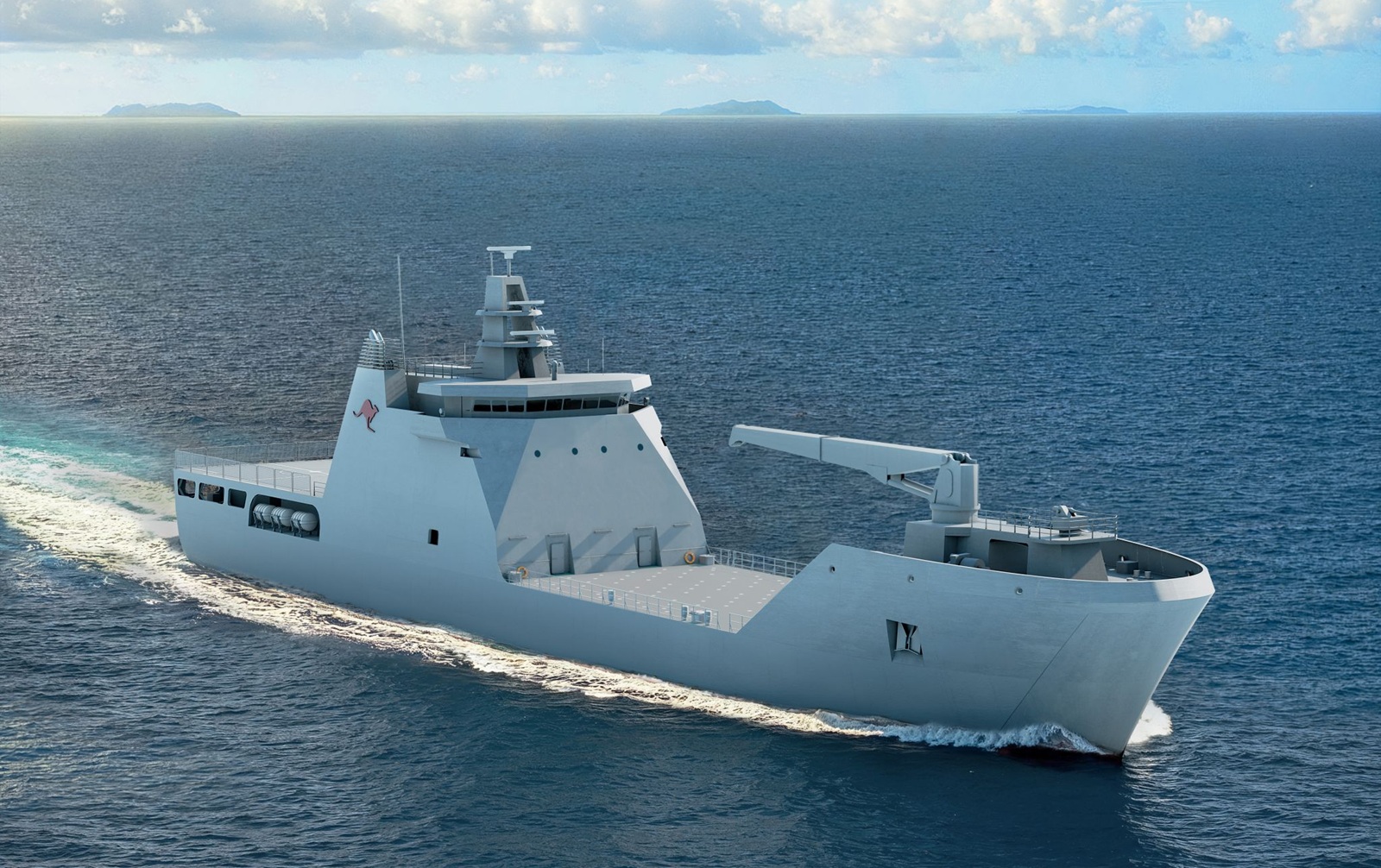
Concept art of an Army LCH at sea. Photo: Austal.
Defence Minister Richard Marles said the government was delivering continuous naval shipbuilding at Henderson, and the construction of landing craft vessels would be the first step.
“These contracts will support thousands of direct and indirect jobs, while also equipping the Australian Army with the capabilities it needs for littoral manoeuvre and to undertake long range land and maritime strike,” he said.
“An increased focus on littoral manoeuvre will enable the ADF to respond more effectively in our region and keep Australians safe.”
Minister for Defence Industry Senator Pat Conroy said the landing craft program would further strengthen Australia’s sovereign industry.
“The combined delivery of landing craft capabilities is expected to create more than 1100 direct and 2000 indirect jobs, providing a sustained pipeline of work that incentivises defence industry investment in skills, supply chains and infrastructure.”
Chief of Army Lieutenant General Simon Stuart said the new vessels underpinned Army’s transformation to deliver land power where it mattered most: in the littoral, defined simply as the part of the country near the coast.
“Consistent with the NDS [National Defence Strategy], and in an increasingly complex strategic environment, Army is rapidly transforming to optimise for littoral manoeuvre paired with long‑range strike capabilities,” he said.
“These vessels will allow us to operate across the beaches, rivers, coastal and jungle environments that define our region, and will shape future conflict.
“Our future littoral fleet, along with Army’s combined‑arms land system, make us more lethal and survivable, strengthening our ability to hold adversaries at risk and to secure strategic terrain.”
LTGEN Stuart said the fleet would be crewed by a specialised workforce.
“Our future littoral fleet, along with Army’s combined‑arms land system, make us more lethal and survivable, strengthening our ability to hold adversaries at risk and to secure strategic terrain,” he said.
“We are working with the Royal Australian Navy and industry to accelerate training pathways for our littoral warfighters – from maritime warfare officers to marine technicians – ensuring crews will be skilled, safe and ready.”
Construction on the first vessels is scheduled to begin later this year, and all vessels are expected to have been delivered by 2038.
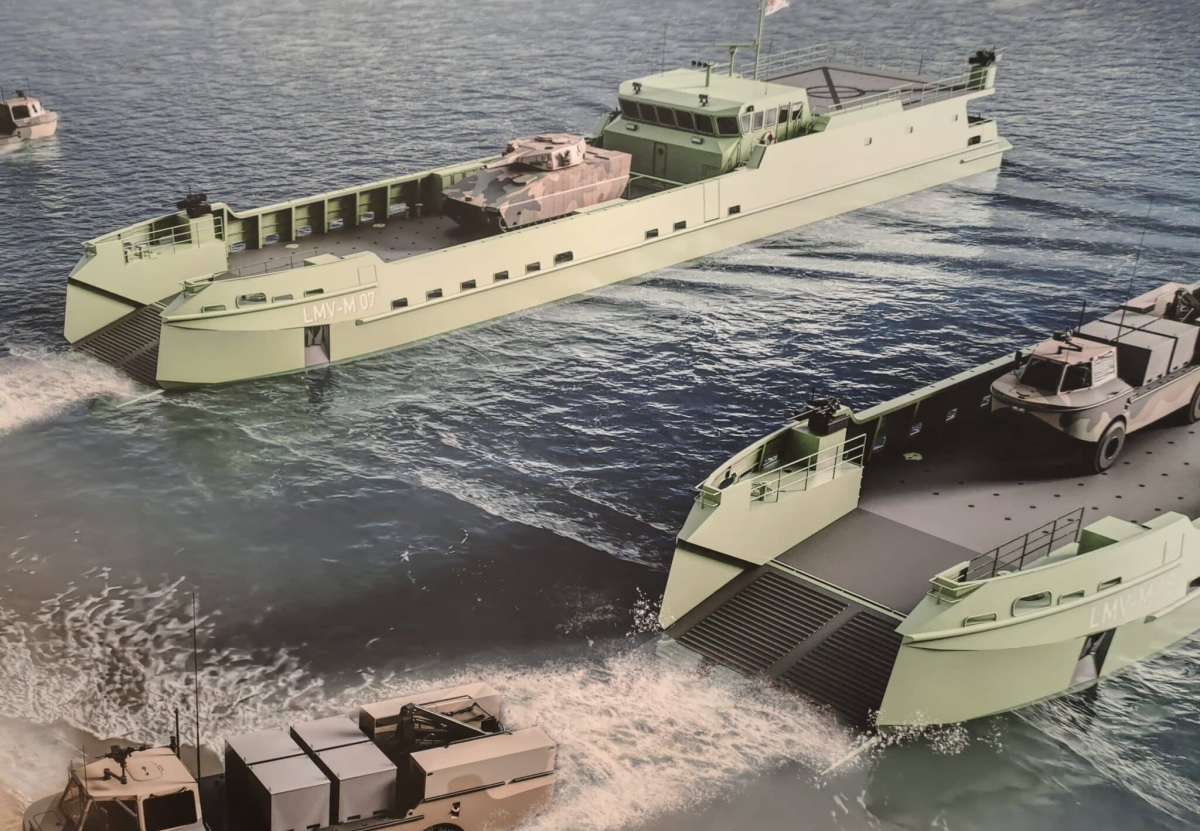
The Birdon/Incat Crowther LMV-M design will be built by Austal at Henderson. Image: Birdon/Incat Crowther.