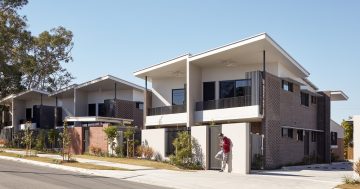
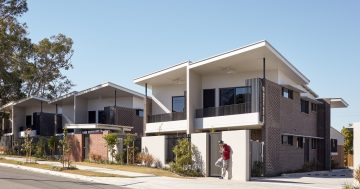
Torres Shire Council is just one local government calling for urgent funding to address a critical housing shortage. Pictured is Saibai. Photo: Torres Strait Island Regional Council.
The mayors of First Nations communities in Far North Queensland are pleading with the Federal Government for funding to reduce chronic levels of overcrowding “having devastating flow-on impacts to health and education”.
Residents in isolated communities have been paying a high price due to years of underinvestment and the leaders are calling for change, according to the Local Government Association of Queensland (LGAQ).
The LGAQ is calling on the Commonwealth to alleviate the problem with a $400 million funding allocation in the May Federal Budget.

Hope Vale Aboriginal Shire Council Mayor Bruce Gibson. Photo: Supplied.
Hope Vale Aboriginal Shire Council Mayor Bruce Gibson said: “Overcrowding and a lack of housing impact on our social determinants – which include education, health and general wellbeing of communities who live in overcrowded houses.
“The kids just don’t have any space. It impacts their education, their ability to do homework, and their ability to be a child,” he said.
“We need 62 houses just to break even with the current population. It impacts on people having a normal life.”
Torres Shire Council Mayor Elsie Seriat said housing shortages in her community led to a slew of other problems.
“A lack of housing means a strain on households – health issues, education issues and no sense of belonging and ownership,” she said.
“Where we are in the Torres Strait is gold set in a pearl environment that has diamond potential – which is a quote from my former mayor.
“We need more houses for our people because people are moving away. Housing is so important to us to keep people at home, have our own workforce and have our schools.
“We have a lot of potential for development – land that we are seeking to be unlocked from the government. This would enable us to build more houses.

Torres Shire Council Mayor Elsie Seriat says more than 250 homes are needed in her community. Photo: Lewis James Media.
“We are looking to build over 250 homes. We just need the government to walk with us so we can have real outcomes for our community.”
The call for funding comes more than a year after the LGAQ made a federal election campaign plea for an urgent cash injection to help fix the worsening housing crisis in remote communities.
Mayors from Lockhart River, Pormpuraaw, Palm Island and Wujal Wujal spoke out – and an open letter to Canberra was signed by all 77 LGAQ mayors.

The LGAQ open letter to Canberra from April 2025. First Nations mayors have renewed a desperate plea for housing funding. Image: LGAQ.
There are accounts of more than 10 people living in two- and three-bedroom homes amid a shortfall of thousands of homes in the remote communities state-wide.
LGAQ president Mayor Matt Burnett said more government funding would help fix the state’s remote accommodation crisis.
“Overcrowding in First Nations communities has reached critical levels and without an urgent federal funding injection, the situation will continue to deteriorate,” he said.
“We’re calling for at least $400 million over four years to be earmarked in the Federal Budget, enabling Queensland’s 17 First Nations councils to kickstart crucial housing construction.”
The LGAQ has created a “timeline of inaction” showing how overcrowding in communities has worsened since the National Partnership Agreement on Remote Indigenous Housing, designed to tackle severe shortages, finished in mid-2018.
The program was not replaced, overcrowding steadily worsened and councils and the LGAQ asked for funding assistance at the 2019 and 2022 federal elections, but pleas were “ignored”.
LGAQ CEO Alison Smith said: “During the National Partnership Agreement on Remote Indigenous Housing (NPARIH) when all levels of government were working together overcrowding rates decreased.
“Since the end of the NPARIH, overcrowding is again worsening and with it the negative impacts to health, education, and domestic and family violence,” she said.
“Councils have vast on-the-ground knowledge about the housing these communities need, and they can partner with the Federal Government to ensure it’s delivered.”

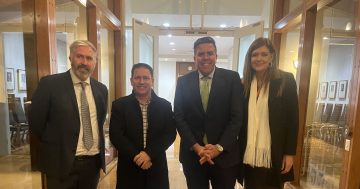
Leichhardt MP Matt Smith. Photo: Supplied.
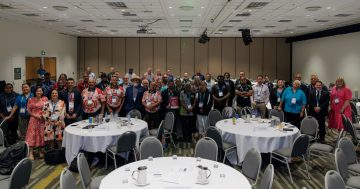
Federal Leichhardt MP Matt Smith said he spoke at the LGAQ Indigenous Leaders forum and met with mayors last week.
“We spoke at length about the challenges facing communities across Leichhardt, as well as pathways to Closing the Gap,” he said.
“On my trips to the Cape community housing is always the number one priority that is bought up. I will always support the voices in my community and will work in collaboration to achieve the best outcomes.
“Each township has different specific needs which we need to address in a bespoke and collaborative manner, as opposed to blanket policies, and my active engagement with the leaders of our communities is ongoing.
“Housing is a priority of this government, but I am unable to comment on what maybe in or out of the upcoming budget.”
Treasurer Jim Chalmers has been approached for comment.
Original Article published by Luke Mortimer on Region Tropical North Queensland.