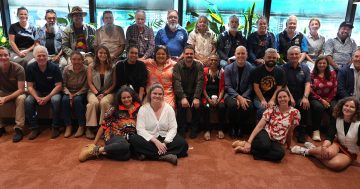
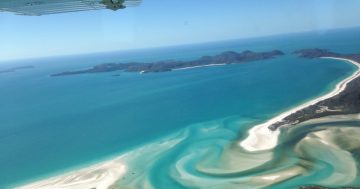
Lama Lama ranger Genai Faaoso. Photos: Supplied.
Lama Lama rangers have been working with archaeologists and scientists to document ancient Indigenous rock artwork and engravings.
The art dated up to 6000 years old is being uncovered on Lama Lama Sea Country, around Princess Charlotte Bay on the Cape.
Scattered across one of the most culturally rich parts of the vast Great Barrier Reef, the illustrations depict mythical beings as well as crocodiles, dolphins, dugong, moths and other creatures.
The Great Barrier Reef Marine Park Authority (GBRMPA) has described the art as a “cultural archive” which could help researchers better understand how species, seasons and other elements of nature have changed over time.
Lama Lama elder Karen Liddy said: “Sea Country is living culture.
“It is where traditional owners care for Country, protect sacred places, sustain marine life and pass knowledge to the next generation,” she said.
“Protecting the Great Barrier Reef is not only an environmental responsibility. It is also a cultural responsibility.”
The Lama Lama people were forcibly removed from their homeland (Aakurru) near the mouth of the Stewart River by police in 1961 under the Department of Native Affairs Act. Their homes were burnt and dogs were shot.
They were sent to live at various communities including Bamaga, Lockhart River, Palm Island, Injinoo [formerly Cowl Creek] and Yarrabah.
The Lama Lama people, including elder Keith Liddy, began making their way back to Port Stewart, near Coen, in the next two decades.
Native title recognition came in 2008, backed by photos and film by Herald Sun journalist Donald Thomson of Lama Lama people building shelters, weaving, fishing and hunting, captured in the late 1920s.

Yintjingga Aboriginal Corporation was formed by Lama Lama traditional owners living in Coen and Port Stewart. Pictured is operations manager Gavin Bassani.
Now, Lama Lama rangers have been running camps for tourists and helping with research into dugong, marine turtles and sawfish, as well as documenting the art and engravings on islands.
There are concerns some sites may have been damaged by a storm surge caused by Tropical Cyclone Narelle in March, and a “cultural heritage monitoring voyage” is planned for later in the year.
Animals in the Great Barrier Reef Marine Park such as dugong and sharks are recognised as totems by some Indigenous groups, and the Lama have a connection with the white-bellied sea eagle.
GBRMPA Traditional Use of Marine Resources Agreements director Niboddhri Ward said First Nations partnerships were a big part of safeguarding the reef.
“Traditional owners bring thousands of years of knowledge to reef protection,” she said.

Lama Lama mother and daughter ranger duo Rachel McIvor (right) and Genai Faaoso.
“They know the stories of places, the movement of seasons, the behaviour of species and the signs of change across Country.
“When that knowledge is combined with western science, it gives the reef its best chance in a changing climate.”
The federal GBRMPA works with traditional owners on planning, resources agreements, species monitoring, compliance partnerships, island management and cultural heritage protection.
The agreements recognise native title rights and the traditional use of marine resources via hunting and gathering.
A total of 10 resources agreements cover more than 43 per cent of the Great Barrier Reef coastline.
Original Article published by Luke Mortimer on Cape York Weekly.