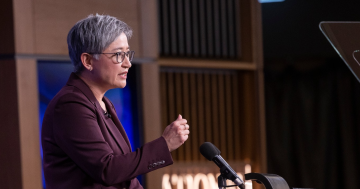
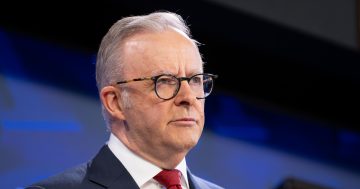
Home Affairs Minister Tony Burke has secured $74 million in the federal budget for a national Counter Terrorism Online Centre. Photo: Tony Burke Facebook.
Next week’s Federal Budget will provide $74 million over two years to set up a dedicated national centre with the role of detecting and disrupting the evolving threat of online violent extremism and terrorism.
It will have a special focus on countering the online radicalisation of young Australians.
It will be known as the Counter Terrorism Online Centre, and be jointly led by the Australian Security Intelligence Organisation (ASIO) and the Australian Federal Police (AFP).
They will work together in partnership with local and international law enforcement partners to target online terrorists who threaten violence and manipulate vulnerable young people.
The centre will enable specialist counterterrorism investigators and intelligence analysts to monitor high-risk online spaces, assess credible threats and coordinate the disruption of extremist content and activity, including through covert online engagement.
Home Affairs Minister Tony Burke said the centre’s capability will enable better national alignment of counter-terrorism activities and law enforcement responses, with any operational responses from the centre complementing existing counter-terrorism efforts such as the Joint Counter Terrorism Teams.
“More young Australians are being radicalised online, and it happens fast,” the minister said.
“We already have centres dedicated to protecting children and combating cyber crime; establishing a centre for online violence extremism and terrorism is the next logical step in a fast-moving threat environment.
“The capability we’ve always had to monitor extremists in the meeting room now extends to the chat room.
“A bolstered online threat capability will give AFP and ASIO the resources they need to target terrorists and violent extremists online.
“Everyone needs to be alert to potential threats from terrorist and extremist organisations online, and I urge anyone who sees something that raises concerns to contact the National Security Hotline.”
The funding is part of a package of $80 million over two years from 2026–27 to enhance capabilities to counter terrorism threats online and prevent violent extremism and youth radicalisation.
It is in addition to the government’s $106.2 million investment over four years from 2024-25 as part of the release of A Safer Australia – Australia’s Counter-Terrorism and Violent Extremism Strategy 2025.
Mr Burke said the enhanced response will enable law enforcement and intelligence agencies to work closer and intervene earlier to disrupt online youth radicalisation.
“Violent extremists are increasingly being radicalised online, and the pathways for radicalisation are evolving every day,” he said.
“Targeted radicalisation and recruitment often occur via gaming platforms. Private chat groups on social media also act as echo chambers and channels for radicalisation and promotion of violence.
“Of concern is how online radicalisation is impacting the most vulnerable in our community – young people.
“This continued investment is required to protect Australia from individuals and groups who seek to erode Australia’s social fabric by advocating hatred, fear and violence.”
On 8 January 2024, the Counter-Terrorism Legislation Amendment (Prohibited Hate Symbols and Other Measures) Act 2023 came into effect, introducing new offences for using a carriage service to access violent extremist material and for possessing or controlling violent extremist material obtained or accessed using a carriage service.
In the two years the legislation has been in effect, the AFP, ASIO and their Joint Counter Terrorism Team partners have charged 27 individuals with violent extremist material offences. Of those individuals, 15 were aged 17 years or younger.
The Royal Commission on Antisemitism and Social Cohesion has begun hearing evidence this week, after delivering its interim report last week, including 14 recommendations for government.
Among them is that the role of the Commonwealth Counter-Terrorism Coordinator should be made full-time.
It also recommends that a Prime Minister and National Security Committee ministers (which, in the current Federal Government, includes Mr Burke) should participate in a counter-terrorism exercise, along with all National Cabinet members, within nine months of each federal election.
The Counter-Terrorism Handbook should also be updated promptly, and subsequently at least every three years, in coordination with updates to the Counter-Terrorism Plan and the Australia-New Zealand Counter-Terrorism Committee triennial review.
Prime Minister Anthony Albanese has committed to embracing all the recommendations.
If you see something of concern, contact the National Security Hotline on 1800 123 400, or via the National Security Hotline Online Report. If you have concerns about a friend, family member or someone in the community, and you want to learn more, please visit Step Together.
Original Article published by Chris Johnson on Region Canberra.