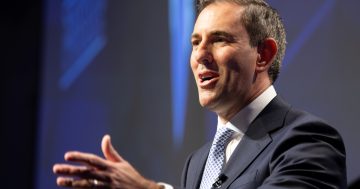
The 2026 Federal Budget has delivered a broken promise over residential investment properties and now Labor has to sell it. Photo: Screenshot.
Now comes the sell, and it won’t be easy, but on the morning after the Federal Budget was delivered, Anthony Albanese and Jim Chalmers are giving it a red-hot go.
Across a number of media interviews on Wednesday morning (13 May), the Prime Minister and the Treasurer are being grilled over the budget’s big initiative to make significant changes to negative gearing and capital gains tax for residential investment properties.
It’s a broken promise and voters don’t take too kindly to such things these days, particularly with trust levels in anything remotely political or institutional on the decline.
This morning’s media interviews are reflecting that and are not going easy on the budget’s leading protagonists.
The PM has even been asked whether the Federal Government will now introduce a death tax – something else Labor said it wouldn’t do.
“No,” says Albo, of course, before getting into the spiel about the tax changes and how they are aimed at helping young Australians get into home ownership.
“The truth is that we’ve thrown everything at the housing supply issue, but young people still aren’t getting a crack,” he said in one interview.
“So we need to make sure that we don’t say goodbye to the Australian dream this generation.
“What it will do is to make a substantial difference by giving people the opportunity to aspire to their own home. It will also, of course, boost supply over time as well.”
The PM has also been explaining the government’s about-face on the issue by insisting he is being upfront about why his mind has changed.
“We have changed our position because we don’t want a generation of people who watch your program to be sitting there and thinking they’re going to be renting for the rest of their lives.”
For his part, the Treasurer put it in a nutshell when he said the measure was all about making it easier to buy a first home but not so easy to buy a fifth one.
“We’re not targeting a particular price or a particular price outcome. We’re trying to make sure that there are more affordable options for more people to get a toehold in the market,” Chalmers said.
“There’s a sense that it’s becoming too hard for people to buy their first home, and if that means we have to not make it quite so easy for people to buy their fifth or sixth or seventh home, then so be it.”
That’s what Labor is hanging its hopes on – that the voting public will come to see this as a genuine effort at intergenerational fairness.
The government expects it to take somewhere between five and 10 years for the measure to show its full impact and for the number of negatively geared properties to drop significantly.
The hope is that 75,000 more Australians will be in their own homes within a decade.
They will get their first homes at the expense of other Australians who have enjoyed the tax benefits of owning more than one.
“These changes are contentious. There’s no use pretending otherwise, but it’s the right thing to do,” Chalmers said Wednesday morning.
“The easiest thing that we could have done from a political point of view would be to see these challenges in the housing market, particularly for young people, and to see the issues in the tax system and to leave everything exactly as it was. And we didn’t think that was an acceptable outcome.”
Selling it to the electorate might not be too hard in the end.
While investors feeling the pinch will gripe, overall, there still remains a wider sense of fairness among the Australian public.
Everyone wants their kids to have at least some of the opportunities they had when it comes to buying a house.
The first, and perhaps the biggest, resistance, however, will come from the Opposition.
The Coalition has already vowed to repeal the changes when they return to the Treasury benches.
Better still, says shadow treasurer Tim Wilson, it will do everything in its power to make sure the reforms don’t become reality in the first place.
Labor has no mandate for these changes, he insists.
“We’ll repeal these measures if necessary, but our objective is to defeat them and to make sure that they’re never legislated,” Wilson said, “because this government doesn’t have licence from the Australian community to support these changes.”
Original Article published by Chris Johnson on Region Canberra.