
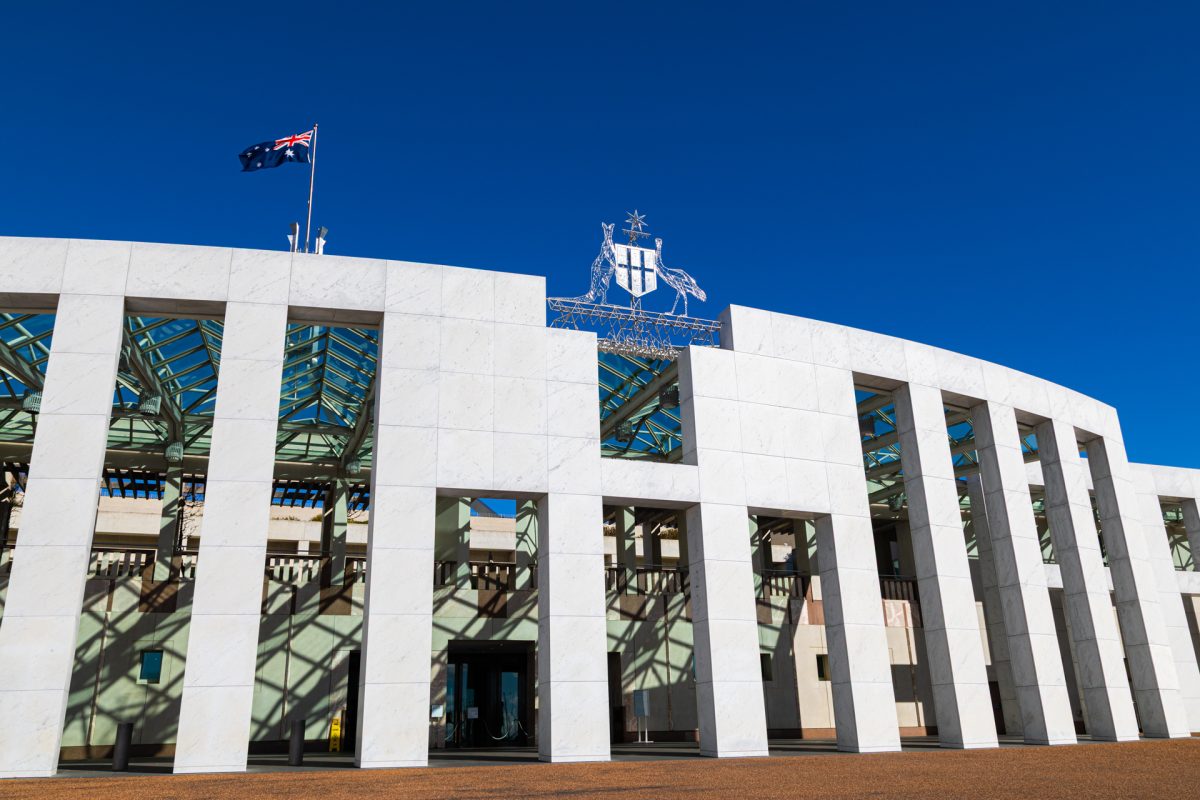
Labor has introduced its legislation to give government more powers to counter terrorist activity. Photo: Michelle Kroll.
Counter-terrorism legislation has been introduced to Federal Parliament seeking to beef up legal and enforcement powers against what the government describes as “evolving threats” to Australia.
The Counter-Terrorism Legislation Amendment Bill 2026, tabled in the House of Representatives on Wednesday (12 August) reforms a targeted set of government powers to ensure they remain “effective, proportionate and responsive” to contemporary terrorism attempts and activity.
It extends critical counter-terrorism powers for a further three years and makes targeted amendments to those powers.
These include amendments to the control order and post-sentence order frameworks, which enable courts to impose orders on certain individuals to protect the public from terrorism.
In presenting the legislation, Attorney-General Michelle Rowland said keeping Australians safe was the top priority for the Federal Government.
“The devastating Bondi terrorist attack demonstrated the profound harm and evil that terrorism inflicts on individuals, families and communities,” she said.
“It also highlighted the complex and evolving nature of the terrorism threat facing Australia.
“Strengthening the operation of Australia’s core counter-terrorism legislation – while maintaining strong safeguards – will ensure our law enforcement agencies are equipped with the necessary tools to disrupt and manage imminent threats to the community.
“This is an important part of the government’s continuing and holistic efforts to protect Australians from the threat of terrorism.”
If passed, the reforms will embed control orders as the primary Commonwealth mechanism for managing serious terrorist offenders in the community, and strengthen the control order and post-sentence order frameworks in the Criminal Code.
They will do that by strengthening information sharing arrangements between the Commonwealth and states and territories; and facilitating access to more information about a person’s criminal history to inform control order and post-sentence order applications and proceedings.
They will also strengthen the application of the control order framework to young people, while maintaining safeguards and consideration of the best interests of the young person.
Enabling law enforcement agencies to obtain warrants for electronic surveillance when considering whether to request a control order in relation to a serious terrorist offender, is another reform contained in the bill.
Beyond that, the legislation seeks to also make technical amendments to the Criminal Code to strengthen the framework for listing terrorist organisations.
It will also expand protections for United Nations to give effect to Australia’s obligations under the Convention on the Safety of United Nations and Associated Personnel.
The bill was developed in close consultation with law enforcement agencies and all states and territories, through the Intergovernmental Agreement on Australia’s National Counter-Terrorism Arrangements.
It was also developed after consideration of the Independent National Security Legislation Monitor’s (INSLM) review of Division 105A of the Criminal Code, dealing with post-sentence orders for terrorist offenders.
That report raised serious concerns regarding the reliability of expert risk assessment tools used to justify prolonged post-sentence detention.
It proposed establishing an independent statutory body to ensure supervision conditions are applied fairly, transparently, and consistently across jurisdictions without political interference.
The review recommended repealing the continuing detention order regime due to the high threshold of uncertainty and unreliable forecasting of future offences.
The government tabled its formal response to the report of that review when introducing the bill on Wednesday, saying it rejected the recommendation.
“The government does not accept the INSLM’s recommendation to abolish continuing detention orders,” the response states.
“Having regard to the current terrorism threat environment, the existing statutory safeguards, and the judicious use of these powers to date, the government considers it would not be appropriate to abolish continuing detention orders.
“Australia is facing a challenging and evolving terrorism threat environment. Continuing detention orders are an important element of Australia’s legal framework to manage the risk of terrorism.
“These orders play a critical role in allowing the continued detention of a serious terrorist offender at the end of their sentence, where no other measures are likely to be effective in managing an unacceptable risk that the offender may commit a serious terrorism offence.
“While extraordinary, these powers are vital to ensure unacceptable and unavoidable risks to the community are managed appropriately.”
Home Affairs Minister Tony Burke said Labor would now refer the bill to the Parliamentary Joint Committee on Intelligence and Security for consideration and reporting.
“Our government is constantly working to ensure that our security, law enforcement and intelligence agencies have the tools they need to do their job and keep us safe,” he said.
“The threat landscape our agencies are facing is evolving faster than ever and it’s critical that the legal powers which underpin their options keep pace.”
Original Article published by Chris Johnson on Region Canberra.