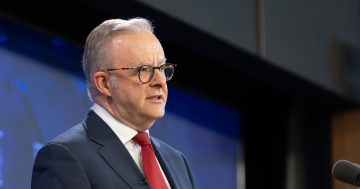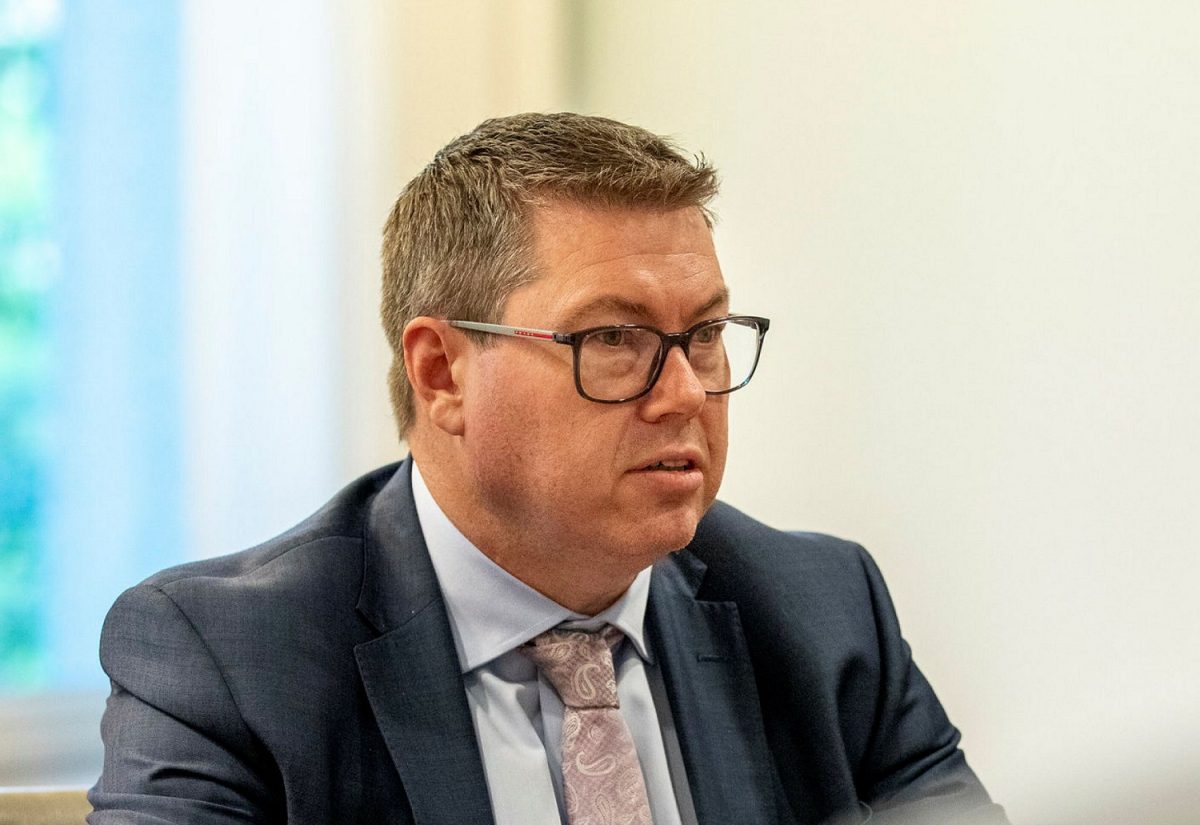
Defence Industry Minister Pat Conroy has confirmed Australia will join a summit hosted by Britain and France aimed at finding a peaceful solution to the Strait of Hormuz. Photo: ADF.
Australia will join more than 40 other nations for high-level talks that exclude the United States, Israel and Iran over what to do about the Strait of Hormuz.
With the US blockade of the strait currently underway – closing the shipping route that was already blocked by Iran – much of the rest of the world is intent on reaching a diplomatic solution to get oil and other essential materials through the transit lane.
This week’s talks will be hosted by the United Kingdom and France, and follow an initial round of discussions hosted by Britain earlier this month.
French President Emmanuel Macron took to social media to describe the planned meeting as a peaceful multinational effort.
“With regards to the Strait of Hormuz, we will be organising in the coming days a conference with the United Kingdom and those countries willing to join us in a peaceful multinational mission aimed at restoring freedom of navigation in the strait,” he wrote on X.
“This strictly defensive mission, which will be separate from the warring parties, is intended to be deployed as soon as the situation allows.”
British Prime Minister Keir Starmer said in a statement that reopening the strait was “vital to ease cost-of-living pressures”.
Australia’s Defence Industry Minister Pat Conroy has confirmed that Australia will join the summit.
But he could not say yet who would represent the Federal Government in the talks.
“We’ve been part of the diplomatic efforts to reopen the Strait of Hormuz. We welcome the announcement of the summit by the UK and French governments,” Mr Conroy said during an ABC News Breakfast interview.
“Australia will most definitely participate in that summit. We are very keen to see an opening by diplomatic means in the Strait of Hormuz … Typically, in these things, we send a military officer, but it could be a diplomatic representative.
“But the key thing is, there is a coalition of nations that are really keen to see a diplomatic resolution of the conflict and for the strait to be reopened via diplomatic means so that we can get ships moving through this vital waterway.”
The minister clarified that while the talks would be centred on safe passage through the Strait of Hormuz, such transit had to be predicated on the war in the Middle East ending.
“The summit, from the UK and France, is obviously focused on how do we ensure safe passage for vessels. But we need peace first, and we’ve been very clear about that,” he said.
“That’s why we need Iran and the United States to continue the ceasefire, return to negotiations so that the strait can be reopened.”
In a separate interview, Mr Conroy confirmed the government was not considering joining the US blockade of the strait, adding that Australia has not even been asked to join.
US President Donald Trump has posted on social media that other countries will join his blockade, but he didn’t say which ones.
The UK has already ruled out joining the US in the blockade.
When announcing at a White House press conference that the blockade had started, President Trump suggested Washington remained willing to keep talking with Tehran.
“We can’t let a country blackmail or extort the world because that’s what they’re doing,” he said.
“I can tell you that we’ve been called by the other side … they want to work a deal.”
The United Nations has condemned the blockade of the vital shipping lane.
The head of the International Maritime Organisation (the UN’s maritime agency), General Arsenio Dominguez, told a news conference on Monday (13 April) that no country had a legal right to block the Strait of Hormuz.
“In accordance [with] international law, no countries have the right to prohibit the right of innocent passage or the freedom of navigation through international straits that are used for international transit,” he said.
Original Article published by Chris Johnson on Region Canberra.