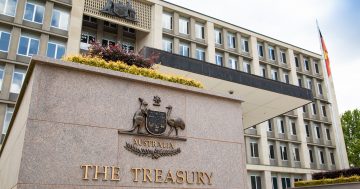
The Federal Government has issued new guidelines for data centres looking to expand in Australia, and they include building their own renewable energy infrastructure. Photo: File.
Artificial intelligence giants operating in Australia will need to fund their own renewable power to avoid draining domestic resources, and they will have to comply with strict new guidelines that prioritise the national interest if they want the Federal Government to fast-track regulatory approvals for expansion.
There are about 200 data centres across the nation, and if the tech giants want to build more, they will have to follow five guidelines.
Developments must prioritise national interest, support the country’s energy transition, use water sustainably, invest in Australian jobs and skills, and strengthen research, innovation and local capability.
The government expects data centres and AI infrastructure operators to underwrite new renewable power supply, pay their full share of new grid connectivity costs so they are not passed on to consumers or businesses, and support Australia’s energy transition through demand flexibility mechanisms.
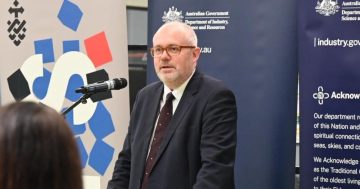
The government’s new framework, Expectations of data centres and AI infrastructure developers, was released by Industry and Innovation Minister Tim Ayres.
“Australia has a significant number of national challenges to solve – and AI, data centre investment and advanced industrial and technological capability can help us get there,” Senator Ayres said.
“Securing this infrastructure onshore strengthens our security, supports our startups and researchers and ensures Australian data benefits Australians – not offshore jurisdictions.
“Australia is open for business, but the kind of business that puts Australia’s national interest first.”
The minister said while global investment in data centres is accelerating, and Australia is well-placed to lead the rush, it must happen on terms that benefit the local community.
The expectations are designed to make it easier to invest in Australia, but they also set clear, nationally consistent signals that the government says support smoother engagement with communities, stronger coordination with states and territories, and faster progress on projects aligned with Australia’s priorities.
Energy and Climate Change Minister Chris Bowen said the expectations make clear that data centre developments must put the needs of the Australian people first, ensuring communities benefit directly through jobs, investment in skills and innovation.
They must “strongly support” Australia’s clean energy transition and safeguard the nation’s long-term water security.
“Data centres have great potential to support our grid and expand new renewable investment, but it’s important we work together across jurisdictions and with industry to get the investment settings right so that we can continue to keep our system secure and energy prices low for all consumers,” he said.
Through regulatory processes, the Federal Government will prioritise proposals that are most closely aligned with these expectations.
Shadow industry minister Andrew Hastie said renewable energy alone won’t be enough, and Australia will not be able to host new AI data centres without nuclear energy or fossil fuels like coal and gas.
“What the government is saying here is you have to invest in your renewables, but everybody can’t power AI centres off renewables alone. You need baseload power from coal or gas or nuclear,” he said.
“If you go to an AI centre or data centre in this country, you’ll find, generally speaking, a Rolls-Royce diesel generator to back it up, powered by diesel.”
Australian Conservation Foundation CEO Adam Bandt (former leader of the Greens) has urged the government to go beyond just issuing guidelines to the tech giants.
“Data centres guzzle power and water, and they could derail Australia’s clean energy transition unless they are properly regulated,” Mr Bandt said.
“The government should be commended for making it clear that it’s not open season for data centres that are eyeing off Australians’ precious water and energy supplies.
“We welcome the government’s direction and the inclusion of expectations relating to additional renewable energy supply and sustainable and efficient water use.
“However, giving these big tech corporations guidelines is not enough.
“Expectations are a vague policy intervention – we expect the government to build on these policy principles and set genuine, specific conditions to make sure data centres comply with these obligations.
“If you want to build a data centre in Australia, you should be compelled to build the renewables and water recycling infrastructure to service it.”
Mr Bandt said the Conservation Council was disappointed that the government has so far not listed any expectations regarding the siting of data centres to minimise impacts on nature.
Nor are there any guidelines relating to community benefits sharing and proper consultation with local communities and First Nations.
“We urge the Albanese Government, in partnership with states and territories, to impose strict, measurable obligations on the tech titans to make sure they do their share, consult properly and don’t drain our resources or derail the clean energy transition,” Mr Bandt said.
Original Article published by Chris Johnson on Region Canberra.