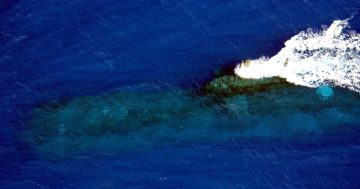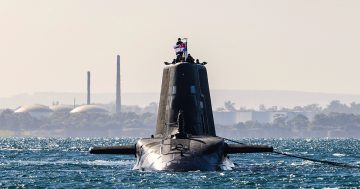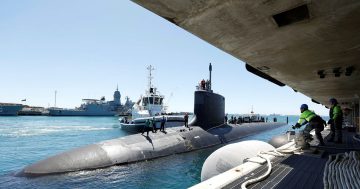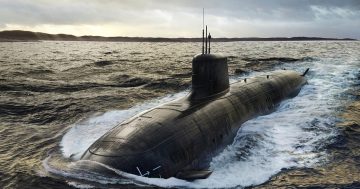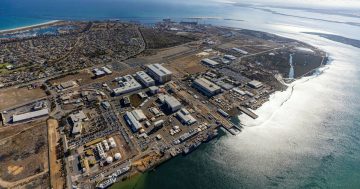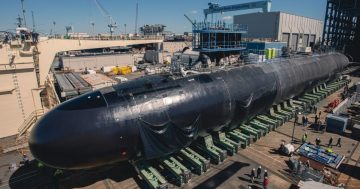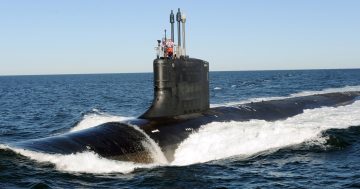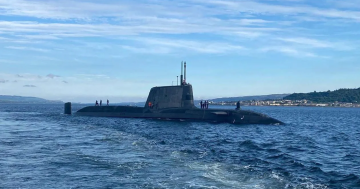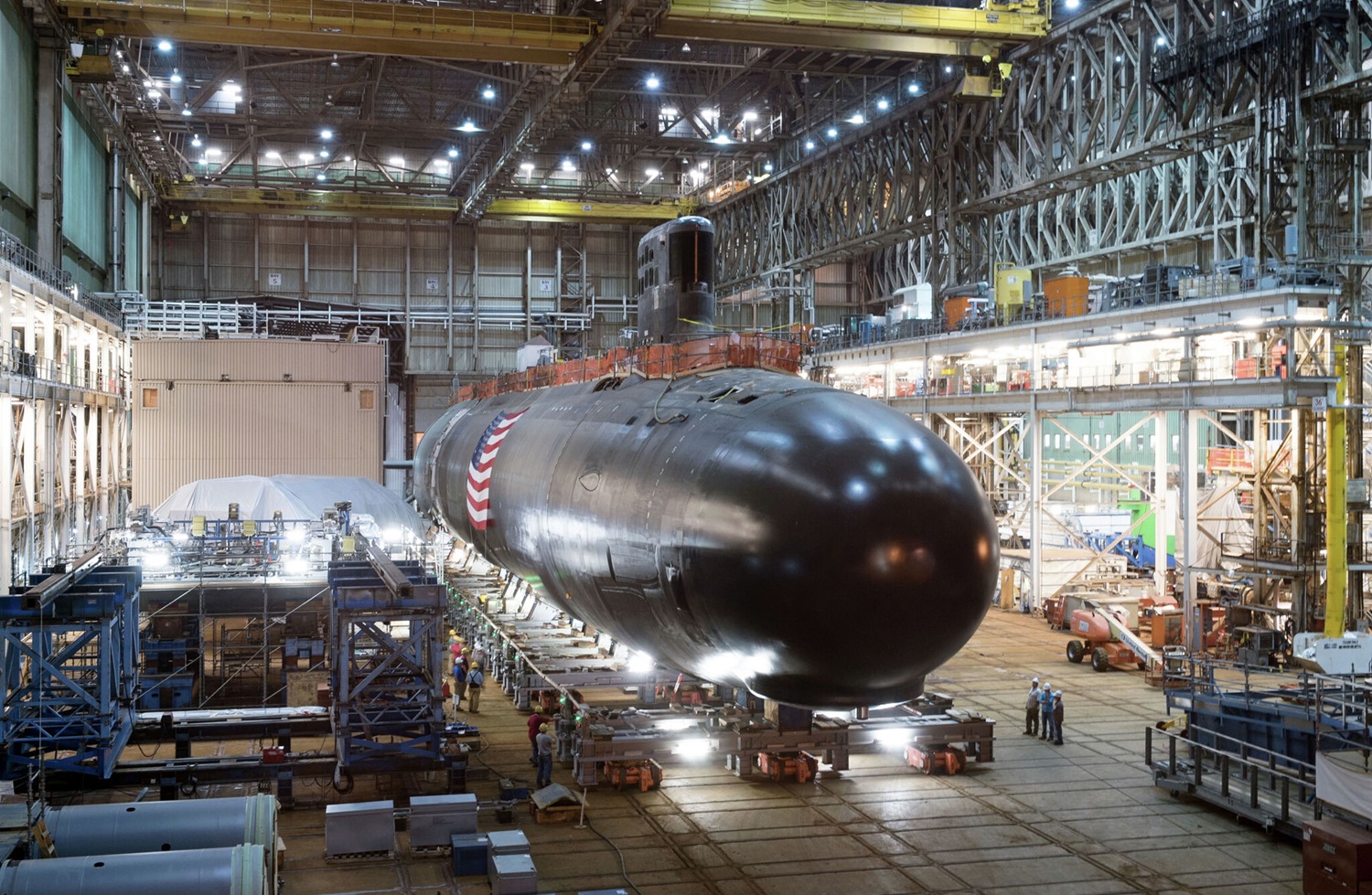
Virginia-class production continues to languish well below the 2.3 per year rate required for the US Navy to provide submarines to Australia. Photo: General Dynamics Electric Boat.
Defence Industry Minister Pat Conroy has used a visit to the US to make two announcements surrounding Australia’s nuclear-powered submarine ambitions under the AUKUS construct, despite there remaining no guarantees Australia will ever receive submarines from the US.
In Washington DC, Mr Conroy announced that US company Leidos Gibbs & Cox will build a submarine contingency dry dock at the Henderson Defence Precinct in WA to support the sustainment of Australian, US, and UK nuclear-powered submarines.
He said the dry dock would be delivered in the early 2030s, and was a precondition of Australia receiving its first of up to five Virginia-class submarines from the US Navy.
Mr Conroy also announced that Port Kembla-based Bisalloy Steel would supply $2 million of steel to General Dynamics Electric Boat (GDEB) in the US for the production of Virginia-class submarines.
The deal was announced after Bisalloy’s HY80 steel plate was qualified to meet the US Navy’s standards through the Australian Government’s Defence Industry Vendor Qualification (DIVQ) Program.
He said the qualification process involved close collaboration between Bisalloy, BlueScope, the Australian Submarine Agency, GDEB, and the US Direct Reporting Portfolio Manager for Submarines to demonstrate Australian industry’s ability to meet the US’s stringent standards required for submarine construction.
Despite being a relatively small sale compared to the scale of the US submarine program, Mr Conroy described the steel sale in a release as “a significant AUKUS milestone and a proud moment” for industry.
“For the first time, Australian-made steel will be used in the construction of US Virginia-class submarines, demonstrating the world-leading capabilities of our manufacturing sector and the growing contribution Australian industry is making to allied defence capability,” he said.
“This is exactly what AUKUS is designed to achieve. With this initial order, the AUKUS program is creating tangible opportunities for Australian industry while lifting their technical standards.
“It is supporting local workers and businesses, and building the industrial capability that will underpin Australia’s future nuclear-powered submarine enterprise.”
The announcement comes less than a week after the government committed an additional $4.6 billion in Australian Naval Infrastructure (ANI) at Adelaide’s Nuclear‑Powered Submarine Construction Yard at Osborne, adding to the $3.9 billion announced in February.
The additional funds will support ongoing construction and development activities across the Osborne precinct to establish the infrastructure, workforce and industrial capability required to deliver Australian-built SSN-AUKUS submarines from the early 2040s.

The floating dry dock will provide for the deep maintenance of Australian and visiting US and UK SSNs at the Henderson Defence Precinct. Image: Australian Submarine Agency.
But despite these investments which come on top of about $4 billion being paid to the US defence industrial base to boost Virginia-class production, and a similar amount to the UK to underpin the production of nuclear reactors, there still remains no firm commitment that Australia will ever receive a Virginia-class or SSN-AUKUS class submarine.
In Washington overnight Tuesday (27 July), Mr Conroy was asked how confident he was in the US being able to boost production from the current 1.3 boats annually to the 2.3 it needs to be able to release submarines to Australia from 2032.
“I’m confident for a number of reasons,” he said.
“First, testimony from (US Navy Chief of Naval Operations) Admiral Caudle recently said that they are on track to achieving the build rate of 2.3 in the early 2030s.
“That’s the critical point. People are focused on the here and now, and that’s understandable. But 2.3 is the goal in early 2030s.
“Another way of freeing up Virginias is increased maintenance efficiency, and the US is doing that as well,” he added. “But ultimately, it’s expanding the submarine industrial base that will allow this to happen.
“So, the submarine industrial base is expanding, and that will flow through over the next few years to increase those production rates.”
Mr Conroy said AUKUS was in the national interest of all three countries, regardless of who the current president or prime minister was.
“That’s why we’re pursuing this,” he said.
“This is not an act of charity, this is about expanding the industrial base of all three countries.
“So, we go from three construction yards capable of making nuclear-powered submarines to four.
“It’s in our national interest, it’s in the national interest of the US and UK, and that’s why it survived changes of government in all three countries,” he added. “And I’m confident it will continue.
“Obviously, the president of the day will make the final decision, but I’m very confident that will occur because it’s not just in our national interest, it’s in the national interest of the United States.”