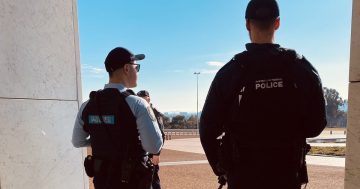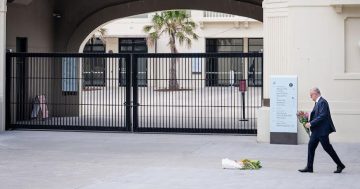


The AFPA has renewed its call for broader terms of reference for the Richardson review into counter-terrorism intelligence. Photo: Michelle Kroll.
The Australian Federal Police Association (AFPA) says it welcomes the Commonwealth Government’s establishment of the Royal Commission on Antisemitism and Social Cohesion, but has renewed its call for a deeper and broader Richardson review into counter-terrorism intelligence.
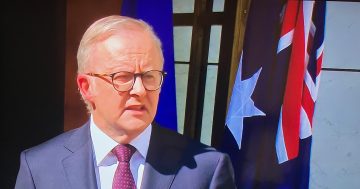
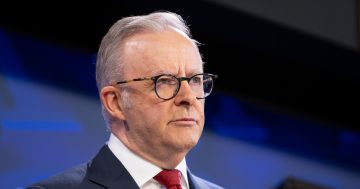
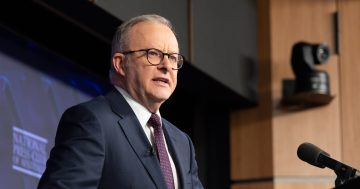
On 22 December, Prime Minister Anthony Albanese announced the review into Australia’s federal law enforcement and intelligence agencies would be led by Dennis Richardson, a former Secretary of Defence and the Department of Foreign Affairs and Trade (DFAT), who is also a former ASIO chief, through the Department of the Prime Minister and Cabinet.
Mr Albanese said the review would report by April this year and would examine whether federal law enforcement and intelligence agencies have the right powers, structures, processes and sharing arrangements in place in the wake of the Bondi Beach terrorist attack, and that it would build on the work of the 2024 Independent Intelligence Review.
The review remains in place, but has been now folded into the wider royal commission that was announced on 8 January.
But the AFPA says the terms of reference of the Richardson inquiry aren’t broad enough. It says that, while it recognises Mr Richardson’s “deep experience in national security” through his former roles, the review should go beyond the examination of intelligence failures and operational decision-making.
It says it should also study funding, resourcing, and staffing levels across the key components of the AFP’s national security framework, including counter-terrorism, protective services, and intelligence coordination.
The AFPA says recent media reports highlighted serious divisions between police forces, and what it said were “unresolved questions about intelligence sharing and decision-making in the lead-up to major violent incidents”. It believes those concerns should also be examined alongside what it calls “the real-world impact on an already overstretched AFP workforce”.
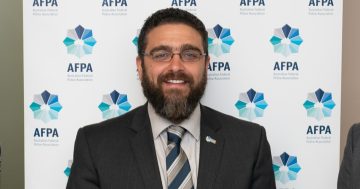
AFPA president Alex Caruana said limited or internal reviews would not restore public confidence or address the systemic challenges facing the AFP, and that, while a review was necessary, looking only at ‘’who knew what and when’’ was a surface-level approach that ignored why gaps in national security existed in the first place.
“When intelligence systems fail, the consequences are devastating,” Mr Caruana said.
“Those failures don’t exist in isolation, they intersect directly with workforce shortages, resourcing constraints and operational pressure on our members.
“Only a deeper, broader Richardson review or royal commission can examine systemic intelligence failures, inter-agency coordination, and whether the AFP is genuinely capable of meeting current and emerging national security demands.”
Mr Caruana said the AFPA had repeatedly warned about critical police vacancies in the AFP and other Australian police forces, and said all jurisdictions were experiencing significant staffing shortfalls. He said chronic understaffing in the AFP was impacting operational readiness, specialist capabilities, and officer wellbeing.
He also raised concerns about the growing expectation that AFP officers may be required to provide security for places of faith, amid heightened threat levels and community anxiety. Protecting places of worship was critically important, but we must be honest about what that meant operationally.
“Guarding religious sites and places of worship requires sustained resources, trained personnel, and long-term funding, not short-term redeployments that hollow out other policing functions,” Mr Caruana said.
“The AFP will need to withdraw resources from other areas of importance to perform these roles. I’m not sure if the AFP can sustain this type of operational tempo for the long term with the current numbers and funding they have.”
The establishment of the Richardson review in the wake of the 15 December Bondi shootings followed calls from the AFPA during last year’s federal election for what it called a complete, end-to-end review of the AFP. In those calls, it cited concerns around governance, resourcing, capability, and workforce sustainability.
Mr Caruana said these issues were not new, and what we were seeing now only reinforced his position.
“Our members are committed professionals, but commitment alone cannot compensate for systemic failures, staffing shortages, under-resourcing and below-industry wages and conditions,” he said.
“Our members are the frontline, and it’s time that the government recognises policing is critical to national security. They need to take care of police officers and unfortunately, they don’t do that very well.”
Original Article published by Andrew McLaughlin on Region Canberra.