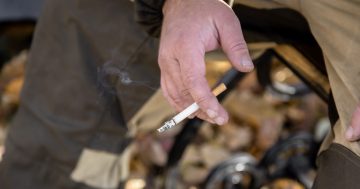
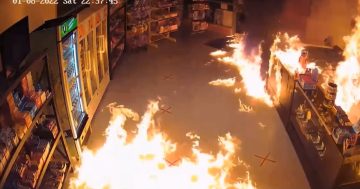
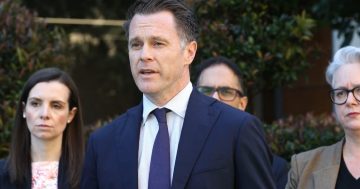
Cheap illegal tobacco risks driving smoking rates in the wrong direction and is also responsible for escalating violence, including fire-bombings, shootings and extortion. Photo: AFP.
When it comes to tackling the sale of illegal tobacco, Canberra hasn’t got too much to boast about.
A new state-by-state league table ranking how governments across the country are performing in their jurisdictions in the fight against illegal tobacco places the ACT second from the bottom.
The Australian Council on Smoking and Health (ACOSH) has released a National Illicit Tobacco Ladder, which has put every jurisdiction under the microscope – benchmarking supply chain controls, penalties and enforcement and exposing the gaps illegal operators are exploiting across the country.
The ACT scores only a 26 per cent effort to land it in the “totally off pace” category, while Queensland (76 per cent) and South Australia (67 per cent) are clear frontrunners.
“The ACT talks a good game but isn’t playing one,” according to ACOSH.
“Without stronger penalties, closure orders, and landlord protections and penalties, it’ll be stuck near the bottom.”
NSW scores 48 per cent to place it third on the ladder, but is still in the “struggling to keep up” category.
ACOSH chief executive officer Laura Hunter said Australian communities are paying the price for a lack of action against illegal tobacco.
She said the widespread availability of cheap illegal tobacco risks driving smoking rates in the wrong direction and is also responsible for escalating violence, including fire-bombings, shootings and extortion.
“To shut down the illicit tobacco business model once and for all, every state and territory needs to turn up and play their role – backed by strong, coordinated leadership from the federal government,” Ms Hunter said.
“The state of play shows a stark drop-off from the top two, with most jurisdictions falling well behind. Without tighter licensing, stronger enforcement and tougher, immediate penalties, illegal operators will continue to thrive.
“Governments around the country are on notice: if you’re not controlling illegal tobacco, you’re dropping the ball on public health.”
The Federal Government has welcomed the scorecard, saying it reinforces the need for all governments to focus on rapidly hardening the environment against serious and organised criminal syndicates; to squeeze supply; to disrupt illicit business models; and to strengthen consequences for illicit trade.
Customs Minister Julian Hill said independent scrutiny can be uncomfortable for some, but it highlights areas where all governments can and need to improve in combating the illicit tobacco trade.
“$84 million is now flowing from the Commonwealth, supporting all states and territories to follow the lead of Queensland and South Australia in overhauling their laws and boosting enforcement to shut down these sleazy shops, seize illicit tobacco, and confiscate the proceeds of crime,” he said.
“The combined efforts of Commonwealth, state and territory agencies are seeing strong results, raising the stakes for criminals and reducing profits, and putting upwards pressure on the price of illegal tobacco products.
“Governments must never surrender health policy to organised crime or condemn the next generation of Australians to the scourge of tobacco addiction and the resulting disease burden and early death that would result.”
Mr Hill said Australian Border Force operations along the entire border continuum have resulted in more disruptions and detections pre-, at and post-border.
This has led to heightened levels of illicit tobacco seizures in 2026, which is putting pressure on criminal networks and seeing prices for illicit tobacco products rise.
The Australian Government financial intelligence agency AUSTRAC has worked closely with banks to apply heightened scrutiny to retailers linked to illicit tobacco, tightening the financial net around criminal supply chains, resulting in hundreds of high-risk accounts being exited, and merchant services and private ATMs being withdrawn.
Australia currently has about 40,000 stores selling tobacco, despite only around 10 per cent of adults smoking.
Ms Hunter pointed out that there are more outlets than for everyday essentials such as bread and milk, for a highly addictive, toxic product used by a small minority.
“It’s a clear oversupply, and it makes effective oversight incredibly challenging, creating ideal conditions for illicit trade to thrive. We need to be far more selective about who is allowed to sell tobacco,” she said.
“For those [governments] stuck at the bottom of the ladder, this should be a wake-up call.
“When teams keep underperforming, the coach comes under pressure, and it should be no different here.”
Original Article published by Chris Johnson on Region Canberra.