Australian Public Service bosses are making hundreds of thousands of ‘accidental’ personal purchases with government credit cards. Photo: Pixabay.
Commonwealth public servants have racked up hundreds of thousands of dollars in personal purchases on their government-issued credit cards and are being made to repay individual amounts.
The personal transactions are for things like restaurants, food deliveries, convenience stores, taxis and Uber rides.
It is all being classified as ‘inadvertent’ personal charges and no one in the Federal Government or the Australian Public Service appears to be getting too upset about it.
There should be more than mere upset at this flippant use of taxpayer-funded credit cards, however.
Someone in authority should be expressing outrage at the level of rampant rule-breaking.
Excuses given for the abuse of the cards are vague and general; often simply stating the purchases were accidental and made through oversight.
How someone accidentally makes a $3000 purchase on a government credit card – as one individual did and has since paid back in full – beggars belief.
Most transactions are far smaller, but none are insignificant and together add up to a systemic problem in the higher ranks of the APS.
To be clear, credit cards are obviously not issued to most public servants.
Only the bosses, and relatively few of them, get the benefit of a card for ‘business’ expenses.
Executive support teams (EAs and EOs) are often the ones handling the transactions on behalf of the bosses, too.
With that comes the responsibility to use them correctly and not to act as though they have been issued as a perk for personal gain.
The public service is not the private sector, and there is no room for such an arrogant sense of entitlement that allows someone to wave around a government-issued credit card indiscriminately.
New figures tabled in the Senate detail thousands of transactions across numerous agencies that breached the government’s credit card rules in the past financial year.
The Department of Defence had the biggest number of personal transactions, totalling 3276 purchases valued at $240,000. Almost all of that has been paid back to date.
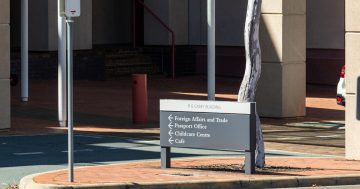
The Department of Foreign Affairs and Trade recorded a massive $151,000 across 2029 personal charges that needed to be repaid, with the largest individual ‘accidental purchase’ exceeding $3000.
Australian Federal Police recorded 987 breaches totalling more than $42,000.
The Department of Home Affairs required 477 purchases worth $28,400 to be repaid – more than $5000 of which was spent on Uber rides and Uber Eats.
At the Department of Employment and Workplace Relations, $8688 in personal purchases was repaid.
The Health Department clocked up $5370 in accidental private purchases, while the Department of Social Services totalled $2250.
The PM’s own department is no different, with the Department of Prime Minister and Cabinet requiring its employees to reimburse 81 personal purchases worth about $2400.
All departments have policies in place that require any accidental personal purchases to be repaid quickly, but the transactions occurring are all contrary to the rules of all these agencies.
There is no excuse for this behaviour.
No one uses a government-issued credit card for their own use unless they arrogantly believe it is their right – which it isn’t.
The government isn’t a bank or credit supplier for senior public servants to abuse for their own convenience.
The official government line is that the system is working because inappropriate use is identified and repaid.
That attitude might help explain the sheer scale of the credit card abuse – no one seems to care so long as it gets paid back.
It does, however, reveal the wider and increasing problem inside the APS of managers acting as though the rules don’t apply to them.
It also suggests the government has let it all get out of control.
Original Article published by Chris Johnson on Region Canberra.