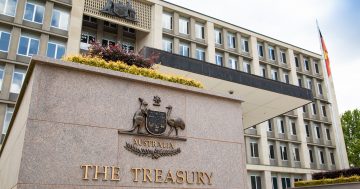
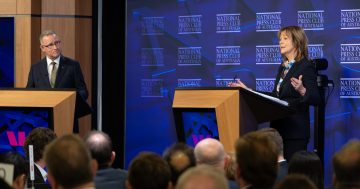
ACCI Chief Executive Officer Andrew McKellar: the new policy would inflict a “massive tax increase” on small business owners. Photo. ACCI.
The Australian Chamber of Commerce and Industry (ACCI) has blasted Labor’s planned tax on discretionary trusts, describing the proposal as an assault on small and family businesses in Australia.
This year’s Federal Budget included a measure to require trustees of discretionary trusts to pay a minimum tax of 30 per cent on the trust’s taxable income from 1 July 2028.
Treasurer Jim Chalmers says one objective of the initiative is to reduce opportunities for income splitting through discretionary trusts.
It would also more closely align the taxation of trust income with the taxation of employment income.
Testamentary trusts (estate planning tools set up inside a last will that only come into effect after death) recently secured a win, however, with genuine structures proposed to be exempt from the new tax.
The Federal Government has launched a consultation process over the planned new tax, and ACCI says Dr Chalmers should drop the whole plan.
In its submission lodged on Friday (31 July), ACCI has severely criticised the proposal, saying the new tax would raise more than $4 billion in its first year alone – at the expense of family-run businesses.
“The proposed minimum tax is not well targeted and will impose considerably higher tax and compliance costs, as well as unnecessary and excessive restructuring costs, on many family and small businesses that use discretionary trusts for legitimate commercial reasons,” the submission states.
“Discretionary trusts are a long-standing and commonly used structure for family and small businesses across Australia.
“They are regularly used in the real estate, construction, financial and professional services sectors, as well as by family businesses in retail and hospitality.
“Discretionary trusts are used because they are relatively easy to establish and simple to administer, and useful for managing commercial risk, asset protection, succession planning and variable income.”
ACCI said that if the government’s concern is tax avoidance by high-wealth individuals, it should be addressed through targeted rules and enforcement measures rather than a broad minimum tax that would capture thousands of legitimate business structures.
A discretionary trust is a legal arrangement that allows a trustee to manage assets on behalf of a group of people, which more often than not comprises family members related to a small business.
It allows business income to be shared among trust members rather than going to a single person, which is beneficial for tax purposes.
ACCI chief executive officer Andrew McKellar said the new policy would inflict a “massive tax increase” on small business owners.
“Small and family business owners across Australia have been stunned by this unprovoked assault,” Mr McKellar said.
“The government is attempting to raid the accounts of thousands of hardworking small and family businesses, despite those businesses being the backbone of the Australian economy.”
ACCI analysis shows the tax would cost small businesses alone around $4.5 billion in its first year.
The proposed 30 per cent minimum tax, paid by the trustee on trust income, is substantially higher than the average personal income tax rate currently paid by beneficiaries under existing flow-through arrangements.
The average small business trust earns about $161,000 a year.
If that income is split evenly between two beneficiaries, ACCI says, they would pay around $29,300 in total tax.
Under the government’s proposed 30 per cent minimum tax paid at the trustee level, the bill jumps to approximately $48,300.
“The government is kidding itself if it thinks this policy is designed to target high-wealth individuals. It will disproportionately hit ordinary family businesses across the country,” Mr McKellar said.
“Whether it’s your local tradie, accountant, corner store, hairdresser or family-run cafe, many of these businesses will face significantly higher tax bills under this proposal.”
In its submission, ACCI strongly urges the government to reconsider the measure.
It says the imposition of a minimum tax on trusts would penalise many small businesses at a time when they face high operating costs, business investment is weak and expected to decline further following the removal of the CGT discount, and productivity growth is anaemic.
It describes the proposal as the “opposite to a good tax policy reform”, which should ideally support small business entrepreneurship, investment and growth.
Mr McKellar said many businesses will be left with little choice but to restructure into companies to use the 25 per cent tax rate instead.
“Restructuring is not simple nor cheap and, in some cases, could exceed $50,000 in legal, accounting and financial advice fees, before any additional state stamp duties are applied on the transfer of assets from the trust to the new company,” Mr McKellar said.
“This policy will wipe out hard-earned profits at the stroke of a pen.
“The government should exempt existing small business trusts from this tax grab and allow them to continue operating under the flow-through arrangements they have relied on for decades.”
Original Article published by Chris Johnson on Region Canberra.